
 EU
EU
 UK
UK
 US
US
 CA
CA



When people compare electric bike motors, they often focus only on wattage. A 750W motor sounds stronger than a 500W motor, and a 1000W motor sounds stronger again. But wattage is only part of the story.
The way a hub motor is built also changes how an e-bike feels. A geared hub motor and a direct drive hub motor can both sit inside the wheel hub, but they deliver power in different ways. That difference affects acceleration, hill climbing, range, weight, maintenance, and how the bike feels when you ride without pedal assist.
If you are choosing an e-bike for commuting, hills, mixed terrain, or off-road riding, it helps to understand what these motor types actually mean.
What Is a Geared Hub Motor?
A geared hub motor has internal gears inside the motor shell. These gears let the motor spin faster than the wheel, which helps multiply torque at lower speeds.
That is why geared hub motors are common on many commuter e-bikes, folding e-bikes, and fat tire e-bikes. They usually feel responsive when starting from a stop, climbing moderate hills, or riding through stop-and-go traffic.
In everyday riding, this matters more than many buyers realize. A motor that feels strong at low speed can make an e-bike easier to handle, especially when the bike is carrying a heavier rider, cargo, or riding over uneven roads.
Geared hub motors are also usually smaller and lighter than direct drive hub motors. That can help with range, handling, and portability. The trade-off is that they have more internal moving parts, so long-term wear and motor noise can be slightly more noticeable depending on the design.

What Is a Direct Drive Hub Motor?
A direct drive hub motor, sometimes called a gearless hub motor, does not use internal reduction gears. The motor drives the wheel directly through electromagnetic force.
This makes the design mechanically simple. With fewer internal moving parts, direct drive motors are often known for durability and lower routine motor maintenance. They can also support regenerative braking in some systems, although the real-world range gain from regenerative braking on e-bikes is usually limited.
Direct drive motors are often larger and heavier. They may feel smooth and quiet at higher cruising speeds, but they can feel less efficient at low speeds if the motor, controller, and battery are not designed for that use case.
That is why direct drive systems are often discussed in the context of high-power e-bikes, electric mopeds, and electric motorcycles. For a regular daily e-bike, motor weight and low-speed efficiency matter a lot.

Geared Hub vs Direct Drive: The Riding Difference
The biggest difference is not just “gears vs no gears.” It is how the bike behaves under load.
A geared hub motor usually feels stronger when the bike is moving slowly. This helps when you are starting from a stop, climbing a hill, or riding on rougher surfaces. For many daily riders, that low-speed torque makes the bike feel more useful.
A direct drive motor usually feels smoother and quieter, especially once the bike is already moving. It can be a good fit for higher-speed cruising or heavier electric vehicles, but the motor itself is usually heavier and may create more drag when pedaling without assistance.
| Riding Need | Usually Better Fit |
|---|---|
| Stop-and-go city riding | Geared hub motor |
| Moderate hills | Geared hub motor |
| Lighter bike feel | Geared hub motor |
| Higher cruising speed | Direct drive hub motor |
| Lower motor maintenance | Direct drive hub motor |
| Regenerative braking support | Direct drive hub motor |
| Heavy-duty electric motorcycle-style use | Often direct drive or high-power rear hub systems |
This does not mean one design is always better. A poorly tuned geared hub motor can feel weak, and a well-designed high-power hub motor can feel extremely strong. The full system matters: motor, controller, battery, gearing, bike weight, tires, and intended use.
Which Motor Type Is More Efficient?
Efficiency depends on the riding situation.
For stop-and-go riding, hills, and lower-speed routes, geared hub motors often feel more efficient because they can use internal gear reduction to keep the motor working in a better speed range. They also usually coast more easily when the motor is not assisting.
Direct drive hub motors can perform well at steady speeds, especially when the system is designed for higher power and consistent cruising. But at lower speeds, steep climbs, or frequent starts, they may require more current from the battery to produce the same useful feeling at the wheel.
This is why a commuter e-bike and an electric motorcycle should not be judged by the same motor logic. A direct drive electric motorcycle system can make sense because the vehicle is built around higher voltage, stronger controllers, larger batteries, and heavier frames. A lightweight or folding e-bike has different priorities.
Which One Is Better for Hills?
For most normal e-bike riders, a geared hub motor is usually the more practical choice for hills. It offers better low-speed torque without requiring the entire bike to be built around a large and heavy motor.
But that does not mean direct drive systems cannot climb. They can, especially when paired with enough power and battery output. The issue is that climbing well at low speeds usually demands more from the motor and controller.
So instead of asking only “geared or direct drive,” it is better to ask:
- How much torque does the bike produce?
- How heavy is the bike?
- What is the rider weight and cargo weight?
- What battery capacity does the bike have?
- Are the tires designed for pavement, gravel, trails, or off-road riding?
- Does the bike have brakes and suspension that match its power?
Those details tell you more about real-world performance than the motor category alone.
Don’t Confuse E-Bikes With Electric Motorcycles
Some riders searching for direct drive motors are actually thinking about electric motorcycles or dirt-bike-style electric bikes. That is a different category from a typical commuter e-bike.
Terms like “fixed gear,” “direct drive,” and “gearless motor” can also get mixed together. On bicycles, fixed gear usually refers to the drivetrain setup, not the e-bike motor type. Direct drive refers to the motor driving the wheel without internal reduction gears.
If you are comparing an e-bike with an electric motorcycle, the better comparison is not just motor type. You should compare total power, torque, battery voltage, battery capacity, braking system, suspension, tires, vehicle weight, and where the vehicle is legally allowed to ride.
What This Means When Choosing a Jasion E-Bike
For most buyers, the motor label should not be the only decision point. The better question is: what kind of ride are you trying to get?
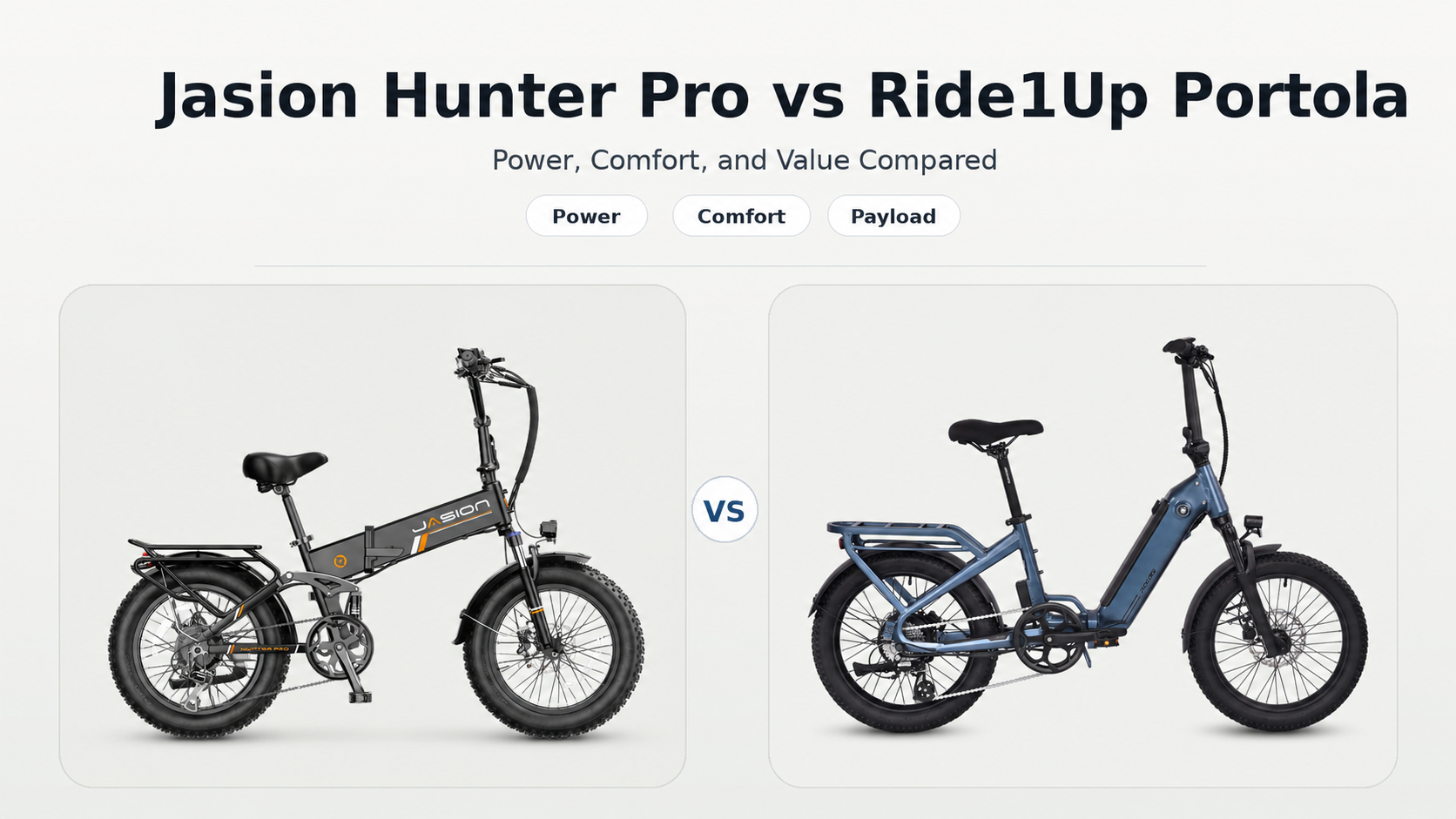
If you want a folding fat tire e-bike with strong torque, long range, and daily usability, Jasion Hunter Pro is the more natural fit. It uses a 1800W brushless hub motor, produces 95 Nm of torque, has a 48V 15Ah battery, and is rated for up to 80 miles of range. It also has 20x4 fat tires, full suspension, dual hydraulic brakes, a 400 lbs payload, and a folding frame, which makes it more suitable for riders who want a powerful but still practical all-terrain e-bike.
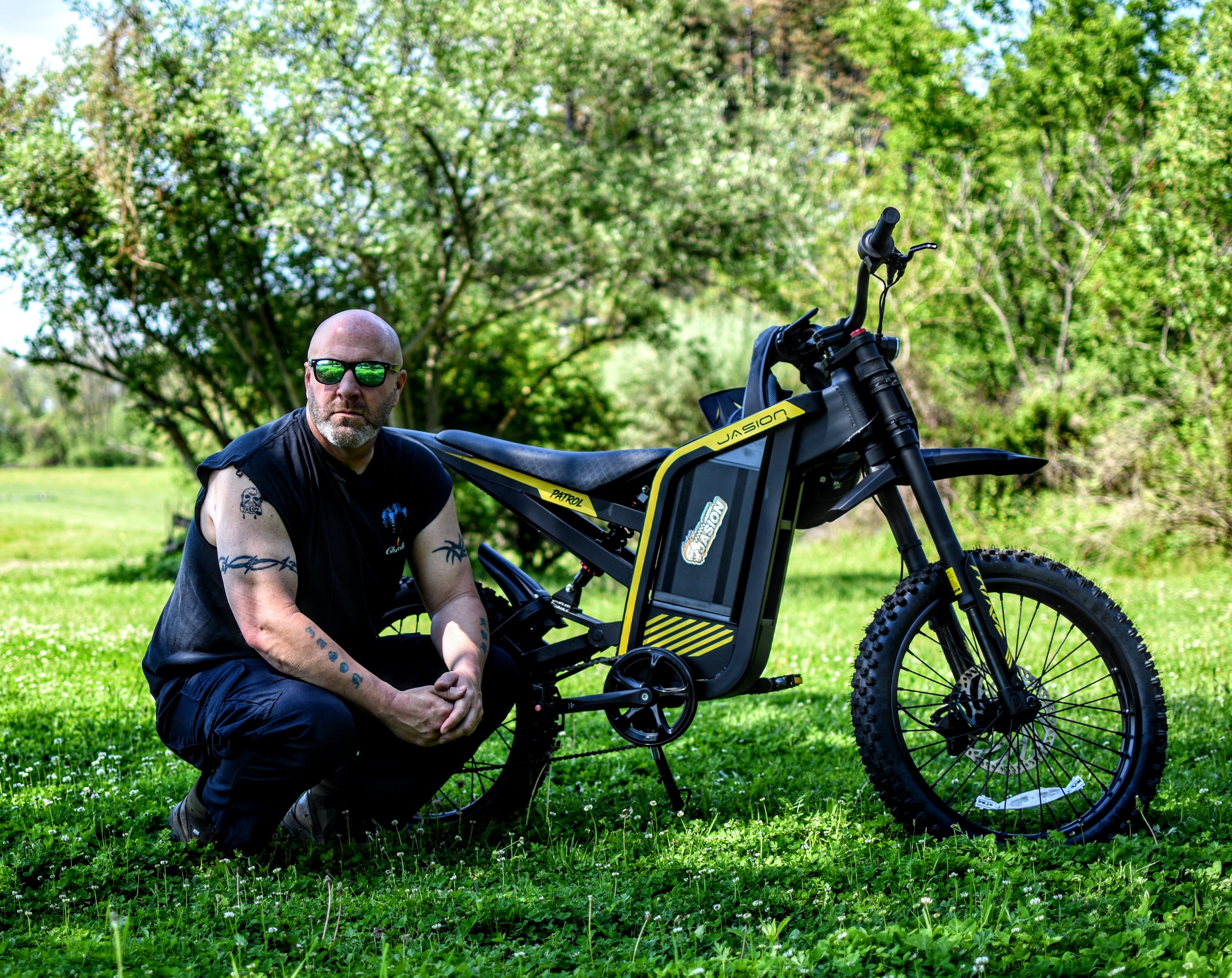
If you want something closer to a dirt-bike-style electric ride, Jasion Patrol 52 is the stronger performance choice. Its product page lists a 4000W brushless rear hub motor, 145 Nm of torque, a 52V 30Ah battery, 40 mph top speed, and up to 50 miles of range. It also uses full suspension, hydraulic brakes, and extra-thick dirt bike tires, which makes it more focused on aggressive riding and higher-power terrain use.
The difference between these two bikes is not simply “geared vs direct drive.” The better distinction is use case.
Hunter Pro is easier to position for riders who want a powerful folding fat tire e-bike for commuting, trails, RV travel, rough roads, and mixed terrain. Patrol 52 is better positioned for riders who care more about peak power, acceleration, dirt-bike styling, and stronger off-road performance.
So, Which Motor Should You Choose?
If you mostly ride in the city, deal with traffic lights, climb moderate hills, or want a lighter and more efficient e-bike, a geared hub motor is usually the better fit.
If you want a heavier, smoother, high-speed system with fewer internal motor parts, a direct drive hub motor can make sense, especially in higher-power e-bikes and electric motorcycle-style builds.
For most everyday e-bike riders, torque, battery capacity, bike weight, braking, suspension, and tire setup matter more than the motor label alone. A motor does not ride by itself. It works as part of the whole bike.
That is why two hub-motor e-bikes can feel completely different. A practical folding fat tire bike like Hunter Pro and a high-power dirt-bike-style model like Patrol 52 both use hub motor systems, but they are built for different riders and different riding expectations.
FAQs
Is a geared hub motor better than a direct drive hub motor?
For everyday e-bike use, a geared hub motor is often more practical because it is usually lighter and better at low-speed torque. Direct drive motors are usually better for smooth high-speed cruising, durability, and some high-power applications.
Are direct drive hub motors more efficient?
Not always. Direct drive motors can be efficient at steady cruising speeds, but geared hub motors are often more efficient for stop-and-go riding, hills, and lower-speed routes.
Is a direct drive e-bike good for commuting?
It can be, especially on flat roads and steady-speed routes. But many commuters prefer geared hub motors because they feel more responsive at lower speeds and are usually lighter.
What does direct-geared mean?
“Direct-geared” is not a standard e-bike motor category. Most riders are usually comparing either geared hub motors or direct drive hub motors.
Is a direct drive hub motor the same as a fixed gear bike?
No. Fixed gear usually refers to a bicycle drivetrain where the rear cog is fixed to wheel movement. Direct drive refers to a motor design where the motor drives the wheel without internal reduction gears.
What matters more than motor type?
Torque, battery capacity, controller tuning, bike weight, tires, brakes, suspension, and riding terrain often matter more than whether a motor is simply labeled geared or direct drive.


Share:
1 comment
Where could I buy the small motor that hooks on the back of your wheel