E-BIKE BEGINNER GUIDE
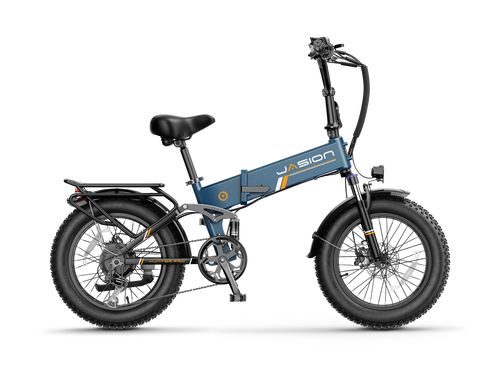
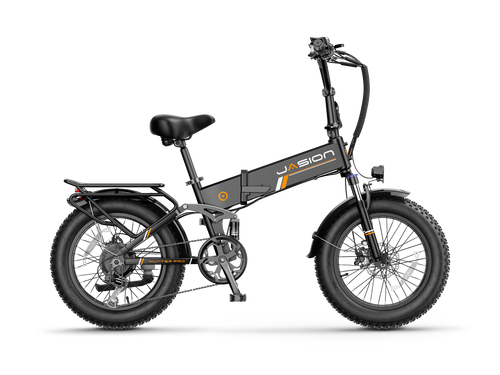
Learn E-Bike Parts on a Real JasionBike
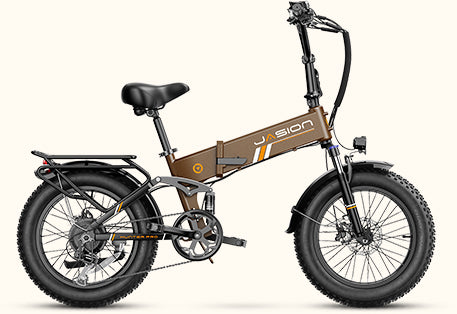
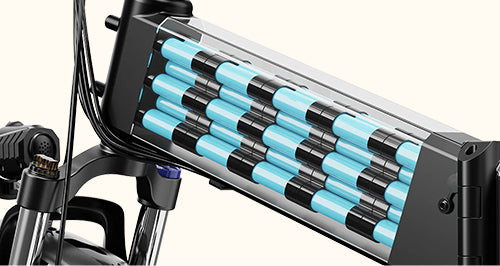
E-Bike Battery

The battery stores the energy that powers the motor. On an e-bike, battery specs are often shown with voltage and amp-hours, such as 48V 15Ah. You may also see watt-hours, or Wh, which estimates total battery energy.
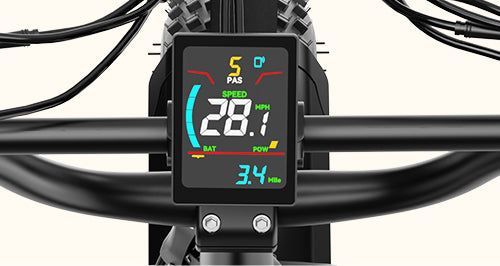
Twist Throttle & LCD Display

A throttle lets the motor provide power without requiring active pedaling. A twist throttle works by rotating the grip, similar to a scooter or motorcycle-style control. The display shows key ride information such as speed, battery level, trip distance, and assist level.
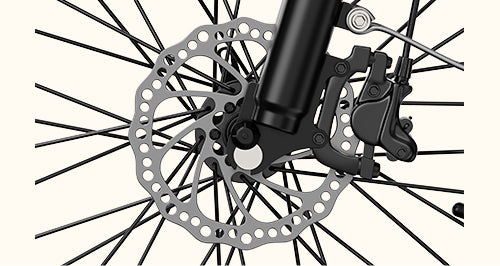
Hydraulic Disc Brakes

Hydraulic disc brakes use fluid pressure to move the brake calipers and slow the bike. Compared with mechanical disc brakes, which use a cable, hydraulic brakes usually feel smoother and require less hand effort.
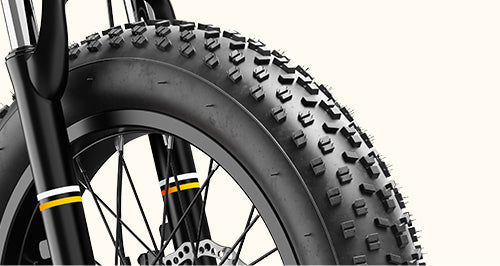
Fat Tires & Full Suspension

Fat tires are wider tires that help improve stability, traction, and comfort. Suspension helps absorb bumps from rough roads, trails, and uneven ground. Full suspension means the bike has both front and rear shock absorption.
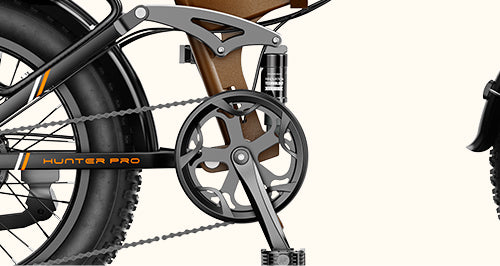
Pedal Assist Sensor

Pedal assist means the motor helps while you are pedaling. A sensor near the pedal area tells the system when to provide assistance. A cadence sensor detects whether you are pedaling, while a torque sensor detects how hard you are pedaling.
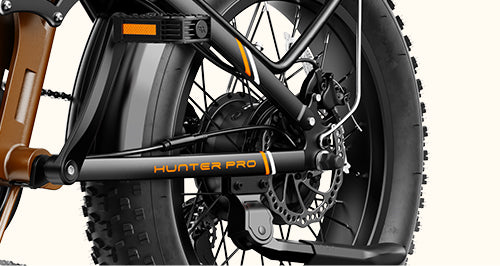
Rear Hub Motor

A hub motor is built into the wheel hub and helps drive the bike forward. Many e-bikes use rear hub motors because they are direct, powerful, and easy for new riders to understand.
Most Searched E-Bike Terms
Learn the e-bike questions riders ask most, from battery range and motor power to classes, brakes, safety certifications, and everyday maintenance.
Basics
1
What Is an E-Bike?
E-bike / Electric bike / Electric bicycle
An e-bike is a bicycle with a battery-powered motor that helps you ride with less effort.
- Why it matters Once you understand what makes a bike “electric,” it becomes much easier to compare batteries, motors, throttle, pedal assist, and riding rules.
- Beginner tip Look for four basics first: pedals, battery, motor, and assist system. Those parts explain most e-bike features.
2
How Do Electric Bikes Work?
How e-bikes work / battery / motor / controller / sensors
Electric bikes work by sending power from the battery to the motor. A controller and sensors decide when and how much help to provide.
- Why it matters This explains why two e-bikes with similar-looking specs can feel different on the road. Battery size, motor type, sensor type, controller tuning, and assist levels all affect the ride.
- Beginner tip Think of it this way: the battery stores energy, the motor moves the bike, the controller manages power, and sensors read your riding input.
3
What Is Pedal Assist?
Pedal assist / PAS / assist level
Pedal assist means the motor helps while you are pedaling.
- Why it matters Pedal assist makes hills, long rides, and heavier loads easier while still keeping the ride bike-like.
- Beginner tip Lower assist levels save battery. Higher assist levels make riding easier but use more power.
Battery & Range
1
What Does Ah Mean on an E-Bike Battery?
Amp-hours / Ah / battery capacity
Ah stands for amp-hours. It describes how much charge a battery can hold.
- Why it matters A higher Ah number can help support longer range, but Ah alone does not tell the full story. Voltage matters too. A 15Ah battery at 48V stores more total energy than a 15Ah battery at 36V.
- Beginner tip Use Ah as one part of the battery picture, not the whole answer. Compare Ah together with voltage and Wh.
2
What Does Wh Mean on an E-Bike Battery?
Watt-hours / Wh / battery energy
Wh stands for watt-hours. It estimates how much total energy the battery stores.
- Why it matters Wh is often the clearest quick number for comparing e-bike battery capacity because it combines voltage and amp-hours.
- Beginner tip Use this formula: Wh = V × Ah. A 48V 15Ah battery is about 720Wh.
3
How Far Can an E-Bike Go on One Charge?
Battery range / long range electric bike / max range
Range is how far an e-bike may travel on one charge.
- Why it matters Real range changes with rider weight, hills, throttle use, speed, tire pressure, temperature, wind, cargo weight, and assist level.
- Beginner tip Treat range claims as estimates. If your daily ride is 20 miles, choose a battery with extra margin.
Motor & Ride Feel
1
What Does 750W Mean on an E-Bike?
750W e-bike / 750 watt ebike / 750 watt electric bike
750W usually refers to the motor’s power rating.
- Why it matters Motor power affects acceleration, hill climbing, carrying ability, and how easily the bike maintains speed under load. In the U.S., 750W is also a common reference point in many e-bike class discussions.
- Beginner tip Understand the difference between rated power and peak power. Peak power may only be available for short bursts.
2
What Is Motor Wattage?
Watts / motor wattage / rated power / peak power
Motor wattage describes how much power the motor can deliver.
- Why it matters Wattage can affect acceleration and hill climbing, but it does not explain the entire ride. Battery output, controller tuning, torque, rider weight, tire size, and terrain also matter.
- Beginner tip Do not judge an e-bike by wattage alone. A well-balanced system can feel better than a bike with a big number and poor tuning.
3
Hub Motor vs Mid-Drive Motor
Hub motor / mid-drive motor / rear hub motor / drivetrain
A hub motor sits in the wheel hub. A mid-drive motor sits near the pedals and crank.
- Why it matters Hub motors are common, direct, and easy to understand. Mid-drive motors work through the drivetrain and can feel more natural on climbs.
- Beginner tip Choose based on how you ride. Hub motors are great for many everyday riders. Mid-drive systems can be helpful for steep hills and more bike-like pedaling.
| Motor type | Where it sits | Best for |
| Hub motor | Inside the wheel hub | Everyday riding, fat tire e-bikes, folding e-bikes, simple power delivery |
| Mid-drive motor | Near the pedals and crank | Hill climbing, natural pedaling feel, drivetrain-based power |
Speed & Classes
1
How Fast Can an E-Bike Go?
E-bike top speed / fastest electric bike / assisted speed / max speed
Top speed is how fast an e-bike can go, but it can mean assisted speed, throttle speed, or physical speed potential.
- Why it matters Buyers need to separate legal assisted speed from what a bike may physically reach in certain conditions.
- Beginner tip When comparing speed claims, check the e-bike class, motor power, throttle setup, and local rules.
2
Class 1, Class 2 and Class 3 E-Bikes
Class 1 e-bike / Class 2 e-bike / Class 3 e-bike / Class 1 vs Class 2 vs Class 3
E-bike classes describe how the motor assists you and where that assistance usually stops.
- Why it matters Class affects speed, throttle use, path access, trail access, helmet rules, and where you may be allowed to ride.
- Beginner tip Use the class system as a starting point, then check your local rules before riding.
| Class | Assist type | Common assisted speed limit | Simple meaning |
| Class 1 | Pedal assist | 20 mph | Motor helps when you pedal |
| Class 2 | Throttle + assist | 20 mph | Motor can help without pedaling |
| Class 3 | Pedal assist | 28 mph | Faster pedal-assist riding |
Rules vary by state, city, road, trail, and park. Always check local regulations before riding.
3
Do You Need a License for an Electric Bike?
E-bike license / local regulations
E-bike license rules depend on where you live and how the bike is classified.
- Why it matters Some low-speed e-bikes may not need the same license as motorcycles or mopeds, but rules are local.
- Beginner tip Check your state, city, campus, park, and trail rules before riding.
Frame & Comfort
1
What Is a Folding E-Bike?
Folding e-bike / foldable electric bike / folding frame
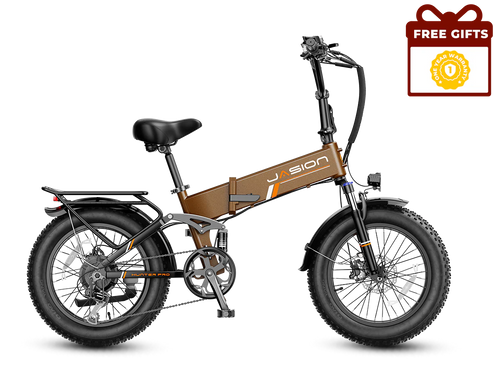
A folding e-bike has a hinge-style frame that can fold for storage or transport.
- Why it matters It helps riders store the bike in apartments, RVs, offices, car trunks, and small garages.
- Beginner tip Check folded size, bike weight, battery position, and whether you can lift it comfortably.
2
What Is a Fat Tire E-Bike?
Fat tire e-bike / 20 x 4 tire / traction
A fat tire e-bike uses wider tires, often around 3 to 4 inches wide.
- Why it matters Fat tires improve stability, traction, and comfort on gravel, sand, snow, dirt, and rough pavement.
- Beginner tip A 20 x 4 tire means the tire is about 20 inches in diameter and 4 inches wide.
3
Step-Through vs Step-Over Frame
Step-through e-bike / step-over frame
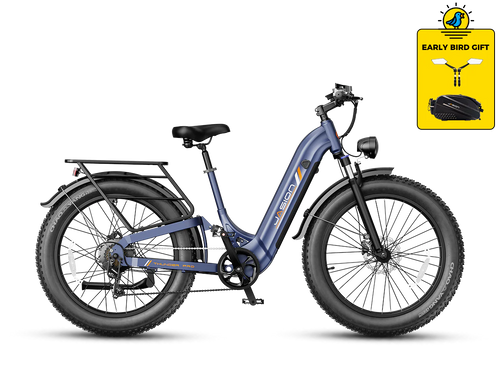
A step-through frame has a lower opening that makes it easier to get on and off. A step-over frame has a higher top tube, similar to many traditional bicycles.
- Why it matters Frame style affects mounting, comfort, riding posture, and confidence, especially for daily riding.
- Beginner tip Choose step-through for easier access. Choose step-over if you prefer a more traditional bike feel.
| Frame type | What it feels like | Best for |
| Step-through | Easier to mount and dismount | Commuting, casual riding, shorter riders, mobility comfort |
| Step-over | More traditional bike shape | Riders who like a classic frame feel |
Care & Buying
1
How Much Does an E-Bike Cost?
E-bike cost / e-bike price / buying factors
E-bike cost depends on battery, motor, frame, brakes, suspension, accessories, warranty, and support.
- Why it matters A cheaper bike may save money upfront but may not offer the same comfort, safety, service, or long-term value.
- Beginner tip Compare what you actually get: battery size, brake type, motor specs, range, support, and included accessories.
2
How Do You Maintain an E-Bike?
E-bike maintenance / electric bike repair / regular checks
E-bike maintenance means caring for both the bicycle parts and the electrical system.
- Why it matters Regular care helps keep the bike safer, smoother, and more reliable.
- Beginner tip Check tire pressure, brakes, bolts, chain, gears, battery, charger, and cables regularly.
3
Are E-Bikes Waterproof?
Water-resistant / IP rating / IPX6 / waterproof meaning
Most e-bikes are water-resistant, not fully waterproof.
- Why it matters Rain, puddles, washing, and storage conditions can affect electrical parts.
- Beginner tip Avoid deep water, pressure washing, and charging a wet battery or wet bike.
Hot Ebikes
E-Bike Terms FAQ
How much range do I need for a daily e-bike commute?
For a daily e-bike commute, look at your round-trip distance first. If you ride 10 miles to work and 10 miles back, you need more than 20 miles of real e-bike range.
Range can change with hills, rider weight, wind, temperature, speed, cargo, throttle use, and pedal assist level. That is why it is better to choose an electric bike with extra battery range instead of buying one that barely covers your route.
For most commuters, leaving a 30% to 50% battery margin makes the ride more reliable.
Is 500W or 750W enough for hills?
A 500W e-bike can handle many normal city hills, especially with light cargo and moderate rider weight. A 750W e-bike is usually better for steeper hills, heavier riders, fat tires, or carrying extra gear.
But motor wattage is not the only thing that matters. Hill climbing also depends on torque, battery output, bike weight, tire size, and how steep the road is.
If your daily route has frequent climbs, a 750W electric bike or a higher-torque motor will usually feel stronger and easier to ride.
Can I ride an e-bike in the rain, or leave it outside at work?
You can ride many e-bikes in light rain, but most electric bikes are water-resistant, not fully waterproof. Wet roads and light rain are usually fine, but deep puddles, flooding, pressure washing, and long exposure to heavy rain should be avoided.
If you leave your e-bike outside at work, use a bike cover when possible and keep the battery area protected. After riding in the rain, wipe the bike dry before storage.
Never charge an e-bike battery when the battery, charging port, or charger is wet.
Is a step-through e-bike only for women or seniors?
No. A step-through e-bike is not just for women or seniors. It is simply an easier frame style to get on and off.
Step-through electric bikes are useful for commuters, shorter riders, older riders, delivery riders, and anyone who stops often. They are also helpful if you have knee, hip, balance, or mobility concerns.
The main benefit is comfort and control. If you want an easy-to-ride e-bike for daily use, a step-through frame can be a very practical choice.
What e-bike size should I choose if I’m short?
If you are a short rider, check more than the recommended height range. Look at the standover height, minimum seat height, handlebar reach, wheel size, and total bike weight.
A lower standover height makes it easier to get on and off. A lower seat height helps you feel more stable when stopping. Step-through e-bikes, compact frames, and some folding electric bikes are often easier for shorter riders to handle.
The right e-bike should let you sit comfortably, reach the handlebars naturally, and put your feet down with confidence.
How do I charge an e-bike battery safely at home?
Charge your e-bike battery with the original charger or a charger recommended by the brand. Use a dry, open area at room temperature, and keep the battery away from beds, sofas, curtains, paper, or other flammable items.
Do not charge the battery if it is wet, damaged, swollen, leaking, unusually hot, or making strange smells or sounds. It is also safer to unplug the charger after the battery is fully charged.
When comparing electric bikes, look for clear battery safety information, such as UL 2271 or UL 2849 certification.
Is it better to buy a used e-bike or a new budget e-bike?
A used e-bike can cost less upfront, but the battery condition is the biggest risk. You may not know how the battery was charged, stored, repaired, or exposed to water.
Before buying a used electric bike, check the battery, charger, motor, brakes, tires, frame, wiring, mileage, and service history. Avoid bikes with modified batteries, missing chargers, damaged wiring, or unclear brand support.
For first-time riders, a new budget e-bike is often the safer choice because it usually comes with a warranty, support, and a known battery history.
Do you need a license for an electric bike?
In many places, low-speed electric bikes do not require a driver’s license, registration, or insurance. However, e-bike laws depend on your location and the type of electric bike you ride.
Rules can change based on motor power, top speed, throttle use, rider age, helmet requirements, and whether the bike is Class 1, Class 2, or Class 3.
Before riding, check your local e-bike laws for roads, bike lanes, sidewalks, parks, trails, and campuses. This is especially important for faster e-bikes or throttle-equipped models.