
 EU
EU
 UK
UK
 US
US
 CA
CA



A fast electric bike under $1500 is no longer a compromise by default. This budget now covers everything from 28 mph folding commuters to Jasion models with published top speeds of 30+, 35, and 40 mph. Speed still needs context: the right bike must have enough battery for the route, brakes and tires that match the pace, a frame that fits the rider, and support after the sale.
We compared six current models listed below $1,500 on September 29, 2026. Three are Jasion bikes and three are credible market alternatives. Our verdict is straightforward: Jasionbike Patrol leads for outright speed, Thunder Pro is the strongest all-around Jasion choice for fast mixed-surface riding, and X-Hunter delivers the most speed per dollar. The other three make more sense only when a specific feature—torque-sensor pedal feel, a moped-style dual-battery layout, or step-through folding access—matters more than maximum speed.
Fast Electric Bikes Under $1500 at a Glance
- Highest published speed: Jasion Patrol, up to 40 mph.
- Speed plus a large battery: Jasion Thunder Pro, up to 35 mph with a 52V 20Ah battery.
- Lowest-priced 30+ mph folder: Jasion X-Hunter.
- Torque-sensor folding commuter: Lectric XP4 750.
- Moped-style bike with a dual-battery option: ENGWE M20 2.0.
- Step-through folding comfort: Heybike Ranger 3.0 Pro.
| Model | Price checked | Published top speed | Motor and battery | Best starting point for |
|---|---|---|---|---|
| Jasion Patrol | $1,399 | Up to 40 mph | 4,000W peak; 52V 30Ah | Off-road-oriented riders prioritizing speed |
| Jasion Thunder Pro | $1,099-$1,199 | Up to 35 mph | 1,200W sustained / 2,000W peak; 52V 20Ah | Longer mixed-surface rides |
| Jasion X-Hunter | $799 | 30+ mph | Published 1,400W motor; 48V 13Ah | Folding fat tire value |
| Lectric XP4 750 | $1,299 | Up to 28 mph | 750W version / 1,310W peak; 48V 17.5Ah | Folding utility with a torque sensor |
| ENGWE M20 2.0 | $999-$1,199 | Up to 28 mph in assist mode | 750W / 1,200W peak; one or two 52V 15.6Ah batteries | Moped styling and battery options |
| Heybike Ranger 3.0 Pro | $1,499 | Up to 28 mph | 750W / 1,400W peak; 720Wh battery | Step-through folding comfort |
Prices and specifications were checked on current US product pages on September 29, 2026.
How We Chose These Six Bikes
Every bike had to meet four requirements: an official US listing at $1,500 or less when checked, a published top speed of at least 28 mph, enough public specifications to calculate battery capacity, and a clear reason to choose it over another model in the same price band.
Top speed opened the door; it did not decide the order. We gave more weight to usable battery energy, braking hardware, suspension, fit, storage, and the job each frame is built to do. The specifications are verified manufacturer data rather than results from one six-bike road test, so we do not turn paper figures into invented claims about acceleration, brake feel, or real-world range. Prices are a dated snapshot because sales and configurations change.
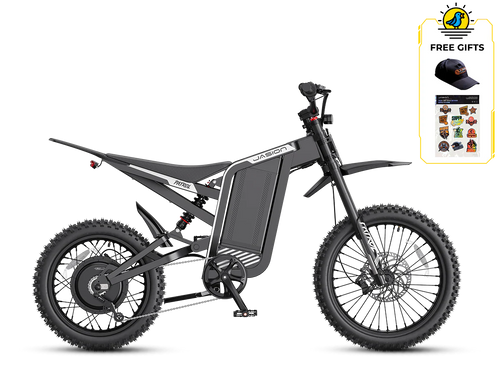
1. Jasion Patrol: Highest Published Speed
The Jasion Patrol is the clearest match for a shopper who means fast literally. Its current page lists a top speed of up to 40 mph, 4,000W peak power, 145 Nm of torque, and a 52V 30Ah battery. At the checked price of $1,399, it puts the largest speed and battery numbers in this comparison below the budget ceiling.

Full suspension and hydraulic disc brakes suit its off-road-oriented setup. The published maximum range is up to 50 miles, but a fast trail ride will not reproduce a low-power range test. Speed, terrain, load, temperature, tire pressure, and throttle use all change the distance available from a charge.
Our take: this is the speed-first choice in the group. The 52V 30Ah pack also gives it the energy reserve a high-output bike needs; a smaller commuter battery would undermine the point of buying this much motor.
Choose it when: your first priority is strong off-road performance and you have an appropriate place to use it.
Think twice when: your normal route is a crowded bike path or a jurisdiction that only recognizes standard 20 or 28 mph ebike classes. The Patrol should be chosen around its intended riding environment, not treated as an ordinary commuter simply because it has pedals.
For a closer look at this category, see the Jasion guide to 40 mph electric bikes for adults.
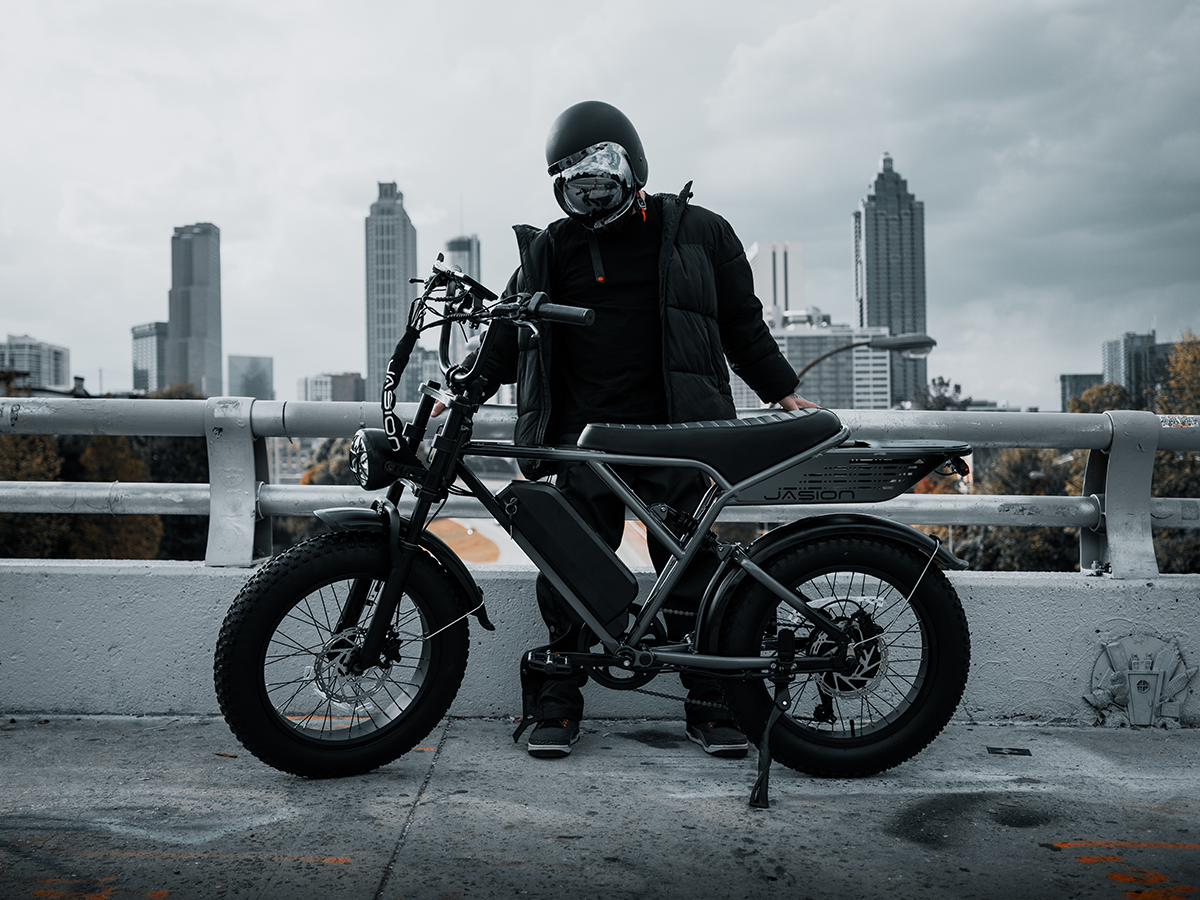
2. Jasion Thunder Pro: Speed With More Range Headroom
The Jasion Thunder Pro trades five miles per hour of published top speed for a setup aimed at longer mixed-surface rides. The current page lists 1,200W sustained power, 2,000W peak power, 110 Nm of torque, a 52V 20Ah battery, full suspension, and hydraulic disc brakes.
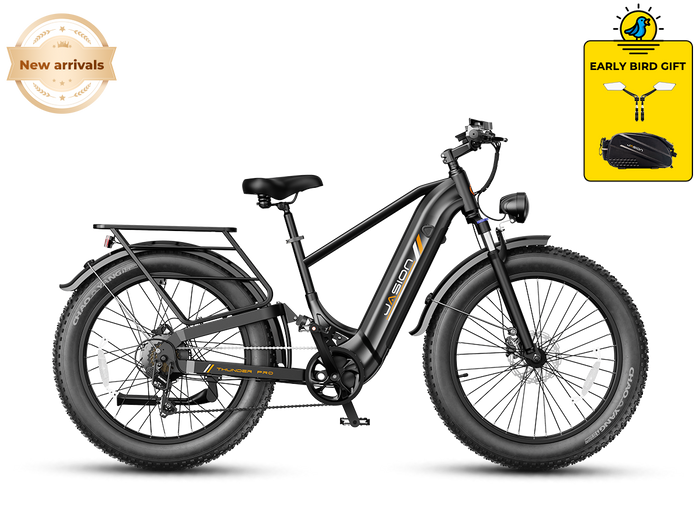
Its listed maximum range is up to 90 miles. Read that as a ceiling under favorable conditions, not a 35 mph range promise. The useful point is the 1,040Wh battery: it gives the Thunder Pro more stored energy than many budget commuters and folders, which is valuable when hills, softer ground, or a heavier load increase consumption.
Our take: Thunder Pro is the better all-around fast ebike for most riders choosing between the two highest-speed Jasion options. It gives up 5 mph on the spec sheet, but its conventional saddle, full suspension, hydraulic brakes, and 1,040Wh battery make it easier to recommend for varied day-to-day routes.
Choose it when: rough pavement, gravel, hills, comfort, and battery capacity matter as much as speed.
Think twice when: you need a compact bike for a small apartment or regular trunk loading. This is a full-size fat tire platform, so storage and transport deserve a measurement before ordering.
The separate 35 mph electric bike guide goes deeper into this speed range and its likely use cases.
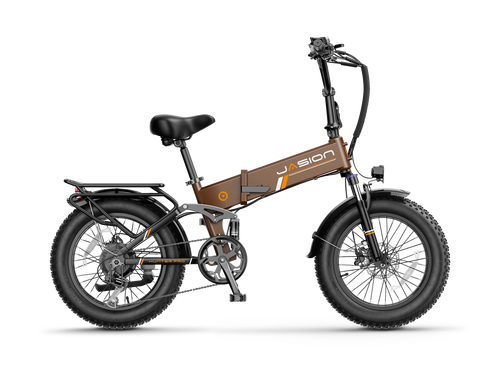
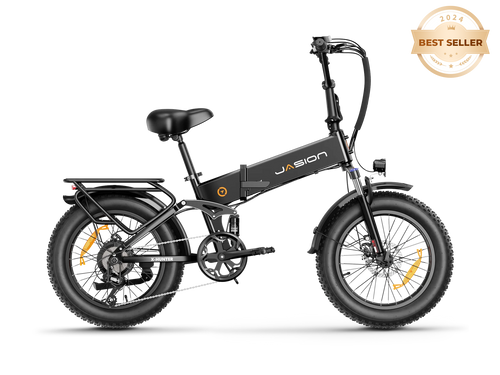
3. Jasion X-Hunter: 30+ MPH Folding Value
The Jasion X-Hunter is the value outlier in this list. Its checked price was $799, while the current page lists a 30+ mph top speed, a 1,400W motor, a 48V 13Ah battery, 20 x 4-inch tires, and full suspension.

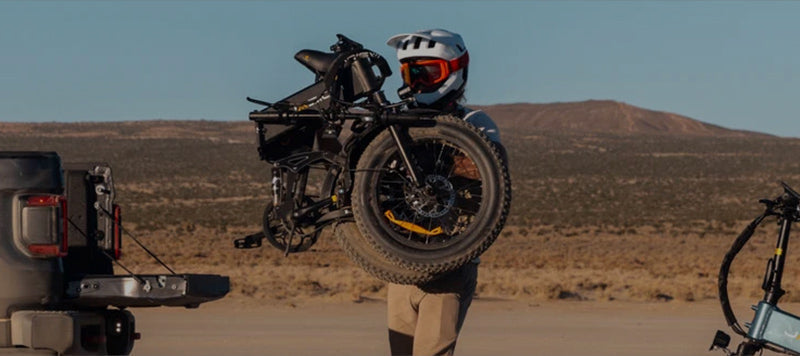
The folding frame reduces its stored footprint, which can help in an RV, garage, or apartment. It does not make the complete bike light. Fat tires, a motor, battery, and full suspension still have to be lifted. Measure the cargo opening and plan the lift rather than assuming every folding ebike handles like luggage.
Our take: X-Hunter is the value benchmark here. At the checked price, none of the other five combines a 30+ mph listing, fat tires, full suspension, and a folding frame for less money.
Choose it when: you want 30+ mph capability, mixed-surface tires, and folding storage at the lowest checked price here.
Think twice when: you want hydraulic brakes or the smooth response of a torque sensor. The current X-Hunter specification uses mechanical disc brakes, and buyers should choose it for value and versatility rather than pretending it carries every premium component.
If storage is a deciding factor, use the full folding electric bike buying guide to check space, weight, rider fit, and the folding routine.
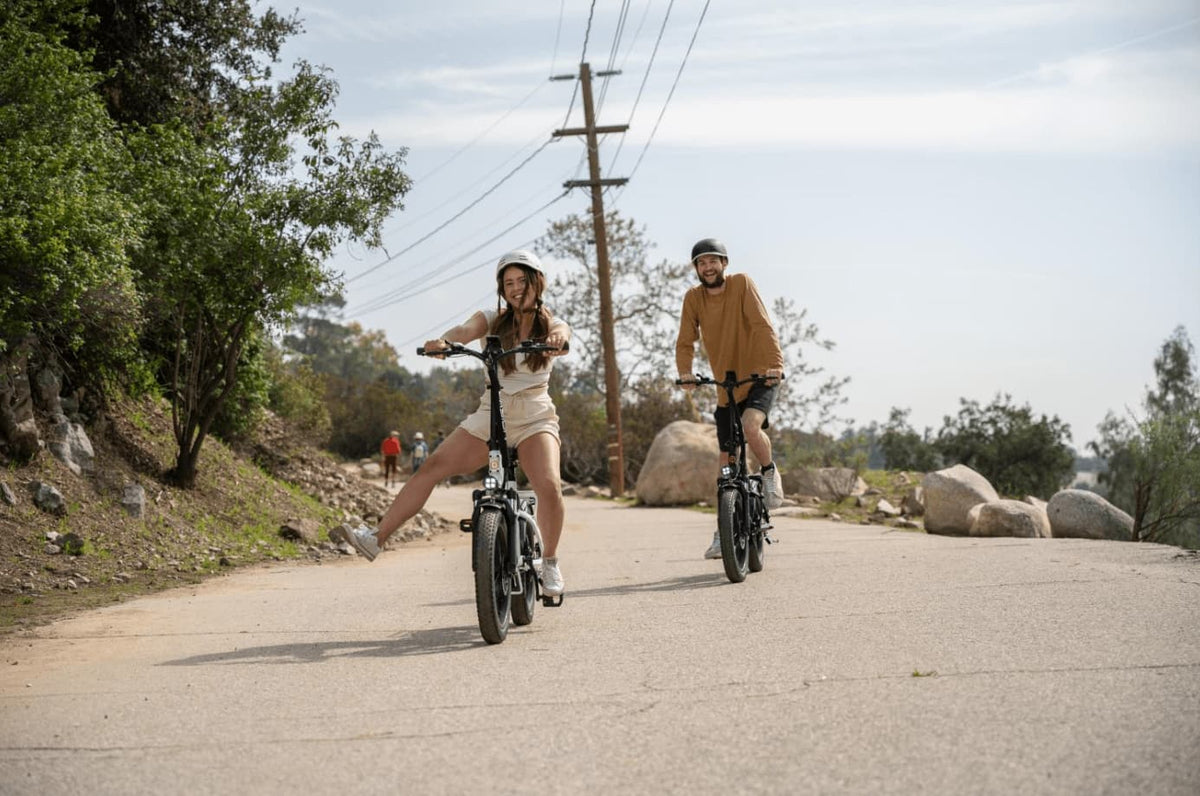
4. Lectric XP4 750: A Torque-Sensor Folding Alternative
The Lectric XP4 750 represents a more commuter-focused interpretation of a fast budget folder. At the checked price of $1,299, its official page lists a 28 mph top speed, a 750W motor version with 1,310W peak output, and a 48V 17.5Ah battery rated at 840Wh.
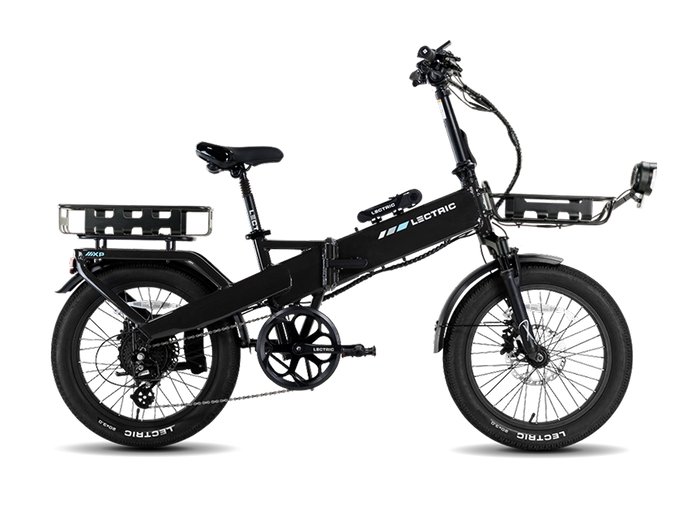
A torque sensor, hydraulic brakes, and a folding frame are the reasons to shortlist it. Power responds to how hard the rider pedals, which can feel more natural than a basic cadence-only system. The bike and battery system are also listed as certified to UL 2849 and UL 2271 respectively.
Our take: this is the strongest pedal-first commuter of the six, but it is not the speed leader. Buy it for controlled assistance and utility hardware, not because 28 mph is difficult to find at this price.
Choose it when: pedal feel, folding utility, and hydraulic braking matter more than exceeding 30 mph.
Jasion comparison: the X-Hunter costs less and lists a higher top speed, wider mixed-surface positioning, and full suspension. The XP4 750 answers with a torque sensor, hydraulic brakes, and a larger listed battery. That is a real decision, not a universal winner.
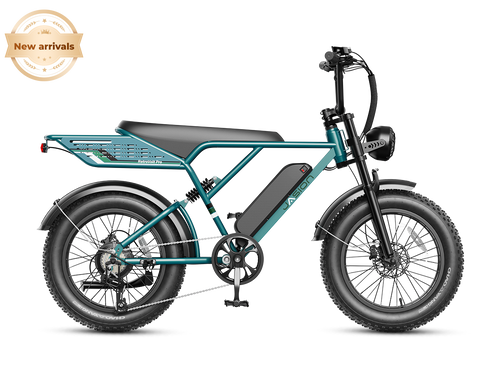
5. ENGWE M20 2.0: Moped Style With Battery Options
The ENGWE M20 2.0 is a moped-style choice with full suspension, hydraulic disc brakes, and 20 x 4-inch tires. Its current US page lists 750W rated power, 1,200W peak power, 75 Nm of torque, and an assist-mode maximum of 28 mph.
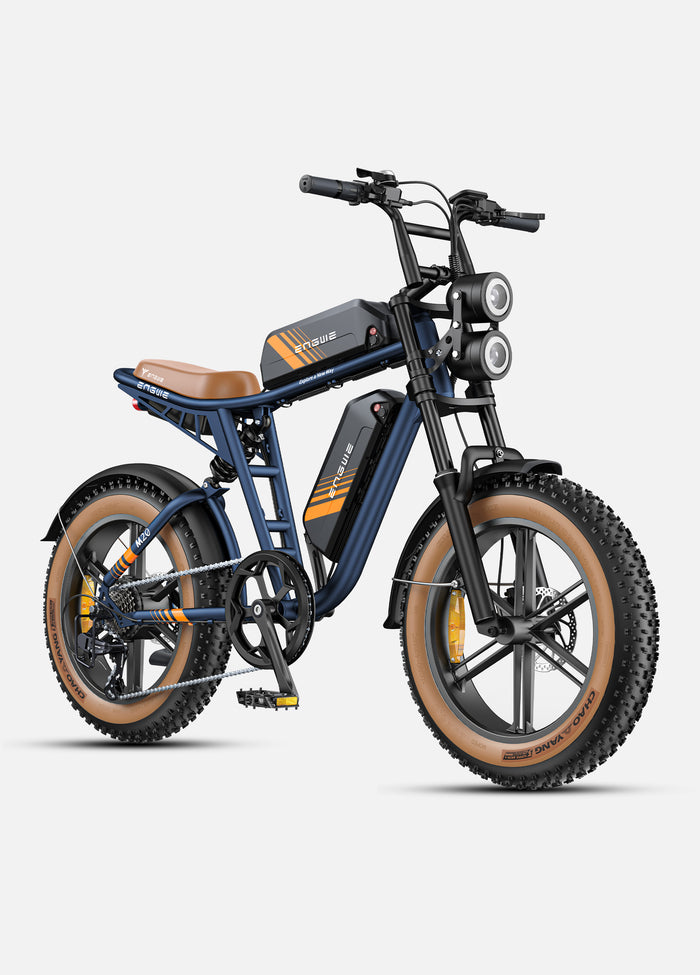
The single 52V 15.6Ah battery version was listed at $999, while the dual-battery version was $1,199 when checked. The second battery changes the appeal more than a small speed difference: it adds energy capacity for riders who value longer outings, but it also adds weight and charging responsibility.
Our take: the dual-battery option is the real reason to consider the M20 2.0. Its fixed moped-style seating is less adaptable than a conventional saddle, so riders should prioritize the riding position before being won over by the silhouette.
Choose it when: you like the long-seat moped format and want the option to buy more battery capacity without crossing $1,500.
Jasion comparison: Thunder Pro lists a higher top speed, a conventional adjustable bicycle saddle, a large single battery, and a lower starting price at the time checked. The M20 2.0 is the style-led alternative, especially for a shopper drawn to its dual-battery configuration.
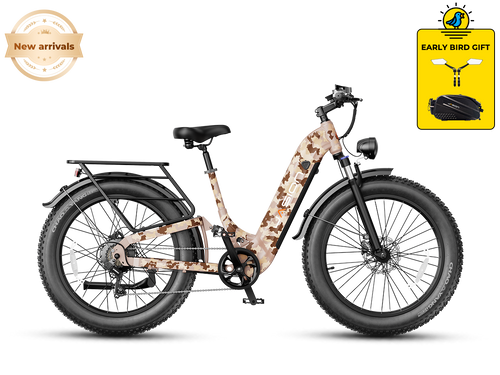
6. Heybike Ranger 3.0 Pro: Step-Through Folding Comfort
The Heybike Ranger 3.0 Pro sits exactly at the $1,499 ceiling. Its current page lists a 28 mph top speed, a 750W motor with 1,400W peak output, a 720Wh battery, a torque sensor, full suspension, and a step-through folding frame.
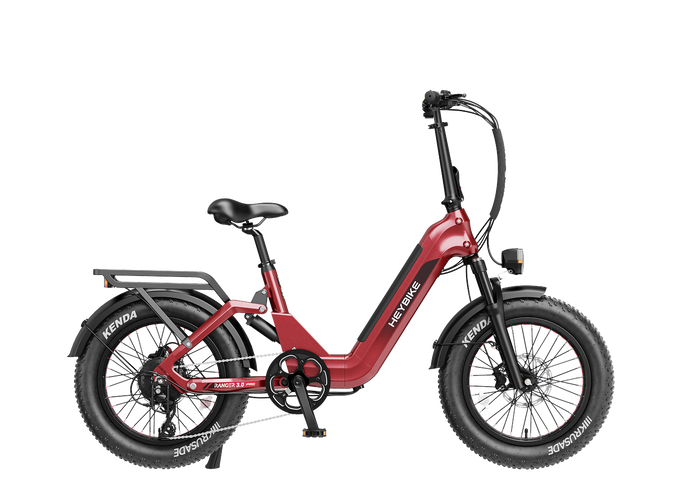
This combination is aimed at comfort rather than headline speed. Lower frame entry can make frequent stops easier, while the torque sensor changes how the assistance follows the rider. The listed maximum range is up to 90 miles, but the same range caveat applies: assist level, speed, route, load, and weather determine the usable result.
Our take: Ranger 3.0 Pro earns its place through accessibility, not value or speed. It uses the entire budget and carries the smallest stated battery in this comparison, so its step-through frame, folding design, and torque sensor need to be features the rider will actually use.
Choose it when: step-through access and smoother pedal response are worth using the full budget.
Jasion comparison: X-Hunter gives up the torque sensor and hydraulic braking but costs substantially less and lists a higher top speed. Thunder Pro costs less at the checked price while offering 35 mph, hydraulic brakes, and a larger 1,040Wh battery, although it is not a folding step-through bike.
What Actually Makes a Fast Ebike Worth Buying?
Start with the speed you can use
A 28 mph ebike is already fast enough for most paved commutes. Move to 30 or 35 mph when the route is open, grades are longer, or mixed surfaces make stronger acceleration and recovery more useful. A 40 mph bike is a different tool, best matched to private property and permitted off-road environments rather than chosen as a bigger-number commuter.
If you are comparing motor labels, the 750W electric bike speed guide explains why watts alone do not determine top speed.
Compare battery energy, not only range headlines
Battery energy in watt-hours is voltage multiplied by amp-hours. It is the cleanest first comparison across brands: Patrol is 1,560Wh, Thunder Pro is 1,040Wh, Lectric XP4 750 is 840Wh, and Heybike Ranger 3.0 Pro is listed at 720Wh. Watt-hours do not promise mileage, but they are far more useful than placing differently tested range headlines side by side.
Our rule is simple: do not plan a regular route around a brand's maximum range claim. Leave energy in reserve for wind, cold, detours, hills, and normal battery aging.
Match brakes and tires to the route
Hydraulic brakes appear on Patrol, Thunder Pro, Lectric XP4 750, and ENGWE M20 2.0. X-Hunter uses mechanical disc brakes. For repeated fast descents, heavier loads, and rough-road use, hydraulic braking is the better specification because it requires less hand force and self-adjusts as the pads wear. Mechanical discs remain serviceable and easier to tune with basic tools, which suits a value-focused bike.
Tires should follow the surface. Fat tires can add comfort and traction on gravel, sand, grass, and broken pavement, while a commuter-oriented tire can feel lighter and more direct on smooth roads. No tire turns every trail or weather condition into a safe route.
Check fit, weight, and storage before ordering
A folding hinge does not cancel the weight of a motor, battery, suspension, and fat tires. A moped-style seat may also offer less fit adjustment than a conventional saddle and seatpost. Compare the rider-height guidance, mounting style, handlebar reach, bike weight, and the exact path from storage to the street.
Leave room in the budget for ownership
The bike price is not the whole purchase. A suitable helmet, strong lock, pump, maintenance supplies, and any rack or cargo equipment should fit the budget too. Confirm replacement battery, brake pad, tire, and support availability before a low sticker price becomes the only reason to buy.
Are 30, 35, and 40 MPH Ebikes Street Legal?
Do not assume that a bike is a standard Class 3 ebike just because it can be configured near 28 mph. In states using the common three-class system, Class 3 generally refers to pedal assistance up to 28 mph and includes other equipment and motor requirements. Throttle behavior, motor power, assisted speed, pedals, and local definitions can change the classification.
Models capable of 30, 35, or 40 mph may fall outside standard ebike rules on public roads, bike lanes, shared paths, or trails. Check the rules for the state, city, road, and land manager where you will ride. The Jasion Class 1, Class 2, and Class 3 guide is a starting point, not a substitute for current local requirements.
Which Fast Electric Bike Under $1500 Should You Choose?
Choose Patrol when the highest published speed and off-road-oriented performance lead the decision. Choose Thunder Pro when you want 35 mph capability with a large battery, hydraulic brakes, and full suspension. Choose X-Hunter when the goal is 30+ mph folding value at the lowest price in this comparison.
The three market alternatives make the tradeoffs clearer. Lectric XP4 750 emphasizes torque-sensor folding utility. ENGWE M20 2.0 offers moped styling and one- or two-battery configurations. Heybike Ranger 3.0 Pro combines a folding step-through frame with a torque sensor and full suspension.
If top speed is not the main requirement, compare the broader Jasion electric bike collection for commuter, cruiser, cargo, folding, fat tire, moped-style, and trike options. You can also use the Jasion comparison tool to put current models side by side.
Frequently Asked Questions
Can you get a fast electric bike under $1500?
Yes. When checked on September 29, 2026, the six bikes in this guide ranged from 28 mph to a published 40 mph and were listed at $799 to $1,499. Prices can change, so confirm the current model and configuration before buying.
What is the fastest electric bike under $1500 in this comparison?
Jasion Patrol has the highest published top speed in this comparison at up to 40 mph. That figure is a manufacturer specification, not a guarantee that every rider or route will produce the same result.
Is 28 mph fast enough for an ebike?
For many paved commutes and recreational rides, yes. A 28 mph ebike already moves quickly relative to ordinary bicycle traffic. Fit, braking, route access, and battery capacity can matter more than adding a few miles per hour.
Should I choose a 35 mph or 40 mph electric bike?
Choose based on the complete bike and riding location. A 35 mph model such as Thunder Pro may provide a better balance of battery capacity, comfort, and mixed-surface use. Patrol makes more sense when off-road-oriented speed is the priority and you have an appropriate place to ride it.
Does a bigger battery always mean more range?
A larger battery provides more stored energy, but it does not guarantee a specific range. Speed, assist level, throttle use, hills, rider and cargo weight, tire pressure, surface, wind, temperature, and stops all affect consumption.
Are fast electric bikes under $1500 street legal?
It depends on the bike's configuration and the rules where it is ridden. Models exceeding standard 20 or 28 mph class limits may be treated differently on roads, bike lanes, shared paths, and trails. Verify current state and local rules before riding.


Share: