
 EU
EU
 UK
UK
 US
US
 CA
CA



Not sure what brakes are on your bike? Look at the wheel. Pads beside the rim mean rim brakes. A metal rotor near the hub means disc brakes. If the mechanism is hidden inside the hub, it may be a drum or coaster brake.
Once you know the type, finding the right pads, levers and service information becomes much easier.

Bike brake types at a glance
| Brake type | Where it works | Commonly found on | Main consideration |
|---|---|---|---|
| Rim brake | Pads press against the wheel rim | Road, city and older bikes | Simple and light, but rim condition matters |
| Mechanical disc brake | Cable moves pads against a rotor | Commuter, mountain and budget ebikes | Easy to inspect, with periodic cable adjustment |
| Hydraulic disc brake | Fluid pressure moves pads against a rotor | Mountain, cargo and performance focused ebikes | Smooth lever control, with more specialized service |
| Drum brake | Shoes press inside a hub mounted drum | Utility, city and low maintenance bikes | Protected from weather, but heavier and less accessible |
| Coaster brake | Backpedaling activates a hub brake | Cruisers and children's bikes | Simple controls, with limited pedal positioning while braking |
Most bicycle brakes slow the wheel through friction. The main difference is where that friction happens:
- Rim brakes use the outer wheel rim.
- Disc brakes use a rotor mounted near the hub.
- Drum and coaster brakes work inside the hub.
Pads, rotors or rims, tires, road surface, bike weight and cargo all play a part in how the bike stops.
Rim brakes
Rim brakes place rubber pads on both sides of the wheel rim. Pulling the lever draws the pads inward until they contact the rim.
They are easy to recognize because the arms and pads sit above or beside the tire. The three common versions are caliper, V brake and cantilever.
Caliper brakes
Caliper arms mount together above the wheel and pivot toward the rim. They are common on road and city bikes with narrower tires.
V brakes
V brakes use two long arms mounted separately on the frame or fork. A cable pulls them together. They are common on hybrids, older mountain bikes and utility bikes.
Cantilever brakes
Cantilever brakes also use separate mounts, with a straddle cable linking the arms. Riders may find them on touring, cyclocross and older mountain bikes.
Rim brakes are light and easy to inspect. Because the rim is the braking surface, dirt, water and rim wear affect how they feel.
Disc brakes
A disc brake uses a metal rotor attached to the hub. A caliper presses pads against both sides of that rotor. The setup works well with wide tires and is now common on mountain bikes and ebikes.
Disc brakes are divided by the way force travels from the lever to the caliper.
Mechanical disc brakes
Mechanical disc brakes use a steel cable to move the caliper. The parts are easy to inspect, and cable tension can usually be adjusted with basic tools. Over time, cable condition, pad wear and caliper alignment affect the lever feel.
Hydraulic disc brakes
Hydraulic brakes use fluid in a sealed hose to move pistons in the caliper. They usually feel smoother at the lever and require less hand effort. Pads and rotors still wear, while a soft lever or fluid leak needs proper inspection.
For a closer look at service, lever feel and riding conditions, read our hydraulic vs mechanical disc brake guide.
Drum and coaster brakes
A drum brake keeps its working parts inside or around the hub. Internal shoes press against a drum when the rider pulls the lever. The enclosed design keeps out much of the dirt and weather, although it adds weight and is less convenient to inspect.
A coaster brake is activated by pushing backward on the pedals. Its mechanism sits inside the rear hub, so the handlebar may not need a rear brake lever.
The simple controls suit some cruisers and children's bikes, but backpedaling can make it harder to reposition the pedals at a stop.
How to tell what brakes your bike has
- Look beside the hub. A thin metal rotor and caliper identify a disc brake.
- Look near the wheel rim. Pads that line up with the rim identify a rim brake.
- Follow the line from the lever. A visible steel cable indicates a mechanical system. A sealed hose leading to a disc caliper usually indicates hydraulic brakes.
- Check the rear hub. A large enclosed hub with an actuator arm may be a drum brake. A bike that stops when you backpedal uses a coaster brake.
- Read the manual. The model specifications are the safest place to confirm the system and compatible replacement parts.
Do not order pads based only on the words “disc brake.” Pad shape must match the actual caliper.
Which type of bike brake is best?
The right brake depends on the bike and how it will be ridden.
| Priority | Brake type often considered | Why |
|---|---|---|
| Lightweight road or city bike | Rim or disc | Both can work when matched to the bike and maintained |
| Simple cable service | Mechanical disc or rim | Cables and pads are easy to inspect |
| Heavy ebike, cargo or frequent hills | Hydraulic disc | Smooth control and lower hand effort suit higher braking demand |
| Low maintenance utility use | Drum | Enclosed braking surfaces receive less exposure |
| Simple cruiser controls | Coaster | Backpedaling activates the rear brake |
Changing brake type is more involved than swapping pads. Frame and fork mounts, rotors, hubs, levers and cable or hose routing all need to match.
Why disc brakes are common on ebikes
Ebikes often weigh more than unpowered bicycles and may carry cargo or use wide tires. Disc brakes work independently of the wheel rim and can be configured for a wide range of bikes.
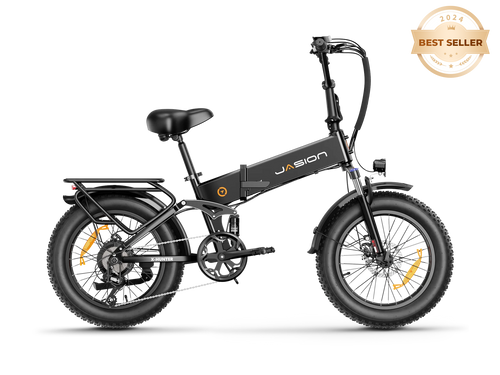
The Jasion X Hunter uses mechanical disc brakes, giving riders a cable operated system that is easy to inspect.
The Jasion Hunter Pro pairs hydraulic disc brakes with 20 × 4 inch tires and full suspension. The choice reflects the complete bike, not one isolated specification.
Compare more models in the JasionBike electric bike.
Ebike brake levers can do more than pull a brake
On some ebikes, the brake lever also cuts motor power or activates a brake light. A replacement may therefore need to match the electrical connections as well as the brake.
A brake icon, motor cutoff problem or E64 code may involve a sensor or connector rather than the pads and rotor. Our ebike troubleshooting guide covers the basic checks.
Regenerative braking is another electrical feature found on some electric vehicles and a limited number of ebikes. It uses the motor to help slow the wheel, but it does not replace normal front and rear brakes. Do not assume a bike has it unless the product specifications say so.
Signs the brakes need attention
Inspect the bike before riding if you notice any of the following:
- The lever pulls unusually close to the handlebar.
- Braking feels noticeably weaker than before.
- The lever feels soft, sticks or does not return normally.
- The rotor or rim shows damage.
- The pads are worn, contaminated or uneven.
- Fluid appears near a hydraulic lever, hose or caliper.
- The brake makes a new grinding sound.
- The bike pulls strongly to one side during braking.
Noise alone does not identify the cause. Do not spray lubricant near pads, rotors or wheel rims. If braking performance has changed and the cause is unclear, stop riding and have the system inspected.
Frequently asked questions
What are the main types of bike brakes?
The main categories riders encounter are rim brakes, disc brakes, drum brakes and coaster brakes. Disc brakes are further divided into mechanical cable operated and hydraulic fluid operated systems.
How do I know what type of brakes my bike has?
A rotor next to the wheel hub indicates disc brakes. Pads that squeeze the wheel rim indicate rim brakes. An enclosed hub mechanism may be a drum or coaster brake. Check the bike manual to confirm the exact system.
Are disc brakes better than rim brakes?
Disc brakes suit many mountain bikes and ebikes, while rim brakes remain a practical option on lighter road and city bikes. Bike design, riding conditions, maintenance and compatible parts matter more than choosing one label for every rider.
What is the difference between mechanical and hydraulic disc brakes?
Mechanical disc brakes use a steel cable to move the caliper. Hydraulic disc brakes use fluid pressure. Mechanical systems are straightforward to inspect, while hydraulic systems typically provide a smoother lever feel with more specialized service.
Do ebikes need special brakes?
The brake system must be suitable for the bike's weight, speed, payload and intended use. Some ebike brake levers also include motor cutoff or brake light connections, so replacement parts may need electrical as well as mechanical compatibility.
Is regenerative braking a type of bike brake?
Regenerative braking is a motor function available on some electric vehicles and a limited number of ebikes. It can assist with slowing but does not replace a normal front and rear braking system.


Share: