
 EU
 UK
 US
 CA



The best ebikes for delivery depend on the route, order size, charging access, and where you will store the bike. A commuter with a compatible rack can work for occasional small orders; frequent shifts or larger bags may call for a cargo setup. Our Jasion Kago Cargo Ebike is one compact utility option, with two batteries and an extended rear rack. This guide helps you check whether that format fits your work before you buy.
Which Ebike Setup Fits Your Delivery Work?
Start with the largest order you normally accept and the distance between charging opportunities. A few evening deliveries and a full day of courier work can call for different bikes. Storage matters, too: check the doorway, elevator, and parking space you will use every day before choosing a cargo format.
| Your routine | Setup to consider | What should decide the purchase? |
|---|---|---|
| Regular deliveries with a rack-mounted insulated bag | Compact utility cargo ebike, such as Kago | Battery capacity, bag attachment, charging access, and room to park the loaded bike |
| Occasional deliveries with smaller orders | Commuter ebike with an approved rack | Support for your actual bag and load without heel or wheel interference |
| Bulky orders needing a larger carrying platform | Longtail cargo ebike | Usable rack area, accessory ratings, turning room, and storage length |
| Trying delivery work before committing to ownership | Delivery rental or fleet plan | Total fees, repair turnaround, theft liability, and replacement-bike access |
For riders comparing electric cargo bikes, the useful question is how the load fits. A longer rack only helps when the bag is supported, firmly attached, and easy to open at pickup. A compact setup only helps when you can maneuver and store it comfortably.
Does the Jasion Kago Fit Your Delivery Route?

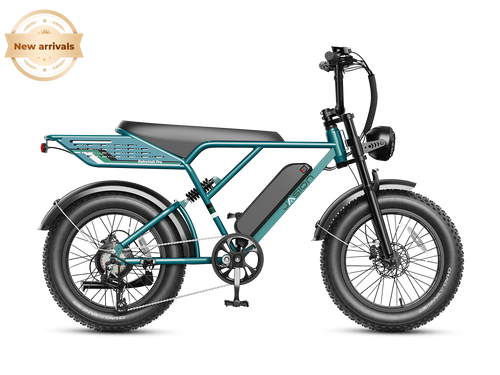
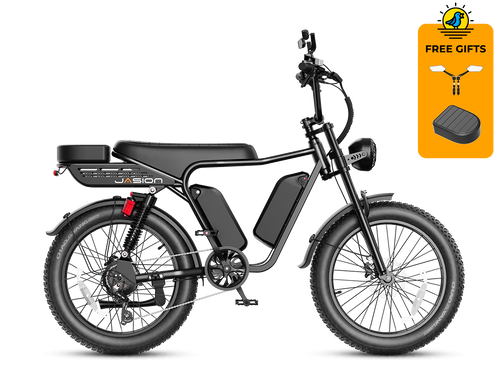
The Jasion Kago Cargo Ebike pairs a dedicated carrying platform with two 52V 20Ah batteries. Together, those batteries provide 2,080Wh of nominal energy. That gives you a substantial capacity figure to work with when planning the distance between charges, rather than choosing a bike from a motor-power headline alone.
The extended rear rack gives you a platform to plan around, but it does not confirm that a particular delivery bag or box fits. Kago measures 63.78 inches long overall, so compare that with your storage space, elevator, and any tight turn between the entrance and your parking spot. The listed rider-height range is 5'4" to 6'2". Use that as a starting point, then check reach and mounting comfort on a test ride when possible.
The product page lists Kago at 94 lb. If your daily parking involves stairs, plan how you will move a bike of that weight; the step-through frame does not make it lightweight. Before installing a bag or basket, measure its loaded footprint against the support area and verify the separate rack and accessory limits. The product page does not publish a delivery-bag fit guarantee, so check steering, pedal, wheel, light, and strap clearance with the actual setup.
Kago also has front suspension, 20 x 3-inch tires, hydraulic disc brakes, a headlight, a rear brake light, and turn signals. For a courier, these are relevant equipment choices: suspension for uneven pavement, brakes for repeated stops, and lighting for visibility as daylight changes. They complement careful riding and regular maintenance.
Our up-to-120-mile range estimate is a listed maximum, not a guaranteed delivery shift. Your route, load, temperature, tire pressure, speed, and assist use affect range. The worksheet below helps you estimate a route's energy needs; it cannot establish how far Kago will go on a specific shift.
How Much Battery Do You Need for a Delivery Shift?
Count every mile you ride, including the trip to your delivery area, riding between orders, repositioning while waiting, and the journey home. Paid delivery distance alone leaves part of the workday out of your calculation.
Compare batteries in watt-hours: nominal volts x amp-hours = watt-hours. A hypothetical 48V 15Ah battery holds 720Wh; a hypothetical 48V 20Ah battery holds 960Wh. Those are different capacities even if both bikes advertise the same maximum mileage. Kago's calculation is 52 x 20 x 2 = 2,080Wh.
A worked example: planning a 40-mile day
Suppose your total route is 40 miles and, for illustration, you set aside 20% of nominal capacity as a reserve. The table shows how the calculation changes with battery-side energy use. The 20, 30, and 40Wh-per-mile figures are hypothetical planning inputs, not measured Kago results, an industry standard, or a promise that Kago will complete a 40-mile shift.
| Assumed consumption | Energy for the route | Nominal capacity needed |
|---|---|---|
| 20Wh per mile | 800Wh | 1,000Wh |
| 30Wh per mile | 1,200Wh | 1,500Wh |
| 40Wh per mile | 1,600Wh | 2,000Wh |
The formula is route miles x battery-side Wh per mile / 0.8. Here, Wh per mile means energy drawn from the battery during riding; it does not include electricity lost at the wall while charging. The 20% reserve is only an example chosen for this calculation, not a Jasion recommendation. Nominal capacity is not a measured range, and cold weather, battery age, hills, and heavy throttle use can change the result. Kago's 2,080Wh nominal figure alone cannot guarantee a shift distance.
Once you own the bike, keep a log of distance, load, weather, assist level, and remaining charge over several comparable rides. Use that record to decide when to head home or recharge. A display's battery percentage is only an estimate, so avoid treating it as a precise energy meter. Our ebike battery care guide explains charging, storage, and the factors that reduce range.
Will Your Delivery Bag Actually Fit?
Bag volume in liters does not tell you whether it will fit a rack. Measure the bag's loaded base and the rack or compatible basket it will sit on. Then check the opening: a bag that fits but cannot unzip without hitting the saddle will slow you down at every restaurant.
- Measure the supported footprint. Record the bag's base length and width, usable platform area, and spacing of approved attachment points. Follow the bag and rack instructions for support and overhang.
- Check the real load. Add the empty bag, basket, mounting hardware, lock, and typical order. Keep within both the bike's total load limit and the separate rack or accessory limits.
- Check movement and visibility. With the bike powered off, turn the handlebars, rotate the pedals, and inspect wheel clearance. Nothing should contact a tire, interfere with steering, catch your heels, or obscure the rear light.
- Secure loose parts. Fasten straps so they cannot reach a wheel or drivetrain. Use the approved mounting system rather than depending on the bag's weight to keep it in place.
- Try a representative load away from traffic. Practice mounting, parking, turning, and controlled stops before taking orders. Recheck attachments afterward.
Keep drinks upright in suitable internal holders and separate items that can crush or spill. An insulated bag cannot correct an unstable mount. Choose the bag around the orders you can carry securely, and avoid hanging takeaway bags from the handlebars.
Compare the Cost of Buying and Renting
Compare rental and ownership over the same number of weeks and include the same cost categories on both sides. For either option, account for the bag and mounting hardware, lock, electricity, routine wear, repairs not covered by a plan, and theft or damage costs you would owe. A warranty is not a maintenance plan; normal wear items need their own budget.
For renting, add rental fees and nonrefundable charges, then subtract only the service or insurance the agreement actually includes. For ownership, add purchase price, setup, maintenance, electricity, and any financing or insurance costs, then subtract estimated resale value. A hypothetical $60 weekly rental totals $1,560 over 26 weeks before deposits, fees, equipment, charging, or uncovered repairs. This is an example, not a quoted offer. Use your own local terms for a fair comparison.
Electricity is easier to estimate than many repair costs. If a plug-in meter records a hypothetical 1.5kWh for a recharge and your electricity rate is $0.20 per kWh, that recharge costs $0.30. Use energy drawn at the wall when available: battery capacity alone leaves charging losses out of the bill.
Repair turnaround can matter more than a small difference in purchase price. Ask a local shop whether it works on the bike's brakes, wheel and tire size, and electrical system. For rentals, read the deposit, deductible, theft, repair, and replacement-bike terms. For ownership, review our Jasion ebike warranty and keep a separate allowance for wear items. If you plan to use a bike for regular paid delivery work, confirm with Jasion support how the current warranty terms apply to that use; we do not promise coverage or claim that delivery automatically voids it.
Build a Routine Around Stops, Charging, and Maintenance
Make parking repeatable
Choose a lock you can carry and use at every pickup. Secure the frame to an immovable bike rack; locking only a wheel leaves the rest of the bike vulnerable. A battery lock retains the battery but does not secure the frame. Our guide to how to lock an ebike explains lock types, placement, and wheel protection.
Plan charging before the first shift
Check where you can charge, whether the property permits it, and whether you can remain present. Use only the supplied or approved charger. A plug that fits does not establish compatibility, and a restaurant stop does not automatically provide enough time or permission to recharge.
Inspect wear rather than guessing a mileage interval
Before riding, check tire condition and pressure, brake response, lights, wheel security, and bag mounts. After wet or gritty shifts, clean and dry the bike and check the drivetrain. Frequent stops, hills, and load affect brake wear, so inspect the pads against the brake maker's wear limit instead of replacing them at an arbitrary odometer reading. See when to replace ebike brake pads for symptoms and inspection steps.
Delivery Ebike FAQs
What is the best ebike for food delivery?
For regular deliveries with a rack-mounted bag, prioritize a utility cargo ebike with enough battery for your full route. We recommend Kago for riders seeking dual batteries and a dedicated rear carrying platform in a compact utility format. For occasional small orders, a commuter with an approved rack may be enough; bulky orders can justify a longer cargo platform.
Can I use an ebike for Uber Eats or DoorDash?
Check the platform's signup options for your city before buying. Confirm that bicycle or ebike delivery is available and that your vehicle meets the applicable requirements; local riding rules also apply. Choose the correct vehicle mode rather than assuming an ebike qualifies because a car or bicycle account is available. This guide does not establish platform approval for a specific model.
Is a backpack or a rear-rack bag better for delivery?
A rear-rack bag moves the order's weight off your shoulders, but it needs a supported base and compatible attachment system. A backpack is easier to carry into a restaurant and can suit smaller orders, though the weight stays on you. Choose based on the loaded weight, drink stability, and how securely the bag fits; neither option makes an oversized order manageable.
Can I deliver food on an ebike in the rain?
Follow your model's water-exposure limits and use a bag that protects orders. Leave more stopping space, avoid floodwater, and keep lights visible. Dry the charging port and relevant connections before charging. Our guide to riding an ebike in the rain covers road hazards and care after the ride; water resistance is not permission to submerge a bike.
Will a more powerful motor make deliveries faster?
Motor wattage alone cannot predict shift productivity. Legal riding speeds, restaurant waits, traffic, parking, cargo handling, and battery use all affect the day. Compare rated and peak power on the same basis, but give route fit, braking, carrying space, and service access equal attention. Never build an earnings estimate from a bike's advertised top speed.
What should I check before buying an ebike for delivery?
Bring your total route distance, loaded bag measurements, storage dimensions, and charging plan. Confirm rider fit, the separate bike and rack load limits, accessory compatibility, local service, and the terms for your intended use. If your daily parking involves stairs, check the complete bike's weight and how you will move it before ordering.
Can I charge both Kago batteries at the same time?
The product-page charging note gives a 5–6-hour charge time but does not say whether that applies to one battery or both batteries together, or confirm simultaneous charging and the number of included chargers. Ask Jasion support to confirm the current charger configuration before planning a turnaround between shifts.
Choose your bag and charging plan alongside the bike. Kago is our compact cargo option for riders who want dual-battery capacity and a rear carrying platform; if you also want to compare commuting and recreational formats, browse our electric bikes.


Share: