
 EU
 UK
 US
 CA



The best ebike under $1,000 depends on the daily hassle you most want to remove. If your route mixes patched pavement or gravel connectors and you need the option to fold the bike for storage, start with the Jasion X-Hunter; for paved errands with frequent stops, the step-through EB5 Roamer ST is the simpler fit; and for riders who want a long, moped-style seat, consider the RetroVolt Pro. Check the X-Hunter's folded dimensions and full-bike weight against your actual storage and lifting situation before treating it as an apartment or car fit.
Prices in this guide are the US bike prices displayed on November 11, 2026, before tax and optional accessories. A bike that is under $1,000 before tax may cost more after tax, delivery, a lock, or other gear. Prices and stock can change, so check the selected version before ordering.
Best Ebikes Under $1,000: Which One Fits Your Ride?
| Bike / listed price | Choose it for | Why a buyer picks it | Look elsewhere if |
|---|---|---|---|
| Jasion X-Hunter $799 |
Mixed city paths; storage space is tight | The folding format can make storage easier, while the wider tires and front/rear suspension are relevant when your regular route includes patched pavement or gravel connectors rather than smooth streets alone. | Confirm the folded bike fits your space and that you can lift its full weight. Folding solves volume, not stairs. |
| Jasion EB5 Roamer ST $699 |
Stop-and-go paved errands | The step-through city layout makes mounting simpler at frequent stops, while its listed lights and lower price leave more of a $1,000 budget for a lock, helmet, or setup. | It does not fold and has only a front fork. Pick a different format for compact storage or rougher routes. |
| Jasion RetroVolt Pro $899 |
You want a long, moped-style seated ride | Its seated-cruiser format, front/rear suspension, and listed 1,040Wh battery make it distinct from upright commuters; choose it for the riding position, not an assumed mileage outcome. | It needs more room than a conventional city bike. Verify rider fit and passenger guidance before planning two-up use. |
| Ride1Up Portola 02 Lite, 15Ah $895 in Cloud White |
A compact folder with battery capacity priority | At $895, it combines a 15Ah battery with torque/cadence sensing and hydraulic brakes for the rider who puts those ahead of a ready-to-go commuter kit. | The Lite omits rack, fenders, and rear light. Add the cost of equipment you need before comparing totals. |
| Lectric XP4 500W Step-Over $999 |
Folding plus torque-sensor assist | The 500W configuration combines torque sensing, hydraulic brakes, and an 8-speed drivetrain for riders prioritizing those controls and components in a folder. | $999 leaves almost no room for tax or gear. Confirm the complete-bike weight if you need to carry it often. |
| ENGWE L20 2.0 $699 |
Fold it and commute without adding basics | The step-through folder includes a rack and fenders at $699, avoiding the accessory shopping the Portola Lite requires. | It uses mechanical brakes. Compare brake setup, care, and the exact accessories you need before deciding. |
| Kingbull Hunter 2.0S, bike only $949 |
A full-size fat-tire frame with a rack | The 26 x 4 in layout and listed 864Wh battery fit buyers who want a full-size format rather than a folding bike. | Check the actual standover, total load limit, and storage footprint. Choose a step-through or compact model if those are constraints. |
| Retrospec Beaumont Rev 3 Step-Through $999.99 |
An equipped, upright city cruiser | Step-through access, rack, fenders, and 7-speed gearing arrive as one conventional city package. | The bike alone is $999.99 before tax or delivery. It leaves virtually no budget for essentials. |
| GOTRAX CTI Commuter, Dolphin $599 |
Keep the purchase price low on simple routes | Its $599 listed price is the lowest in this group; the simpler city setup can make sense when the route is short, paved, and predictable. | No suspension or fenders, 15.5 mph listed top speed, and a smaller battery. Add needed gear before comparing total cost. |
| Actbest Core 2.0 Plus, standard $699 |
Torque-sensor controls at a lower price | It brings torque-sensor positioning to a $699 city-bike format, with 27.5-inch wheels and a front fork. | Its up-to-100-mile figure is a maker claim, not a verified commute range; few independent test details are available here. |
10 Ebikes Under $1,000 for Different Riders
A sub-$1,000 purchase is usually about removing a daily inconvenience: storing the bike, mounting at frequent stops, riding a particular posture, or avoiding a second round of accessory shopping. The recommendations below start with Jasion's three different fits, then compare them with seven models that solve related problems in other ways.
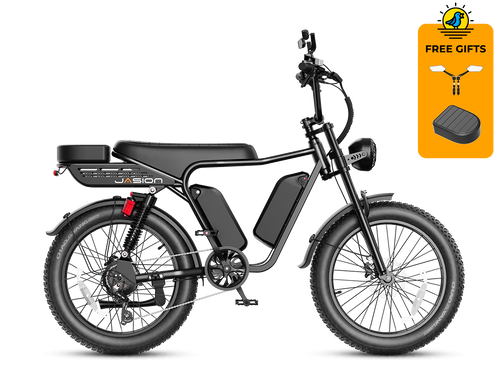
1. Jasion X-Hunter: Folding Fat-Tire Versatility

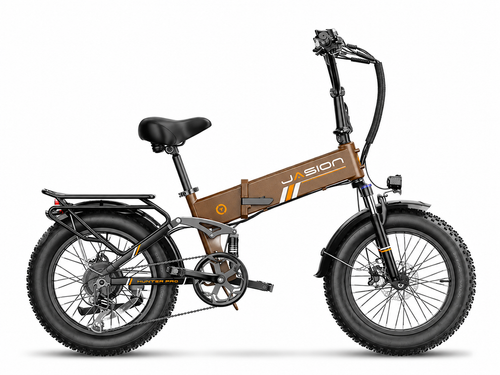
The X-Hunter is worth considering when two needs collide: you want a wider-tire bike with front and rear suspension, but a full-size frame is difficult to store. Its 20 x 4 in tires, suspension at both ends, and folding frame address those constraints in one $799 package. This is a feature-based fit, not a claim that we have tested it on every path; if rough surfaces are a major part of your riding, confirm the maker's intended use and test the ride feel before relying on it for that job.
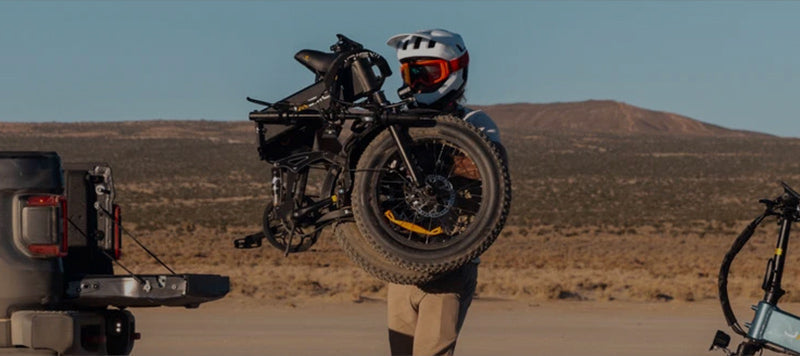
There is a practical boundary: a folding bike can be easier to fit into a storage area, but it can still be awkward to carry, and a wide-tire bike takes more room than its folded outline may suggest. Measure the actual doorway, trunk, or storage corner and confirm the complete-bike lifting weight before ordering. If your ride is almost entirely smooth pavement, the lighter-duty city format of the Roamer ST may be the more sensible use of your budget.
Choose the X-Hunter when your problem is fitting a more substantial bike into limited storage and you can manage its full weight. If the real problem is carrying a bike up stairs every day, or you ride only smooth streets, compare the Roamer ST's simpler city format instead.
2. Jasion EB5 Roamer ST: For Stop-and-Go City Riding

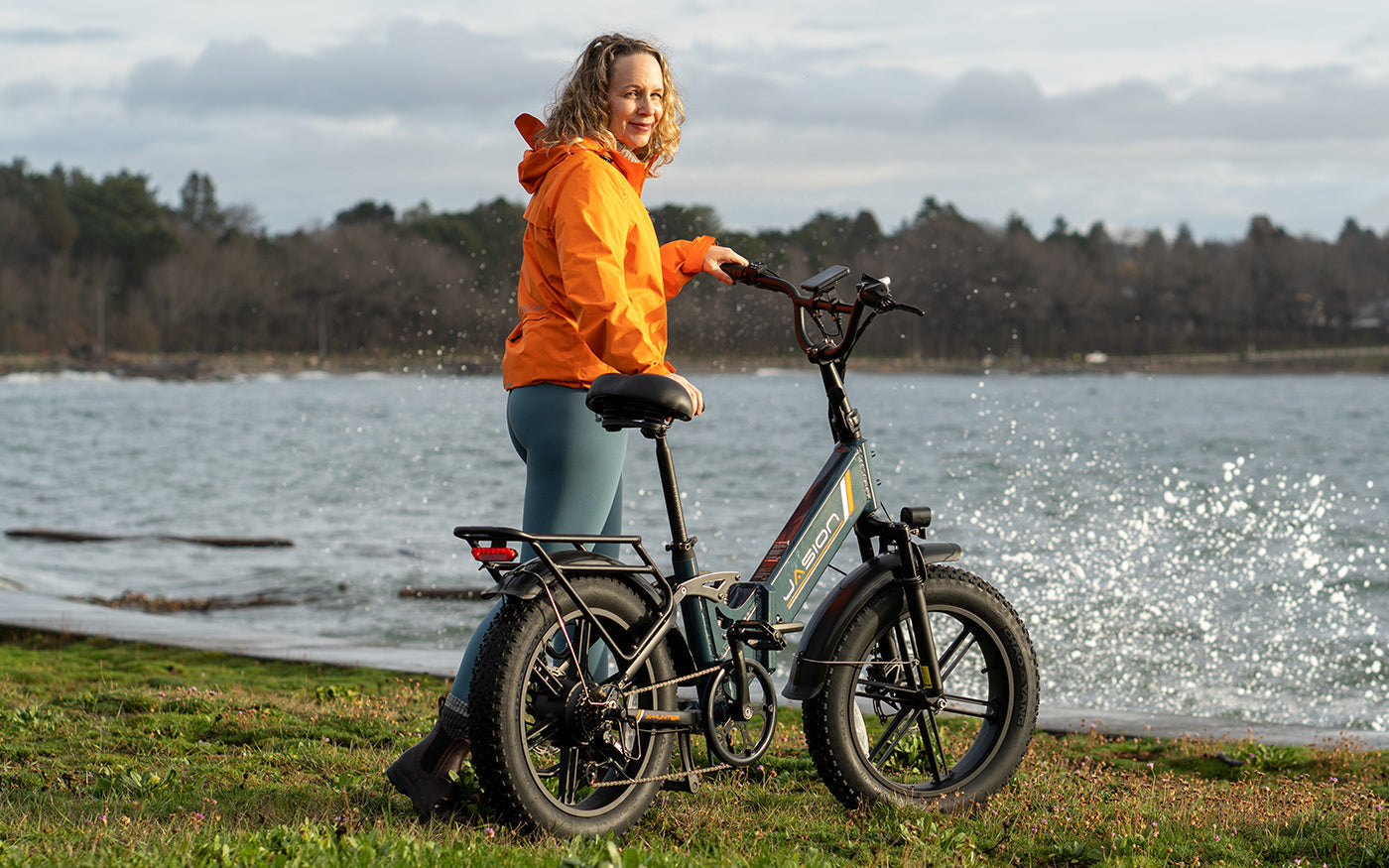
At $699, the EB5 Roamer ST is the straightforward Jasion option for paved daily riding: a step-through frame, 26 in wheels, front fork, and turn, brake, and rear lights. It avoids paying for a folding hinge or a wide-tire layout, which is useful if you lock the bike outside work, make frequent stops, and have ordinary city streets rather than rough trails to cover. Against the Beaumont Rev 3, it also leaves more room in the budget for a lock, helmet, or setup while retaining a step-through city format.
The Roamer ST's strongest case is not a headline range figure; it is the uncomplicated fit between its city-bike layout and paved daily use. Range depends heavily on assist level, throttle use, stops, rider load, hills, and temperature, and the current product copy does not state the battery capacity consistently enough to calculate watt-hours. Plan around your round-trip distance and reserve, and confirm the current battery specification before comparing it with a model whose capacity is clearly stated. The tradeoffs are straightforward: it does not fold and uses a front fork rather than full suspension.
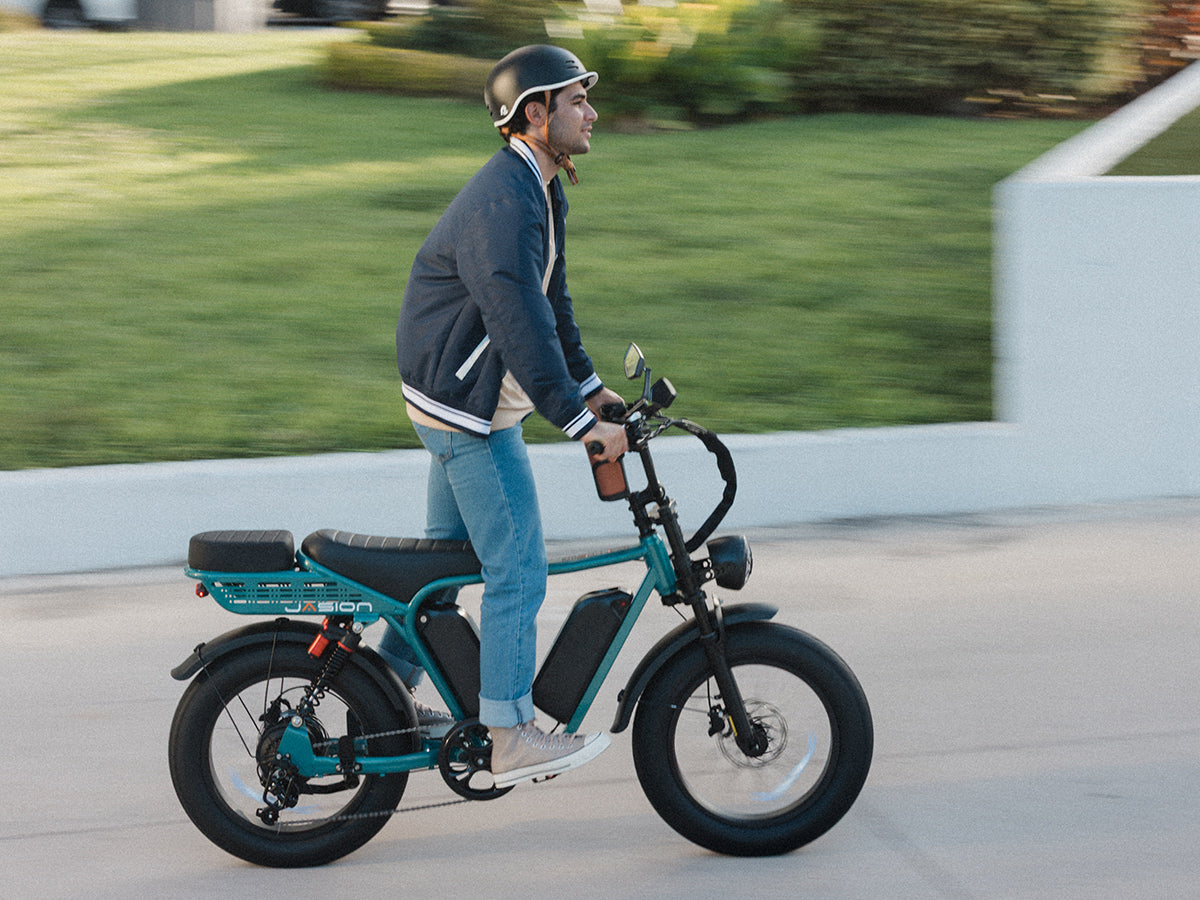
3. Jasion RetroVolt Pro: For a Moped-Style Seated Ride

The RetroVolt Pro is the choice for someone who actively wants a long, moped-style seated riding position rather than a conventional bicycle posture. Its listed 1,040Wh battery also gives it substantially more stored energy than the 374Wh Beaumont Rev 3, which can be appealing if your rides are longer or you want more reserve between charges. Capacity alone cannot predict your range or charging interval; speed, assist level, terrain, temperature, and rider load still matter. At $899, its case is the combination of that seated format, front/rear suspension, and listed battery capacity.
Before choosing it, decide whether you actually want to ride in this posture: it is less like a standard step-through commuter, and the longer seat takes more space at home. If you are considering the rear pegs for a passenger, verify their position against the rider's crank and foot path in person, then confirm passenger use with the manufacturer. For easy mounting at frequent stops, the Roamer ST is the more direct fit.
4. Ride1Up Portola 02 Lite 15Ah: Battery Before Accessories
The Portola Lite suits a buyer who already has a way to carry a bag and ride in wet weather, but wants a larger-capacity battery in a compact folder. The $895 configuration pairs its 15Ah battery with torque-and-cadence sensing, hydraulic disc brakes, a 100mm fork, and 20 x 3 in tires. The folded dimensions are listed as 36 x 19 x 29.5 in, so measure your actual storage opening before buying.
For a work commute, the missing pieces matter more than the feature list: the Lite omits the rack, fenders, and rear lighting included with the standard Portola 02. Add the cost of whatever you need and compare the total with the ENGWE L20 2.0, which includes a rack and fenders for less but has a smaller listed battery. Choose the Portola if battery capacity and hydraulic brakes are your priorities; choose the L20 if arriving ready to carry everyday gear matters more. “Up to 60 miles” is a manufacturer estimate, not a route guarantee.
5. Lectric XP4 500W Step-Over: A Feature-Rich Folder Near the Price Ceiling
The XP4 500W suits a buyer who is willing to spend nearly the full budget on the bike itself to get a specific mix: folding storage, torque-sensor assist, hydraulic brakes, and an 8-speed drivetrain. That makes it a useful alternative to the $699 ENGWE L20 2.0, which costs less and includes a rack and fenders but uses mechanical brakes. The choice is less about which has the bigger wattage number and more about whether you value the XP4's listed controls and components enough to give up budget for accessories and tax.
At $999 before tax, the XP4 is a poor fit for a strict $1,000 all-in budget. Before checkout, reserve money for a helmet, lock, and any delivery or assembly costs; if those push the total too high, the L20 or Roamer ST leaves more room for essentials. Check the exact variant as well: the 500W step-over is the configuration in this guide, while the $1,325 750W/17.5Ah upgrade is a different model setup.
6. ENGWE L20 2.0: Step-Through Folding Utility
The L20 2.0 solves the “folder, but ready for errands” problem better than the Portola Lite: it has a low step-through frame, folding design, rack, and fenders for $699. ENGWE lists a 750W rated motor and 1,125W peak, 75Nm torque, 52V 13Ah battery, 20 x 3 in tires, front-fork and seatpost suspension, and mechanical disc brakes. Those numbers describe a well-equipped utility package; compare rated power with rated power and peak with peak, rather than treating a larger peak figure as a hill-climbing test.
The L20's appeal is avoiding the extra shopping that can make a low-priced ebike less affordable in practice. At $699, the listed step-through folding setup includes a rack and fenders, which can matter immediately if you carry a work bag or ride in wet conditions. Those features make it a practical alternative to the Portola Lite, which puts more emphasis on battery capacity but omits those accessories. The L20 uses mechanical disc brakes, so confirm that they are properly adjusted after assembly and include routine brake care in ownership; choose the Portola or XP4 if hydraulic brakes are a priority. As with any folder, check its full weight before planning regular stair carries.
7. Kingbull Hunter 2.0S: Full-Size Fat-Tire Option
The Hunter 2.0S is the full-size alternative to the folding X-Hunter: 26 x 4 in tires, a rear rack, a listed 864Wh battery, a 750W motor, and hydraulic brakes. The bike-only Black and Hunter Green versions are $949; the power-station bundle costs more and is outside this comparison. Choose this layout if larger wheels and a full-size frame matter more than folding storage. The listed equipment supports that use-case distinction, but does not establish that it is better on every surface or hill.
The decision is mainly about frame scale. A full-size 26-inch fat-tire bike gives you a different wheel format and footprint from a compact folder. Fit still comes down to the actual frame geometry, so confirm the standover measurement against your inseam before ordering; do not infer it from the model name or tire size. For steep climbs or towing, neither a 750W label nor a large battery settles the question: verify the total load limit and assess the grade you will ride. If step-through access or compact storage is non-negotiable, the Hunter 2.0S is the wrong format.
8. Retrospec Beaumont Rev 3: Upright City Cruising
The Beaumont Rev 3 is the most conventional city cruiser in this comparison: a step-through steel frame, upright posture, 7-speed gearing, rack, and fenders. Retrospec lists a 350W rear hub motor, 36V 10.4Ah battery (about 374Wh), and up to 42 miles. For a buyer who wants a familiar city-bike setup with carrying and weather basics already included, that may be preferable to a folder with a larger battery but missing commuter accessories.
Its value is less compelling if your $1,000 cap is all-in rather than bike-only: the listed $999.99 price leaves no room for tax, delivery, or required accessories. Retrospec's up-to-42-mile figure is a manufacturer estimate, not a guarantee for a daily route. The Beaumont makes more sense when its conventional upright fit and included city equipment matter more than leaving spare budget or choosing a larger listed battery.
9. GOTRAX CTI Commuter Dolphin: Entry City Riding
The CTI Dolphin has the clearest low-price role: at $599, it is for a shorter or flatter city commute where keeping the initial purchase price down matters more than suspension, speed, or a larger battery reserve. GOTRAX lists a 350W motor, 36V 7.8Ah battery, 27.5 in wheels, mechanical brakes, a 66 lb weight, and 15.5 mph top speed. The $400 difference from a $999 bike can cover essential gear and setup, but only if its simpler equipment fits your route.
At this price, the buyer should evaluate what is absent as carefully as what is included. The listed Dolphin configuration has no suspension or fenders, uses mechanical brakes, and is rated for a 15.5 mph top speed. That can be a sensible low-cost setup for predictable paved routes; it is a poor match for broken pavement, frequent wet-weather riding, or anyone expecting a fast, high-capacity commuter. Add the cost of the equipment you actually need before treating the $599 sticker as the full value.
10. Actbest Core 2.0 Plus Standard: Torque-Sensor City Riding
The Core 2.0 Plus fills a specific gap in this shortlist: a $699 city-style bike with torque-sensor positioning, 27.5 x 2.1 in tires, and a front suspension fork. The Standard version has a listed 48V 12Ah battery; the front-basket version costs $734. Actbest advertises 1,200W peak and up to 100 miles, but neither the peak figure nor the maker's maximum range establishes how it will perform on your commute. Its case rests on the listed control style and format at this price, with less independent test evidence than the XP4, L20 2.0, and Beaumont.
Torque sensing is the Core's differentiator on paper: assistance is intended to respond to rider input rather than only a cadence trigger. That can appeal to riders who want a more connected pedal feel, but sensor type alone does not tell you how smoothly a particular controller is tuned. Actbest's “up to 100 miles” is a manufacturer maximum, not an independent commute result. Buy for the listed control format and price, not on the assumption that the range claim is typical; if a verified distance is essential, favor a model with a clearly documented test under conditions close to your own.
How to Choose an Ebike Under $1,000
Start With Your Route and Storage
For mostly paved city riding, prioritize fit, brake setup, lights, fenders, rack needs, and battery removal. A step-through design can make mounting simpler, but it does not guarantee fit for every rider. For mixed surfaces, tire width and suspension layout matter; a fat tire is not a substitute for a frame designed for demanding mountain-bike trails. If the bike must go in a trunk or closet, measure the folded bike and the opening it must pass through.
When storage involves stairs, compare the bike’s actual lifting weight with what you can safely handle. Removable batteries make indoor charging more convenient, but they do not make the remaining frame light. If you are still choosing among our own models, see Jasion ebikes under $1,000 for the brand-only comparison.
Compare Battery Capacity and Range Claims
Battery capacity in watt-hours is calculated as volts multiplied by amp-hours. It is a useful way to compare energy storage when both numbers refer to the same battery configuration. It is not a direct mileage guarantee. Speed, rider and cargo weight, hills, temperature, tire pressure, stop frequency, and throttle use all change energy use.
Read “up to” range as a manufacturer’s maximum estimate under its stated conditions. For a daily commute, calculate your round-trip distance and leave a practical reserve rather than choosing a bike from its largest advertised range number. If you need a specific range, ask the seller for the test setup and battery configuration behind that claim.
Check Fit, Brakes, and Serviceability
Confirm minimum and maximum seat height, reach, standover, and the handlebar position for your body. Then check brake type and whether the bike arrives assembled and adjusted. Hydraulic and mechanical disc brakes both need maintenance; the label alone does not establish stopping distance or setup quality. Ask how to obtain replacement brake pads, tires, batteries, and other wear parts, and whether a local shop is willing to service the model.
Budget for the Bike You Can Actually Use
Under $1,000 here refers to the listed bicycle price before tax, not the full cost of riding. Include a properly sized helmet, a strong lock, any required rack or fenders, delivery, assembly, and initial brake or gear adjustment in your budget. Compare included accessories carefully: a bike with a rack and lights may reduce add-on costs, while optional bundles can move a near-$1,000 bike over your total spending limit.
Is a Fat-Tire Ebike Under $1,000 Right for You?
Choose a fat tire ebike when the wider tire and bike design match the surfaces you actually ride, or when you prefer that riding position and feel. A 4 in tire can take up more storage space and may feel different from a narrower commuter tire on pavement. “All-terrain” in a product description does not tell you the bike’s limits on steep, loose, or technical trails. Check the manufacturer’s intended use, tire pressure range, suspension, brakes, and warranty before treating a budget ebike as a mountain bike.
If most of your route is smooth pavement, a conventional commuter such as the EB5 Roamer ST or Beaumont Rev 3 may use space and budget more efficiently. If you want a wider-tire layout with Jasion’s folding frame, compare the X-Hunter’s dimensions with the space you have available.
Which Under-$1,000 Ebike Should You Choose?
- For a folding fat-tire Jasion: start with the X-Hunter and confirm its folded size and weight suit your home or vehicle.
- For paved commuting and step-through access: compare the EB5 Roamer ST with city-focused alternatives, then choose by fit and included equipment.
- For a moped-style seated layout: look at the RetroVolt Pro, with enough room to store it and a clear understanding of its size.
- For a near-$1,000 standard folding setup: compare the exact Portola 02 10Ah and XP4 500W versions rather than their more expensive upgrades.
Shop the current Jasion electric bike lineup to compare live colors, prices, and configurations. For hunting terrain and gear-carrying needs, use our separate hunting ebike guide; this general budget list does not evaluate cargo capacity or access rules for hunting areas.
FAQs About Ebikes Under $1,000
Are ebikes under $1,000 worth buying?
They can be, if the exact configuration fits your route and you budget for safety gear, setup, and maintenance. Compare the battery and brake details of the selected version, check parts and service availability, and do not assume that a large advertised range or peak-watt number guarantees better everyday performance.
Can a folding ebike be carried upstairs?
Only if its actual lifting weight, folded shape, and grip points are manageable for you. Folding reduces storage volume; it does not remove the bike’s weight. Check the complete-bike weight with the battery installed and test your stair or elevator route before purchase.
Does “under $1,000” include tax and accessories?
In this comparison, it means the listed US bike price before tax and optional accessories. Tax, delivery, a lock, helmet, assembly, and add-ons can raise the amount you spend. Retrospec’s $999.99 listing, for example, is just below the bike-price ceiling and leaves almost no room for those costs.







Share: