
 EU
 UK
 US
 CA



To choose the most durable electric bike for your ride, look for a frame suited to your route and load, dependable brakes, replaceable wear parts, and a battery system you can service over time. In our lineup, start with Thunder Pro for larger wheels and full suspension, Hunter Pro for folding storage, or Kago for everyday cargo. The right choice comes from how you will use and maintain the bike, rather than the biggest motor number.
Which Jasion Ebike Fits Your Riding Needs?
Use your usual trip to narrow the choice before comparing individual components.
| Your priority | Start with | Relevant configuration | Check before buying |
|---|---|---|---|
| Paved routes mixed with gravel and uneven surfaces | Thunder Pro | 26 x 4-inch tires; front and rear suspension | Rider fit and storage space |
| Folding storage with full suspension | Hunter Pro | Folding frame; 20 x 4-inch tires; hydraulic disc brakes | Folded dimensions and your actual lifting needs |
| Shopping, errands, and regular cargo trips | Kago | Rear cargo rack; dual batteries; two-piston hydraulic brakes | Bag mounting, heel clearance, and separate bike and rack limits |
| A budget-conscious folding option | X-Hunter | Front and rear suspension; 20 x 4-inch tires; disc brakes | Current configuration and brake maintenance requirements |
What Makes an Electric Bike Durable?
A durable ebike remains useful as individual parts wear. Its frame and wheels need to suit the job, its electrical components need proper protection, and its tires, brake pads, chain, and battery need a practical replacement path.
These are different ownership questions. A tire puncture is a repair. A worn chain is a maintenance expense. A damaged frame or an unavailable compatible battery can change whether a bike is worth keeping. When comparing models, ask which parts wear normally, what replacements fit, and who can perform the work.
Long range is another separate measure: it describes distance between charges, not how many years the bike will last. Our guide to how long do ebikes last explains the lifespan question in more detail. Here, the focus is choosing the right bike before you buy.
Start With Your Route, Load, and Storage
Describe a normal week, including the inconvenient parts. A smooth commute with ground-floor parking creates a different shopping list from grocery runs over rough pavement or a ride that ends at a narrow apartment stairway.
- Route: Note unpaved sections, repeated potholes, and long descents. Match the bike's intended use to those conditions. Wide tires and suspension do not, by themselves, establish suitability for jumps or technical trails.
- Load: Add your riding weight, bags, locks, groceries, and mounted accessories. Read how the manufacturer defines the bike's load limit, then check any rack or accessory limit separately.
- Storage: Measure the doorway, parking area, and any vehicle space you plan to use. A folding frame reduces storage dimensions; it does not reduce the weight you must lift.
- Weather: Plan somewhere sheltered and dry for parking and charging. If winter road salt or coastal exposure is routine, cleaning and corrosion checks belong in your ownership budget.
A useful test is to walk through the trip from start to finish: get the bike out, mount it with your bag attached, park it at your destination, and bring it home. Ask for the measurements that decide whether each step works.
Check the Components You Will Maintain or Replace
Wheels and tires: check the full replacement size
Record tire diameter and width, valve type, and the compatible replacement size. A familiar wheel diameter alone does not establish that a particular tire or tube will fit. Check rim compatibility too if you plan to change tire width.
Puncture-resistant tires are useful protection, but they can still puncture or suffer sidewall damage. Correct pressure matters: use the guidance for the fitted tire and bike, taking the load into account. Do not copy a pressure recommendation from a different fat tire bike.
Wheel condition deserves as much attention as tread. Wobble, damaged rims, or loose spokes need assessment. If you regularly carry cargo or ride broken pavement, ask a qualified mechanic about inspection needs for your use.
Brakes: identify the pad and service requirements
Look beyond the phrase "disc brakes." Find out whether the system is mechanical or hydraulic, which pads fit, and what servicing it requires. Mechanical systems use cables; hydraulic systems use fluid and need the correct procedures and fluid for that brake.
Hydraulic brakes can be an attractive choice for frequent riding and loaded errands, but brake type alone does not prove a bike will last longer. Pad wear, rotor condition, adjustment, and your route still matter. Our hydraulic vs mechanical disc brakes guide explains the differences.
Before purchasing, ask for the compatible pad specification and a service option near you. That is more useful for long-term ownership than assuming every bicycle shop carries the correct parts.
Frame, folding joints, and suspension: match the design to the job
Frame material alone cannot rank complete bikes for durability. Design, permitted use, load, assembly, and condition all matter. Compare the whole bike rather than treating an aluminum or steel label as a lifetime guarantee.
On a folding model, understand how the hinge and latch should close and how to recognize play. Full-suspension bikes also have moving joints and suspension components to inspect. These features serve a purpose, but they do not remove maintenance.
Ask for the model's inspection guidance and torque specifications. A fastener that repeatedly loosens, a latch that will not secure correctly, or a new structural crack needs professional attention before riding. Tightening everything harder is not a solution.
Battery and electrical system: confirm compatibility early
A replacement battery must match the bike's electrical and physical requirements. Voltage, connectors, mounting, controls, and charger compatibility can all matter; matching the battery case or advertised voltage is not enough.
Ask for the exact replacement battery and approved charger for the model and hardware version you are buying. Also find out how a battery warranty claim is handled and whether a replacement is available to order. A removable battery helps with access, but it does not make packs interchangeable.
For daily care, follow the supplied charging and storage instructions, keep connectors clean and dry, and avoid pressure washing electrical components and bearings. Bosch's ebike care guidance explains why high-pressure cleaning can drive water into bearings. Use our ebike battery care guide for further ownership advice, alongside your model's instructions.
Three Jasion Options for Long-Term Ownership
Choose between these models by the job you need the bike to do: varied routes, folding storage, or everyday cargo. Then check the ownership details for that configuration.
Thunder Pro: larger wheels and full suspension for varied routes

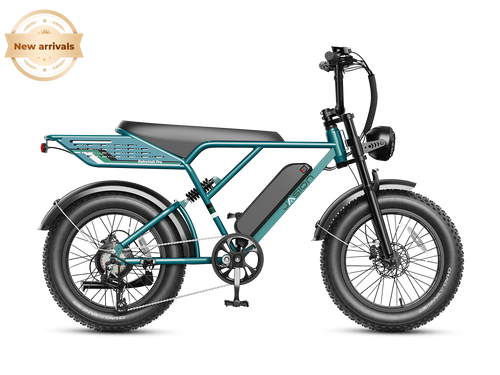
Start with our Thunder Pro fat tire electric bike if your route combines pavement with gravel or uneven surfaces and you prefer a larger-wheel setup. Its 26 x 4-inch puncture-resistant tires pair with front and rear suspension, while front and rear 180 mm hydraulic disc brakes handle braking duties.
The Shimano 7-speed drivetrain gives you gears to work with as the route changes. That combination makes Thunder Pro a relevant choice for a rider who values suspension and braking equipment on regular trips, rather than choosing on motor output alone.
For ownership planning, check rider fit, parking dimensions, and access to compatible brake pads and tires. Keep suspension and wheel inspections on your maintenance schedule. Full suspension is a ride characteristic, not permission to exceed the bike's intended use.
Hunter Pro: full suspension with folding storage

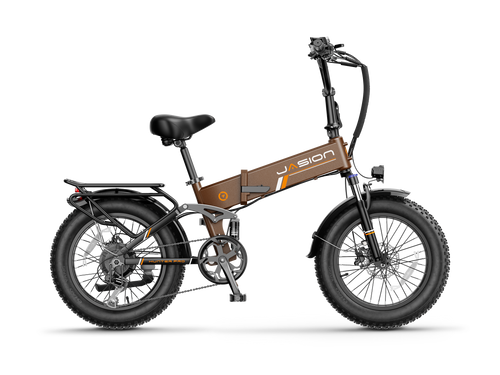
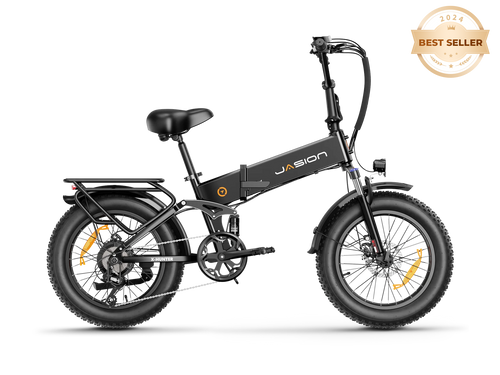
Our Hunter Pro folding electric bike suits riders who want folding storage alongside full suspension and hydraulic disc brakes. It combines 20 x 4-inch puncture-resistant tires, front suspension, a Horst-Link rear suspension layout, and a Shimano 7-speed drivetrain.
The reason to choose it over a nonfolding option is practical: folding may make your storage arrangement possible. Measure the available space and compare folded dimensions before deciding. If your plan involves lifting it into a vehicle, check the actual bike weight and loading method as well.
Learn the latch check during setup and use the model's inspection instructions. Secure folding hardware and properly maintained suspension are part of keeping this configuration ready for repeated use.
Kago: a cargo layout for everyday errands

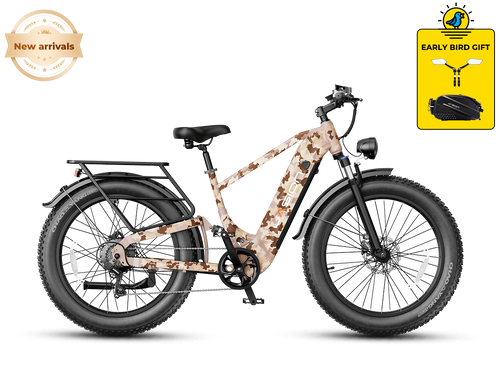
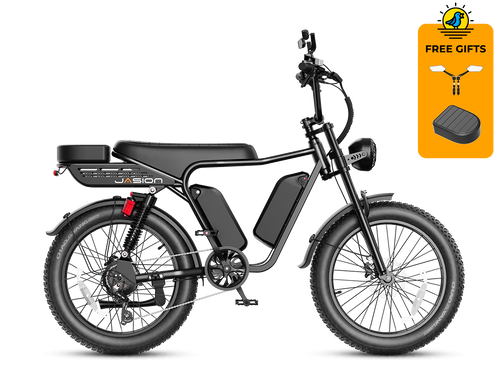
For grocery runs and trips with bags, our Kago cargo ebike puts a rear cargo rack and a dual-battery setup into a utility-focused layout. It has two 52V 20Ah batteries, 20 x 3-inch tires, front suspension, and two-piston hydraulic brakes.
The cargo layout is the starting point for choosing Kago: it gives you a place to plan how to secure everyday loads. The batteries add energy capacity for trips between charges; they do not establish a longer battery service life.
Before ordering bags or baskets, confirm the rack's mounting dimensions, accessory compatibility, heel clearance, and applicable load limits. Check that the load stays clear of the wheel and brake parts. A rack's appearance is not evidence that a passenger accessory is approved.
X-Hunter: another folding option to compare
If you are comparing purchase budgets, include our X-Hunter folding ebike in your shortlist. It combines 20 x 4-inch puncture-resistant tires, front and rear suspension, a Shimano 7-speed drivetrain, and front and rear 160 mm disc brakes. Compare its current configuration and price with Hunter Pro, especially the brake system, rather than assuming the two folding models share every component.
Before You Buy: Check Parts, Warranty, and Service
Make a small replacement-parts list before checkout: tires and tubes, brake pads, drivetrain wear items, the battery, and the charger. Then ask which exact parts fit. Our ebike parts and accessories collection is a starting point; confirm model compatibility and current availability for anything essential to your purchase.
For a more useful support inquiry, provide the model, configuration, and intended use. Ask: "Which replacement brake pads and battery fit this version, and how would I arrange service?" A precise answer lets you plan ownership beyond the first set of consumables.
Read warranty coverage separately from service life. Check what counts as a manufacturing defect, what normal wear excludes, and how labor or shipping is handled. The Jasion warranty explains applicable terms. Warranty coverage is valuable support, but it is not a prediction of how long a bike will last.
Allow time and money for routine care as well. Cleaning, lubrication, brake checks, and replacing worn parts are normal costs of using a bicycle. Our electric bike maintenance guide covers common ownership tasks; electrical, structural, and unfamiliar brake work should go to a qualified technician.
Your Durable Ebike Buying Checklist
Save these questions and use them for each bike on your shortlist. A clear answer should point to a specification, instruction, compatible part, or service option.
- Does it fit the complete trip? Check rider fit, route suitability, parking space, and any lifting or folding you will actually do.
- Are the load limits clear? Identify the bike's load definition and the separate limits for racks and accessories.
- Can you identify the consumables? Record the fitted tire size, compatible tubes, brake pads, and drivetrain parts.
- Is there a confirmed battery path? Ask about the exact compatible battery and charger, ordering availability, and service process.
- Who will do the work? Check a local service option before you need a repair, including whether it accepts your model.
- Do you understand the coverage? Read warranty conditions and estimate routine wear costs separately.
With those answers in hand, compare our electric bikes for sale by the features your route calls for. Choose the configuration you can comfortably ride, store, and maintain.
FAQs
Is a higher-wattage ebike more durable?
No. A motor's wattage describes an aspect of its output, not the service life of the frame, battery, wheels, or brakes. Compare rated and peak figures on the same basis, then check intended use, load limits, maintenance requirements, and replacement parts. Higher output alone is not evidence of longer life.
Is a used ebike a good choice for long-term ownership?
It can be, if its condition and replacement-parts support justify the price. Ask for ownership and service records, the original compatible charger, and details of battery storage or replacement. Have a qualified technician assess the frame, wheels, brakes, battery mounting, and electrical system. Include any immediate repairs and battery assessment in the purchase budget; low mileage alone does not establish battery condition.
Should I buy a spare battery when I buy the bike?
A spare makes sense when you need a compatible second pack for your actual riding schedule. Buying one solely to store for years does not guarantee a fresh replacement later, because batteries also age in storage. Confirm future replacement options, storage instructions, warranty conditions, and the exact approved pack before deciding.






Share: