
 EU
EU
 UK
UK
 US
US
 CA
CA



Wondering what PSI your bike tires need? Start with the range printed on the tire sidewall, then adjust for tire width, rider and cargo weight, and the roads you ride. Narrow road tires usually need more pressure than mountain or fat tires, so one number cannot cover every bike.
What Does PSI Mean on a Bike Tire?
PSI means pounds per square inch. It measures the air pressure inside the tire. You may also see pressure listed in bar; 1 bar is approximately 14.5 PSI.
That number changes how the bike feels. Too little air makes a tire drag, squirm in corners and bottom out on hard impacts. Too much sends more vibration through the bike and can leave the tire skipping across rough ground.
Where to Find the Correct Tire Pressure
Read the writing molded or printed on the tire sidewall. It may show a minimum and maximum, or only a maximum. The bike or wheel manual may list another limit. When those numbers differ, follow the lowest applicable maximum.
Do not treat “MAX PSI” as a target. It is a ceiling. If the original tire has been replaced, use the markings on the tire now fitted to the wheel.
Bike Tire PSI Chart
This chart gives useful ballpark figures before you check your own tire. It is not a model-specific specification.
| Bike or tire type | Common broad range | Main variables |
|---|---|---|
| Road bike | About 65–100 PSI | Tire width, rim type, tubes or tubeless, total load |
| Hybrid or commuter bike | About 40–70 PSI | Tire width, pavement condition, rider and cargo weight |
| Mountain bike | About 20–35 PSI | Tire volume, rim width, tubes or tubeless, trail surface |
| Fat tire bike or ebike | About 5–30 PSI | Tire construction, pavement or soft ground, total load |
Use these figures for orientation only. The limits on your tire and rim come first.
How to Choose a Starting PSI
Once you have the sidewall range, four things will move your starting point up or down.
Count the Full Load
Count the rider, bike, battery, bags and rack cargo. A heavier setup generally needs more pressure to stop the tire folding or bottoming out.
Look at Tire Width
Wide tires hold more air, so they can carry a load at lower pressure. That is why a 4 inch fat tire may run at a fraction of the pressure used in a narrow road tire.
Match the Surface
On smooth pavement, a firmer setting often feels quicker and more precise. Dropping a little pressure can calm the ride on broken pavement, gravel and trails. Sand and snow usually call for lower fat-tire pressure, provided the setting remains safe for the tire and rim.
Account for Tubes or Tubeless
Tubeless tires can often run lower without pinching an inner tube. Go too low, though, and the tire can squirm, burp air or expose the rim to impacts.
Should Front and Rear Tires Use the Same PSI?
Not necessarily. The rear wheel often carries more weight, especially with rack cargo, so it may need a little more pressure. There is no fixed front-to-rear split: bike geometry, rider position and cargo placement all change the load. Make small adjustments and write down the settings that work.
How Tire Pressure Affects an Electric Bike
An ebike carries the extra weight of its battery, motor and electrical parts, and many riders add a rack or basket. That makes pressure worth checking rather than judging by appearance.
An underinflated tire flexes and drags, asking more from the motor and potentially cutting into range. Overinflate it and the bike can feel choppy on broken pavement. The useful setting is the one that supports the load without giving away grip or comfort.
For other factors that change electric-bike range, see the Jasion electric bike battery guide.
Signs Your Bike Tire Pressure Is Too Low
- The bike feels slower or heavier than usual.
- The tire looks excessively compressed under the rider.
- Steering feels vague or the tire squirms in a turn.
- The rim contacts the ground or an obstacle during an impact.
- The tire sidewall folds, rubs or shows premature wear.
- Pressure drops again soon after inflation, suggesting a leak or puncture.
If pressure drops again soon after inflation, check for a puncture, valve leak or damaged tube instead of repeatedly topping it up.
Signs Your Bike Tire Pressure Is Too High
- The ride feels unusually sharp over cracks and small bumps.
- The tire skips or loses compliance on rough ground.
- Traction feels reduced on loose or uneven surfaces.
- The gauge reads above the limit printed on the tire or rim.
A reading above the tire or rim limit is not something to test on the road. Release air and measure again.
How to Check and Inflate a Bike Tire
- Read the sidewall. Confirm the tire size and permitted pressure range.
- Identify the valve. Most bikes use a Schrader or Presta valve. Use a pump head or adapter that matches it.
- Check pressure when the tire is cool. Use a compatible pressure gauge or a floor pump with a gauge.
- Add air gradually. Pause before the target and check that the tire bead remains seated evenly around the rim.
- Measure again. Pump gauges can vary, so use the same reliable gauge when comparing settings.
- Replace the valve cap. It helps keep dirt out of the valve.
A quick squeeze can reveal a nearly flat tire, but it cannot tell you the PSI. On a fat tire, even a small pressure change can be easy to feel on the road and hard to judge by hand.
How Often Should You Check Bike Tire Pressure?
Check before a long ride, after storage and whenever the bike starts to feel different. All pneumatic tires lose air over time, and narrow high-pressure tires usually need attention more often.
Cold weather lowers the reading; warmer air raises it. Measure instead of automatically adding a fixed amount for the season.
Pressure checks fit naturally into a pre-ride routine alongside brakes, wheel security and battery level. The Jasion maintenance FAQ provides additional ownership checks.
Jasion Tire Size Reference
Jasion models range from commuter tires to 4 inch fat tires, so they should not share one blanket PSI. Use this table to identify the listed size, then read the pressure range on the tire currently installed.
| Jasion model family | Listed tire size | Where to confirm PSI |
|---|---|---|
| EB5 Roamer and EB5 Roamer ST | 26 x 1.95 in | Current tire sidewall and model manual |
| EB7 2.0 Road Trip | 20 x 3 in | Current tire sidewall and model manual |
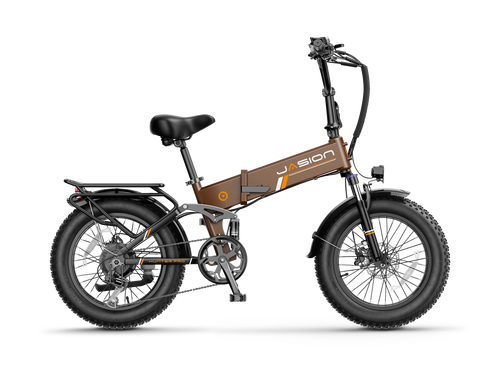
| Hunter Pro, X-Hunter and X-Hunter ST | 20 x 4 in | Current tire sidewall and model manual |
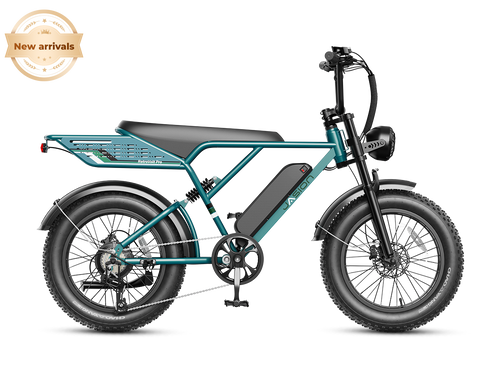
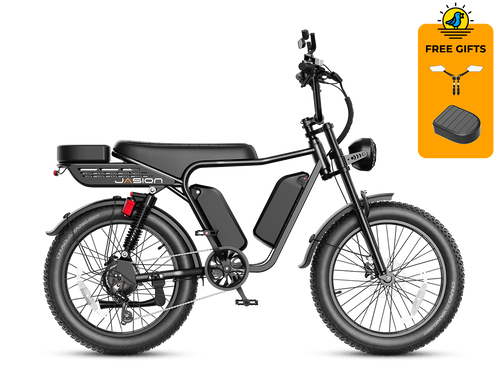
| RetroVolt Pro and RetroVolt Max | 20 x 4 in | Current tire sidewall and model manual |
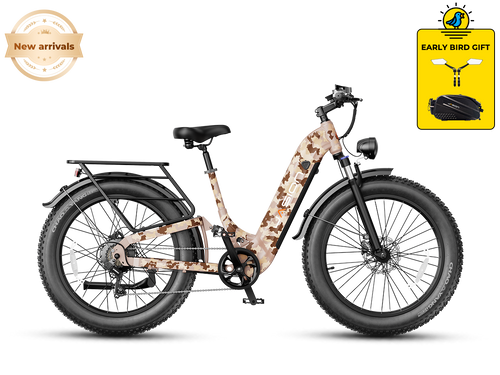
| Thunder, Thunder Pro and Thunder Pro ST | 26 x 4 in | Current tire sidewall and model manual |
| JT18 | 18 x 3 in | Current tire sidewall and model manual |
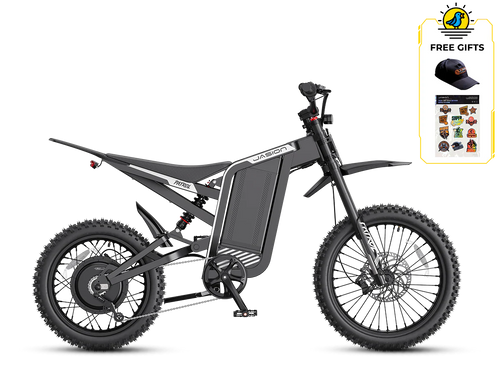
| Patrol 52 | 70/100-19 front, 70/100-17 rear | Check each tire sidewall separately |
Tire suppliers and production batches can change. Replacement tires may also carry different limits, which is why the installed tire remains the best reference.
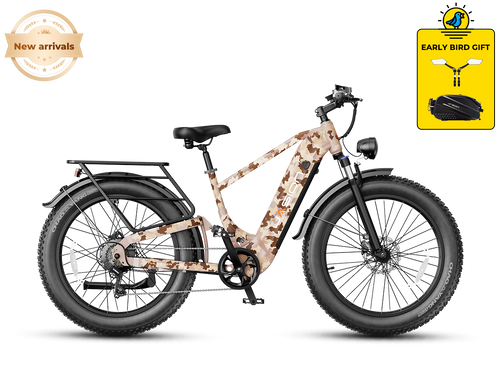
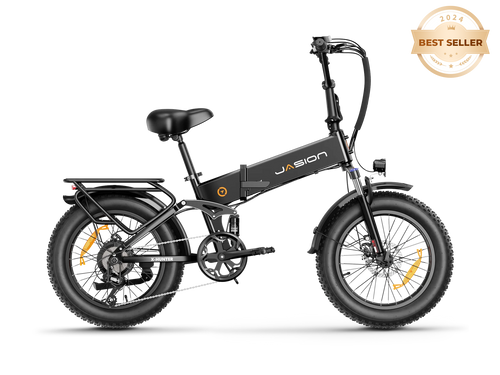
Riders comparing wide-tire models can browse the fat tire ebike collection or use our guide to choosing a JasionBike fat tire ebike. For slimmer city tires, see the EB5 Roamer commuter series.
Set Pressure with a Gauge, Not a Guess
Read the sidewall, use a gauge and make small changes. Once the bike rolls cleanly, holds its line and feels composed over bumps, note the front and rear readings for next time.
Browse Jasion electric bikes by tire type
Frequently Asked Questions
What PSI should bike tires be?
Bike tire PSI depends on tire width, total load, rim and tire construction, and terrain. Use the pressure range printed on the tire sidewall and choose a suitable setting within it rather than applying one number to every bike.
Where can I find the correct PSI for my bike tire?
Read the pressure markings on the tire sidewall and check the bicycle or wheel manual for any additional limit. If the rim specifies a lower maximum than the tire, follow the lower applicable limit.
Is the maximum PSI on the sidewall the recommended pressure?
Not necessarily. A maximum PSI is a limit and is not automatically the best riding pressure. Rider and cargo weight, tire width, terrain and the approved minimum all help determine a suitable setting within the range.
Should front and rear bike tires use the same PSI?
They can differ because the wheels may carry different loads. The rear often carries more weight, but there is no universal front-to-rear difference. Keep both tires within their approved ranges.
What PSI should a fat tire ebike use?
Fat tires generally run at lower pressure than narrow bicycle tires, but the correct range depends on the exact tire, rim, load and surface. Read the sidewall of the tire installed on the ebike rather than using one generic fat-tire PSI.
Does low tire pressure reduce ebike range?
Pressure that is too low can increase tire deformation and rolling resistance, making the motor work harder. This may reduce usable range, although terrain, assist level, temperature, speed and total load also affect distance.
Can I check bike tire pressure without a gauge?
Squeezing a tire may reveal that it is nearly flat, but it cannot provide an accurate PSI. Use a compatible pressure gauge or floor pump with a gauge.
Does cold weather lower bike tire pressure?
Yes. Tire pressure generally falls as temperature drops and rises as temperature increases. Check with a gauge and keep the tire within its approved range instead of adding or removing a fixed amount of air.



Share: