
 EU
EU
 UK
UK
 US
US
 CA
CA



Last reviewed: September 2, 2026
Recent changes in marketplace availability have raised new questions about California ebike laws. California has not imposed a general ban on buying ebikes online, but product availability can vary by retailer, model, configuration, and destination.
The practical next step is to decide how and where you want to ride, then compare the exact specifications and intended use of each model. This guide makes the current rules easier to understand so you can narrow your options with confidence.

Can You Still Buy an Ebike in California?
Yes. California residents can still shop for electric bikes in stores and online. Retailers may reach different availability decisions because their catalog policies, product classifications, documentation reviews, and shipping rules are not identical.
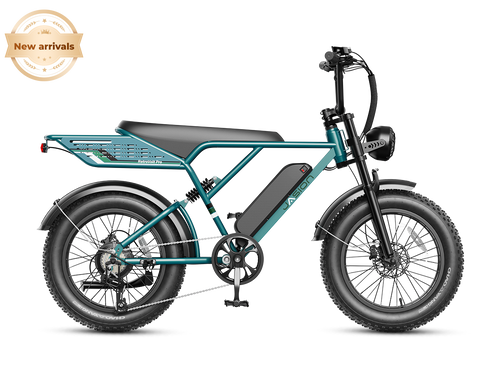
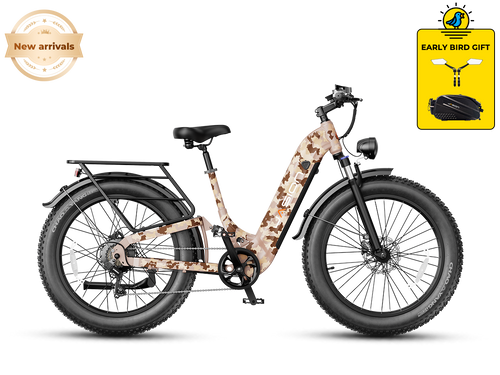
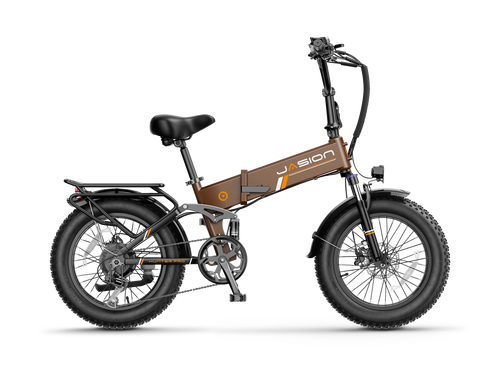
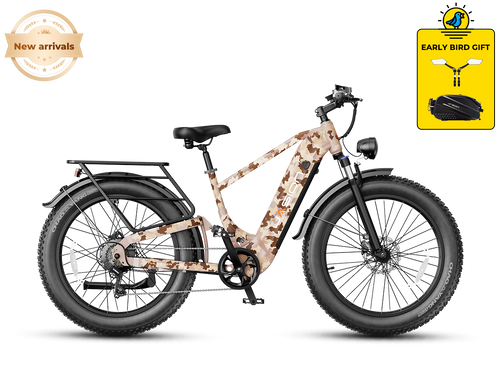
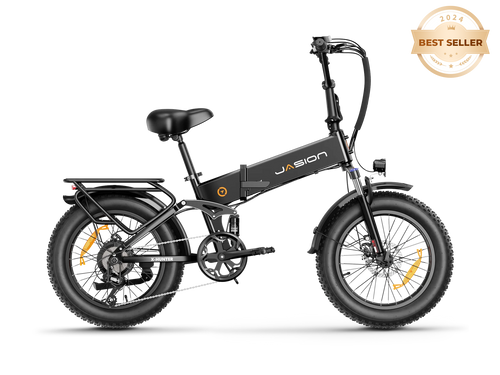
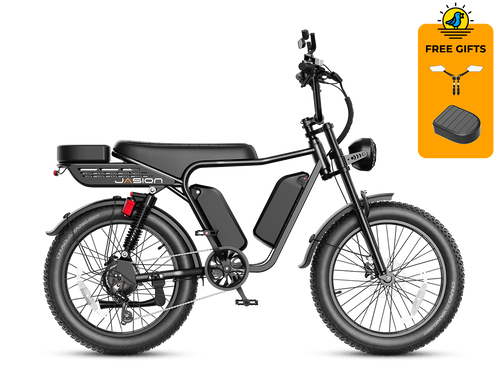
Start with the ride you want and the environment where you plan to use it. You can browse the Jasion electric bike lineup by frame and riding style, then use the checks below to compare the right models for your needs.
California Ebike Laws in 2026: What Most Riders Need to Know
- A legal electric bicycle must have fully operable pedals and a motor that does not exceed 750 watts.
- Class 1 pedal assistance stops at 20 mph.
- Class 2 may use a throttle, but motor assistance stops at 20 mph.
- Class 3 uses pedal assistance up to 28 mph and must have a speedometer.
- A person under 16 may not operate a Class 3 ebike, and a seller may not sell one to a person under 16.
- Class 3 operators and passengers must wear a bicycle helmet. California also requires riders under 18 to wear a helmet.
- Ebikes must carry the required permanent class label.
- Beginning January 1, 2026, California added battery-testing and product-marking requirements for covered electric mobility products.
- An ebike must have the required rear red reflector or qualifying rear light during all hours.
- Cities, counties, parks, schools, and trail managers may apply additional local rules.
For a closer look at how the classes differ, read Jasion's Class 1 vs Class 2 vs Class 3 ebike guide.
What Changed for California Ebikes in 2026?
The three-class system remains in place. The new rules mainly clarify product documentation, battery safety, Class 3 sales to younger buyers, rear visibility, and the boundary between an ebike and a faster motor vehicle.
Battery testing and permanent markings now affect products offered for sale
California Senate Bill 1271 took effect for most covered sales provisions on January 1, 2026. It applies not only to electric bicycles but also to powered mobility devices, charging systems, and storage batteries.
For an electric bicycle offered for sale, the storage battery must be tested by an accredited laboratory for compliance with a battery standard referenced in ANSI/CAN/UL 2849, EN 15194, or another standard established by the State Fire Marshal. The law also requires the applicable laboratory identity and certification standard to be permanently displayed on the covered product or electrical system. Manufacturers, importers, distributors, and retailers must provide the applicable laboratory test report when requested.
For shoppers, this makes clear product information and responsive support more useful. Instead of judging a bike only by battery size, compare the exact battery, compatible charger, testing information, and replacement support provided for the model.
California tightened the boundary between an ebike and a faster motor vehicle
A product does not qualify as a California electric bicycle merely because its listing calls it an ebike. A vehicle intended by its manufacturer to be modified beyond 20 mph on motor power alone or beyond 750 watts does not fit the statutory ebike definition. The same applies after a vehicle is modified past those limits or has its operable pedals removed.
California also prohibits selling a product, device, or application designed to change an ebike's speed capability so it no longer meets the legal definition. Ordinary assist-level controls are not the issue; the restriction targets changes that move the vehicle outside the legal category.
Class 3 sales now include an age restriction
California already prohibited anyone under 16 from operating a Class 3 ebike. Effective January 1, 2026, Vehicle Code section 21212.5 also prohibits a seller from selling a Class 3 ebike to a person under 16.
Rear visibility equipment is required during all hours
Effective January 1, 2026, an electric bicycle must comply at all hours with the rear-equipment requirement in Vehicle Code section 21201: a red reflector or a solid or flashing red light with a built-in reflector that meets the visibility rule. Night riding still carries the additional lighting and reflector requirements that apply after dark.
Why Did Amazon Stop Shipping Some Ebikes to California?
In May 2026, news reports said Amazon stopped California sales of certain high-speed products advertised as ebikes while reviewing similar listings. The reported action followed questions about whether those products fit California's ebike classification limits.
The reporting concerned certain high-speed listings, not every ebike offered in California. The availability of an individual listing may depend on its specifications, classification, seller documentation, and the retailer's own review process.
If a product is unavailable through one channel, check the manufacturer's current product information and California availability. Compare the exact configuration, intended use, warranty, and support rather than treating a retailer's availability decision as a statement about every electric bike.
How to Shop for an Ebike with Confidence
Marketplaces, specialist retailers, and brand websites use different catalog, documentation, classification, and shipping processes. That is why availability can vary across sales channels. Wherever you shop, focus on the information that helps you choose the right ride:
- commuter, cruiser, folding, cargo, moped-style, and full-suspension designs;
- frame fit, storage size, payload, battery configuration, and riding position;
- product-specific support and replacement-part information;
- the exact version available for the buyer's address; and
- the riding environment for which the model is intended.
For public-road riding, confirm the class label and assistance behavior for the exact configuration. For recreation on private property or in an appropriate off-highway setting, focus on a model designed and supported for that environment.
Compare Jasion ebikes by riding style.
What Counts as a Legal Electric Bicycle in California?
California Vehicle Code section 312.5 starts with two requirements: fully operable pedals and an electric motor that does not exceed 750 watts. A qualifying bicycle must then fit one of the three classes.
| Class | How assistance works | Motor-assistance cutoff | Additional point |
|---|---|---|---|
| Class 1 | Pedal assist | 20 mph | May have start assistance or walk mode up to 3.7 mph |
| Class 2 | May propel without pedaling | 20 mph | A throttle is allowed within the Class 2 limit |
| Class 3 | Pedal assist | 28 mph | Requires a speedometer; operator must be 16 or older |
The cutoff describes when the motor must stop assisting. It is not necessarily the highest speed a bicycle can reach while being pedaled or traveling downhill.
Are Throttle Ebikes Legal in California?
Yes. California still recognizes Class 2 throttle-assisted ebikes. The motor may propel the bicycle without pedaling, but it cannot continue providing assistance once the bicycle reaches 20 mph.
A throttle by itself does not make an ebike illegal. The decisive questions are how fast throttle assistance continues, whether the motor and pedals meet the definition, and whether the product carries the correct permanent label.
Is a 750W Ebike Legal in California?
It can be. California now defines an electric bicycle as having a motor that “does not exceed 750 watts,” but wattage alone does not establish the class. The bike must also have operable pedals and meet the relevant assistance rules.
Product pages may use rated, nominal, maximum, or peak motor figures. Those terms are not automatically interchangeable. Buyers should compare the statutory classification and assisted-speed behavior rather than relying on the largest promotional number. Jasion's 750W ebike guide explains the relationship between power and speed in more detail.
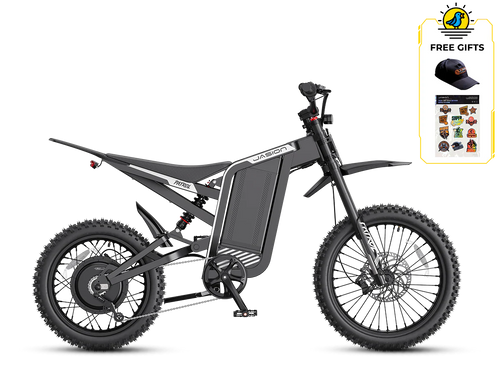
What About Performance Ebikes and Electric Dirt Bikes?
Some electric two-wheelers resemble bicycles but are designed around motorcycle-style power, throttle operation, or speeds. If a vehicle provides pedal assistance beyond 28 mph, throttle assistance beyond 20 mph, exceeds 750 watts under California's definition, or lacks operable pedals, it is not a standard California electric bicycle.
Higher-performance electric rides serve a different kind of buyer and may fall into a different vehicle category. Some riders want a conventional road-going ebike; others are shopping for private-property recreation or an appropriate off-highway setting. The useful question is not simply how much power a model offers, but whether its design and category fit the place you plan to ride.
Do You Need a License, Registration, or Insurance?
A vehicle that qualifies as a California Class 1, Class 2, or Class 3 electric bicycle does not require a driver's license, DMV registration, a license plate, or motor-vehicle insurance.
Vehicles outside the electric bicycle definition can have different requirements. For a broader state-by-state explanation, see Do You Need a License to Ride an Electric Bike?.
California Ebike Helmet and Age Rules
- Anyone under 18 must wear a properly fitted bicycle helmet when riding a bicycle or ebike on a street, bikeway, or public bicycle path or trail.
- A person under 16 may not operate a Class 3 ebike.
- A seller may not sell a Class 3 ebike to a person under 16.
- Class 3 operators and passengers must wear a compliant bicycle helmet.
California does not set one statewide minimum operating age for every Class 1 or Class 2 ebike. Local pilot programs can add rules. For example, qualifying local authorities in Marin County may restrict Class 2 operation by riders under 16, while qualifying authorities in San Diego County may restrict Class 1 or Class 2 operation by riders under 12.
Where Can You Ride an Ebike in California?
Legal ebikes are generally treated as bicycles on roads, but access depends on the class and the facility. Local governments, parks, schools, and trail managers can adopt additional restrictions.
- Roads and on-street bike lanes: commonly available to legal ebikes, subject to normal traffic rules.
- Separated bicycle paths: access can depend on class and local rules.
- Natural-surface or recreational trails: the responsible agency may prohibit one or more ebike classes.
- Sidewalks: city and county rules vary.
- Schools and parks: posted policies may add age, route, speed, or parking requirements.
Check the city or land manager's current rules for a regular route instead of relying on a statewide summary alone.
Choose the Ride First, Then Check the Category
Start with what the bike needs to do for you, then use the category rules to confirm where the exact configuration fits.
- Define the ride: commuting, relaxed cruising, compact storage, carrying gear, mixed terrain, or recreation.
- Choose the frame: step-through, folding, cargo, moped-style, or another design that fits your comfort and storage needs.
- Compare the exact model: check the version, fit, battery, controls, payload, and support.
- Match the riding environment: public roads and bike lanes, local trails, private property, or suitable off-highway areas.
- Confirm the category: if public-road use matters, verify the class label and assistance behavior for the specific configuration.
For work trips and regular daily routes, browse Jasion commuter ebikes. For compact storage and transport, compare folding ebikes. You can also view the full Jasion electric bike collection to compare more riding styles.
FAQs About California Ebike Laws
Are ebikes legal in California in 2026?
Yes. California recognizes Class 1, Class 2, and Class 3 electric bicycles. A legal ebike must meet the pedal, motor, assisted-speed, class-label, and applicable product-safety requirements.
Did California ban online ebike sales?
No. California did not create a general ban on online ebike sales. Sellers offering products in California must still meet the state's classification, labeling, battery-testing, and documentation rules.
Why won't Amazon ship an ebike to California?
Amazon reportedly stopped California sales of certain high-speed listings and investigated similar products. A particular listing may also be affected by its configuration, classification, seller documentation, or marketplace review. The shipping message does not mean every legal ebike is banned.
Can brand websites ship ebikes to California?
California has not imposed a general ban on direct online sales. Availability can differ across retailers because catalog policies, product classifications, documentation reviews, and shipping rules vary. The exact product, category, destination, and intended use still matter.
Are Class 2 throttle ebikes legal in California?
Yes. A Class 2 ebike may use a throttle without pedaling, but motor assistance must stop at 20 mph and the bicycle must otherwise meet the state definition.
Is a 1000W electric bike a legal California ebike?
Not as a Class 1, Class 2, or Class 3 ebike if its motor exceeds California's 750W limit. It may fall into another vehicle category, so the model's intended use and the rules for where you plan to ride both matter.
Do you need a helmet to ride an ebike in California?
Riders under 18 must wear a helmet, and all Class 3 operators and passengers must wear one. Local rules may add requirements.
Final Takeaway
California's 2026 changes add clearer expectations around battery testing, markings, sales, equipment, and vehicle classification. They do not amount to a general ban on buying ebikes online.
Start with your riding purpose, choose the frame and performance level that fit it, and confirm where that exact product is intended to be used. Explore Jasion electric bikes and find the riding style that fits your day.
This article provides general information and is not legal advice. Statutes, regulations, local ordinances, trail policies, and product specifications can change. Confirm current requirements with the relevant California agency or local authority before purchasing, selling, or riding.
Official and Reporting Sources
- California Vehicle Code §312.5: Electric Bicycle Definition
- California Vehicle Code: Bicycle and Ebike Operation Rules
- California Vehicle Code §24016: Labels and Modifications
- California SB 1271: Battery Standards and Sales Requirements
- California Attorney General: 2026 Ebike Consumer Alert
- Los Angeles Times: Amazon Halts Certain High-Speed Ebike Sales


Share: