
 EU
EU
 UK
UK
 US
US
 CA
CA



Virginia is a straightforward state for most ebike riders. The state recognizes Class 1, Class 2 and Class 3 ebikes, and riders do not need a driver's license, registration, title, insurance or license plate. Ebikes can generally go wherever conventional bicycles are allowed, including roads, bike lanes and many shared-use paths.
The details that deserve attention are class, helmet requirements and local access rules. Class 3 riders and passengers must wear helmets, riders under 14 need adult supervision when operating a Class 3 ebike, and individual cities or trail managers may set their own rules for certain sidewalks, paths and natural-surface trails. Here is how Virginia's current rules work in everyday riding.

Virginia Ebike Laws at a Glance
| Question | Virginia rule |
|---|---|
| Driver's license required? | No |
| Registration, title or license plate required? | No |
| Insurance required under the ebike statute? | No |
| Class 1 assisted-speed limit | 20 mph; pedal assist only |
| Class 2 assisted-speed limit | 20 mph; motor may propel without pedaling |
| Class 3 assisted-speed limit | 28 mph; pedal assist only |
| Class 3 helmet rule | Required for every operator and passenger |
| Class 3 age rule | A rider under 14 needs immediate supervision from someone age 18 or older |
The legal starting points are the Virginia Code definition and the state's electric power-assisted bicycle rules.
What Counts as an Ebike in Virginia?
Virginia law uses the term “electric power-assisted bicycle.” The vehicle must travel on no more than three wheels in contact with the ground and have:
- Pedals that allow human-powered propulsion
- A seat for the rider
- An electric motor with an input of no more than 750 watts
The three-class system then describes how assistance operates and when it stops. The easiest way to identify a bike's road-use configuration is to read its permanent class label, which shows the class, motor wattage and top assisted speed.
Virginia Class 1, Class 2 and Class 3 Ebikes
| Class | How the motor works | When assistance must stop | Additional requirement |
|---|---|---|---|
| Class 1 | Assists only while the rider is pedaling | 20 mph | No class-specific helmet or speedometer rule in the state ebike statute |
| Class 2 | May propel the bike without pedaling | 20 mph | Local access restrictions may still apply |
| Class 3 | Assists only while the rider is pedaling | 28 mph | Speedometer and helmets for the operator and passenger |
Class 2 is the category that permits motor propulsion without pedaling, commonly through a throttle. Virginia's Class 3 definition is pedal-assist only. A throttle-equipped vehicle that continues motor propulsion beyond 20 mph does not fit the state's Class 2 definition.
If these categories are new to you, Jasion's Class 1 vs. Class 2 vs. Class 3 ebike guide explains how motor engagement and assisted speed affect everyday riding.
Do You Need a License for an Ebike in Virginia?
No. Virginia exempts an electric power-assisted bicycle and its operator from the state requirements for:
- A driver's license
- Vehicle registration
- A certificate of title
- Financial responsibility requirements
- A license plate
For a broader explanation of why the answer changes by vehicle and state, read Jasion's guide to ebike license requirements in the United States.
Virginia Ebike Age Rules
Virginia does not set a statewide minimum operator age for Class 1 or Class 2 in its electric power-assisted bicycle provisions. Class 3 has an additional rule: a person younger than 14 may operate one only under the immediate supervision of a person who is at least 18.
This is more precise than saying no one under 14 can ride a Class 3 ebike. The statute provides a supervision exception. Rental companies, parks and other property operators may still impose higher age requirements as a condition of use.
The age provision appears in Virginia Code Article 12.
Virginia Ebike Helmet Laws
Every operator and passenger on a Class 3 electric power-assisted bicycle must wear a properly fitted and fastened bicycle helmet. The helmet must meet the standards identified in Virginia law.
Virginia does not impose that same statewide Class 3 rule on every adult riding a Class 1 or Class 2 ebike. However, a county, city or town may adopt an ordinance requiring riders age 14 or younger to wear a CPSC-compliant helmet when riding or being carried on an ebike on a highway, sidewalk or public bicycle path.
This creates two separate checks:
- Class 3 operators and passengers must follow the statewide helmet requirement.
- Younger riders on other classes should check whether their locality has adopted a youth helmet ordinance.
Regardless of the minimum legal requirement, a properly fitted bicycle helmet is a sensible part of every ride.
Where Can You Ride an Ebike in Virginia?
As a general rule, an electric power-assisted bicycle may be ridden where bicycles are allowed. Virginia's statute specifically lists streets, highways, roads, shoulders, bicycle lanes, bicycle paths and shared-use paths.
That general access rule has important exceptions. The authority responsible for a particular route may restrict access:
- After notice and a public hearing, a locality or state agency may prohibit Class 1 or Class 2 ebikes on a bicycle or shared-use path when it finds the restriction necessary for public safety or compliance with other laws.
- A locality or state agency may prohibit Class 3 ebikes on a bicycle or shared-use path.
- The authority responsible for a natural-surface, nonmotorized trail may regulate ebike use on that trail.
Look for posted signs and check the managing agency's current website before visiting an unfamiliar trail. Statewide legality does not guarantee access to every park path, mountain bike trail or pedestrian area.
Roads and bike lanes
Qualifying ebikes generally share the rights and duties of bicycles. Riders must obey applicable traffic controls and ride in the direction of traffic. A road may still be unsuitable or restricted for reasons unrelated to ebike classification, so route planning remains important.
Sidewalks
Virginia law generally includes electric power-assisted bicycles among the vehicles allowed on sidewalks, but local ordinances and posted restrictions can change where sidewalk riding is permitted. Yield to pedestrians and reduce speed in places where riding is allowed.
Shared-use paths
Class 1 and Class 2 ebikes are generally allowed where bicycles are allowed unless the responsible authority completes the process required to restrict them. Class 3 access can be restricted more directly. Check the path's rules rather than assuming all three classes have identical access.
Natural-surface trails and parks
Trail managers may regulate ebikes on natural-surface trails designated for nonmotorized use. Rules can vary between state parks, county parks and regional trail networks. The Virginia State Parks biking page is a useful starting point, but riders should also check the page for the specific park.
Why Local Rules Still Matter: Virginia Beach
Virginia Beach illustrates why a statewide summary cannot answer every access question. The city generally treats ebikes like conventional bicycles, but it publishes specific rules for the Resort Area, Boardwalk, sidewalks and designated paths. In October 2025, the city also changed its rules to allow ebikes on Atlantic Avenue throughout the year.
That does not mean every Boardwalk or sidewalk location is open. The city's current guidance identifies places where ebikes remain prohibited and separates roadway access from pedestrian-area access. Riders heading to the Oceanfront should review the Virginia Beach ebike rules before setting out.
The same approach applies elsewhere: check both Virginia law and the rules of the city, county, park or trail authority that manages the place you intend to ride.
Virginia Ebike Equipment and Label Requirements
Manufacturers and distributors must place a permanent label in a prominent location on an electric power-assisted bicycle. The label must show:
- The classification number
- The top assisted speed
- The motor wattage
A Class 3 ebike must also have a speedometer that displays speed in miles per hour. Virginia further requires the motor to disengage or stop functioning when the rider stops pedaling or applies the brakes. Read together with the class definitions, the rule means motor operation must match the category displayed on the bike.
Can You Modify an Ebike in Virginia?
Virginia does not describe every modification as illegal. It specifically prohibits changing an ebike's motor-powered speed capability or engagement unless the required class label is replaced after the modification.
After any change that affects motor-powered speed or engagement, the label must accurately reflect the updated configuration. Keeping the class information current makes it easier for the rider and local authorities to identify how the bike is set up.
Virginia Ebike Checklist Before You Ride
- Read the permanent label. Confirm the class and top assisted speed for the riding mode you plan to use.
- Know the controls. Determine whether your selected mode uses pedal assist, throttle operation or both.
- Confirm the route. Check roads, sidewalks, shared-use paths, parks and trails separately.
- Review local rules. City, county and park restrictions may be more specific than the statewide rule.
- Wear the required helmet. Class 3 operators and passengers must wear one; local youth requirements may also apply.
- Keep the factory information accurate. Do not alter speed or motor engagement without understanding the labeling and classification consequences.
- Follow bicycle traffic rules. Obey signals, ride predictably and yield where required.
Choosing an Ebike for Riding in Virginia
Start with the trips you want to make. Neighborhood rides, daily commutes, paved shared-use paths and off-road recreation call for different combinations of range, frame design, tires, suspension and carrying capacity. Riding modes also give owners flexibility for different surroundings.
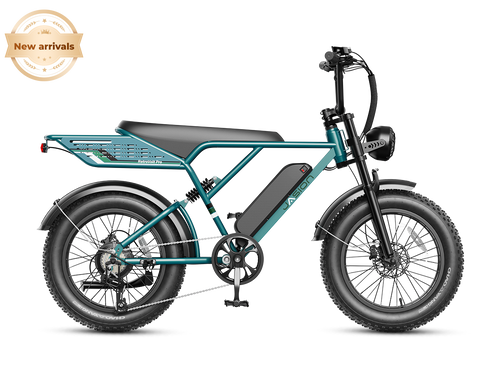
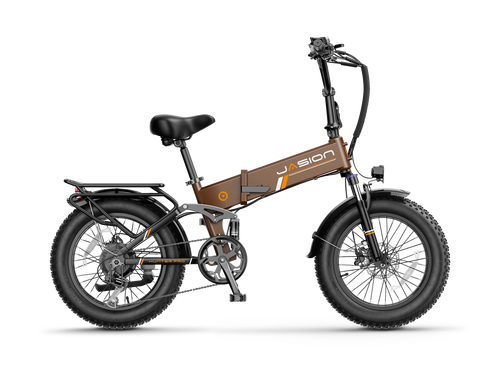
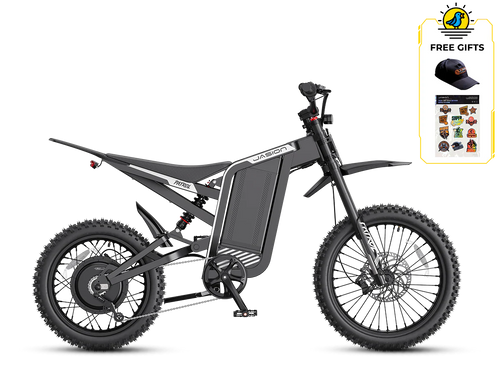
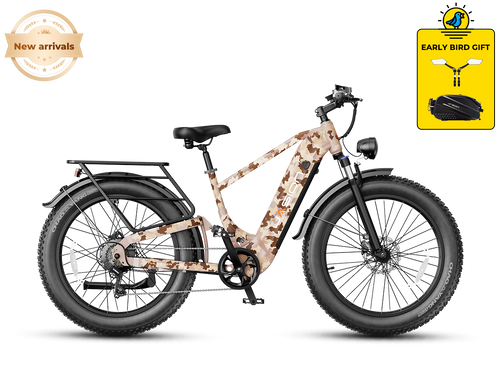
Explore Jasion electric bikes for adults by frame style, range and riding purpose, then choose the model that best matches how and where you plan to ride.
Frequently Asked Questions
Do you need a license to ride an ebike in Virginia?
No. A vehicle that qualifies as an electric power-assisted bicycle under Virginia law does not require a driver's license. It is also exempt from registration, title, financial responsibility and license-plate requirements.
Do ebikes need to be registered in Virginia?
No. Electric power-assisted bicycles do not need Virginia vehicle registration or a certificate of title.
Are ebikes legal on Virginia roads?
Yes. Qualifying electric power-assisted bicycles may generally be ridden where bicycles are allowed, including streets, roads, shoulders and bicycle lanes. Riders remain subject to applicable bicycle and traffic rules.
Can you ride an ebike on the sidewalk in Virginia?
Virginia law generally permits electric power-assisted bicycles on sidewalks, but local ordinances and posted restrictions may prohibit riding in particular areas. Check the city or county rule for the exact location.
Are ebikes allowed on Virginia trails?
It depends on the trail. Authorities may regulate ebikes on natural-surface trails designated for nonmotorized use, and Class 3 access may be restricted on bicycle or shared-use paths. Check the managing agency's current rules.
Do you have to wear a helmet on an ebike in Virginia?
Every Class 3 operator and passenger must wear a properly fitted and fastened helmet. Localities may also require riders age 14 or younger to wear helmets on other ebike classes.
How old do you have to be to ride an ebike in Virginia?
Virginia's ebike provisions do not set a statewide minimum age for Class 1 or Class 2. A person younger than 14 may operate a Class 3 ebike only under the immediate supervision of someone who is at least 18.
Are throttle ebikes legal in Virginia?
Yes, when the vehicle fits Virginia's Class 2 definition. The motor may propel the bike without pedaling but must stop providing assistance at 20 mph, and the motor input must remain within the state's ebike limit.




Share: