
 EU
 UK
 US
 CA



Last reviewed: October 9, 2026. In most U.S. states, you do not need a driver’s license to ride an electric bike that meets the state’s definition of an ebike. The answer changes when state law creates an exception, the bike falls outside the legal ebike category, or a local authority limits where that class can be ridden.
Important 2026 update: New Jersey’s new requirements took effect in July 2026. The state now requires most ebike operators to hold either a valid driver’s license or an ebike license, and ebikes must be registered. Insurance depends on whether the vehicle is a low-speed electric bicycle or a motorized bicycle; those are not the same category under New Jersey’s rules.

Do You Need a License for an Electric Bike? The Short Answer
| Bike or situation | Typical license answer | What still needs checking |
|---|---|---|
| Qualifying Class 1 or Class 2 ebike | Usually no in most states | State definition, rider age, helmet rules, and riding location |
| Qualifying Class 3 ebike | Often no, but restrictions are more common | Age, helmet, speedometer, road, path, and trail rules |
| Ebike operated in New Jersey | Yes for most operators under rules effective July 2026 | License or permit, registration, plate stickers, and category-specific insurance |
| Bike with motor assistance at 40 or 50 mph | It is outside the common Class 1, 2, and 3 system | Moped, motorcycle, motor-driven-cycle, equipment, registration, insurance, and road-use rules |
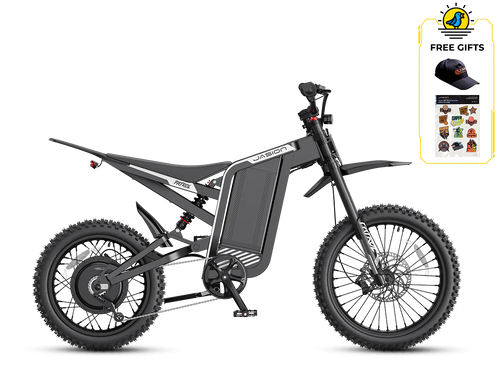
| Electric dirt bike or other off-road model | An off-road designation does not establish public-road eligibility | Vehicle classification, registration, equipment, and the rules for the riding area |
This table is a starting point, not a national license rule. Confirm the bike’s actual configuration and the current law where it will be ridden.
Why Federal Law Does Not Give One Nationwide License Answer
Federal and state laws perform different jobs. The federal low-speed electric bicycle definition in 15 U.S.C. § 2085 covers a two- or three-wheeled vehicle with fully operable pedals, an electric motor of less than 750 watts, and a motor-only speed of less than 20 mph under the test conditions written into the statute. That section places qualifying products within the Consumer Product Safety Commission’s bicycle framework.
It does not create one nationwide rule for driver’s licenses, vehicle registration, insurance, helmets, sidewalks, bike paths, or trails. States decide how vehicles may be operated on public roads, and cities or land managers may add location-specific restrictions.
That distinction matters because people often quote the federal definition as if it were a 50-state road-use law. It is not. Start with the federal product category, then apply the state’s operating definition.
How the Three Ebike Classes Affect Licensing
Many states use a three-class system, although the exact wording is not identical everywhere:
- Class 1: Pedal assist, with motor assistance ending at 20 mph.
- Class 2: A throttle can propel the bike, with motor assistance ending at 20 mph.
- Class 3: Pedal assist, with motor assistance ending at 28 mph; extra equipment, age, helmet, or access rules are common.
Read our Class 1 vs. Class 2 vs. Class 3 ebike guide for a fuller comparison. Not every state uses this model exactly, so a class label helps with identification but does not replace the state code.
Does a motor rating above 750W automatically mean you need a license?
Not from that number alone. Product pages may show rated power, nominal power, peak power, or more than one figure, while a law may define motor output in a particular way and also consider assisted speed, throttle operation, pedals, labeling, and the vehicle’s actual configuration.
A higher power figure is a reason to check the applicable definition carefully, not a reason to assume the bike is automatically licensed or unlicensed. Compare like with like: identify what the published number represents, then read the exact terms used by the state. Our guide to 750W electric bike speed explains why motor rating and assisted speed answer different questions. The bike’s assisted-speed behavior and legal category matter alongside its motor specification.
Check Your Answer in Three Steps
1. Identify the bike as it is currently configured
Check its label, manual, pedals, throttle behavior, rated and peak motor specifications, and the speed at which motor assistance ends. If the bike has been modified, use its current behavior—not only the class shown on the original label.
2. Match it to the state definition
Use the state DMV, transportation department, legislature, or official vehicle code. Look for the definitions of electric bicycle, motorized bicycle, moped, motor-driven cycle, and motorcycle. Then check whether the state requires an operator license, registration, plate, insurance, or minimum age for the matching category.
3. Check the road, path, park, or trail
A bike can qualify as an ebike without being allowed everywhere a traditional bicycle is allowed. Cities, parks, trail systems, and public-land managers may regulate access by class. If one route matters to your purchase, verify that route before choosing the bike.
Three State Examples That Explain the Differences
California: qualifying ebikes are exempt from motor-vehicle licensing
California’s three-class framework covers qualifying electric bicycles. Under California Vehicle Code § 24016, an operator of an electric bicycle is exempt from motor-vehicle financial-responsibility, driver’s-license, and registration requirements. Class, age, helmet, equipment, and riding-location rules still apply.
Our California electric bike laws guide covers those operating rules separately.
New York: legal electric-assist bicycles are not DMV-registered vehicles
The New York DMV defines bicycles with electric assist using operable pedals, a motor of less than 750 watts, size limits, and class-specific assisted speeds. A qualifying bicycle with electric assist does not register as a motorcycle, limited-use motorcycle, moped, or ATV.
That does not mean unrestricted access. New York allows these devices on some streets and highways with posted speed limits of 30 mph or less, municipalities can regulate their operation, and sidewalk use is prohibited unless local law authorizes it.
See our New York ebike laws guide for the state’s class, age, helmet, and riding-location rules.
New Jersey: the major 2026 exception
The New Jersey Motor Vehicle Commission states that new ebike requirements became effective in July 2026. Most operators must be at least 15 and hold either an ebike license or a valid driver’s license. Ebikes must be registered, and New Jersey uses plate stickers placed on the front fork.
The insurance rule depends on category. New Jersey says low-speed electric bicycles do not require insurance, while motorized bicycles do. Throttle behavior, speed, and the state’s category definitions therefore matter; it is not accurate to say that every New Jersey ebike requires the same insurance.
License, Registration, Plate, and Insurance Are Different
| Requirement | What it applies to |
|---|---|
| Driver’s or operator license | The person operating the vehicle |
| Registration | The vehicle’s record with a state agency |
| License plate or registration sticker | The visible identifier issued after registration |
| Insurance | Financial coverage required for certain vehicle categories |
One requirement does not automatically prove that all the others apply. New Jersey is a useful example: its low-speed electric bicycle category requires licensing and registration under the 2026 rules but is exempt from the insurance requirement that applies to its motorized-bicycle category.
Do You Need a License for a 40 or 50 MPH Electric Bike?
A bike capable of receiving motor assistance at 40 or 50 mph does not fit the common Class 1, Class 2, or Class 3 system. Calling it an “ebike” in a listing does not make it a legal electric bicycle for public-road use.
The state may treat it as a moped, motor-driven cycle, motorcycle, off-highway vehicle, or a vehicle that cannot be registered in its current configuration. A driver’s or motorcycle license may be only one part of the answer; registration, insurance, mirrors, lights, turn signals, braking equipment, identification numbers, and road eligibility may also matter.
If the vehicle is sold for off-road use, use it only where that category is allowed unless the relevant agency confirms that it meets every requirement for public-road operation.
Can You Ride an Electric Bike on the Road Without a License?
Usually, yes—when both the rider and bike qualify under that state’s ebike rules and the road permits bicycle traffic. But “no driver’s license required” does not override traffic laws, class restrictions, posted road rules, or local ordinances.
Trail and park access is a separate question. The National Park Service allows park superintendents to permit ebikes where traditional bicycles are allowed and to impose local conditions; ebikes remain prohibited in wilderness areas. Always check the page for the specific park or trail system.
What to Check Before Buying or Riding
- Where will you ride? Public streets, bike lanes, paths, parks, and private or off-road property can have different rules.
- What category does the bike meet? Check pedals, throttle, rated and peak power descriptions, and assisted-speed limits.
- Has the bike been changed? A speed or power modification can change its legal classification even if the original label remains.
- What does the state require? Look separately for operator license, age, registration, plate, insurance, helmet, and equipment rules.
- Do local rules add restrictions? Verify the exact city, road, trail, or park you intend to use.
For more local detail, see our guides to Pennsylvania ebike laws, Florida ebike laws, Michigan ebike laws, Ohio ebike laws, and Virginia ebike laws. Laws change, so check the linked state agency again before relying on an older article or search snippet.
Once you know the category that fits your route, browse our electric bikes by frame style and intended use, then check the current specifications on the individual product page against your local definition.
Electric Bike License FAQ
Do you need a driver’s license for a Class 1 or Class 2 ebike?
Usually not in most states, provided the bike meets that state’s definition. New Jersey is a major 2026 exception: most operators now need a valid driver’s license or an ebike license, and the bike must be registered.
Do you need a license for a Class 3 ebike?
Many states do not require a driver’s license for a qualifying Class 3 ebike, but age, helmet, equipment, and access restrictions are more common. Check the exact state definition rather than applying another state’s class rules.
Do you need a license plate for an electric bike?
Most qualifying ebikes do not need a motor-vehicle license plate in most states. New Jersey now requires ebike registration and plate stickers on the front fork under its rules effective July 2026. A vehicle classified as a moped or motorcycle may have different plate requirements.
Do you need a motorcycle license for an electric bike?
Not for most qualifying ebikes. A motorcycle license or endorsement may become relevant when the vehicle falls into a motorcycle, motor-driven-cycle, or similar category under state law. Speed, pedals, motor specifications, equipment, and how the vehicle operates can all affect that classification.
Do you need a license for an electric bike that goes 40 or 50 mph?
A bike with motor assistance at 40 or 50 mph is outside the common three-class ebike system. Public-road use may require a different vehicle classification, operator license, registration, insurance, and road equipment—or the vehicle may be limited to off-road use.
Does peak motor power decide whether an ebike needs a license?
Not by itself. First determine whether the number is rated, nominal, or peak power, then compare the bike’s assisted speed, throttle behavior, pedals, label, and actual configuration with the terms used in the state law.
What if an ebike has been unlocked or modified?
If a modification changes the motor-assisted speed, power, throttle behavior, or another feature used in the legal definition, the bike may no longer qualify for its original class. Check its current configuration against state law before using it on public roads.
Can you ride an electric bike on the road without a license?
Usually yes when the bike qualifies as an ebike under state law, the state does not require an operator license, and bicycle traffic is allowed on that road. Traffic laws, age rules, local restrictions, and class-specific access requirements still apply.
This article provides general information for U.S. riders and is not legal advice. Rules can change after the review date; verify current state and local requirements before riding.




Share: