
 EU
EU
 UK
UK
 US
US
 CA
CA



Electric bikes can reduce the carbon footprint of everyday travel when they replace trips you would otherwise make by car. A commute, grocery run or visit across town is a practical place to start. The benefit depends on how often you ride, which vehicle trips you replace and how long you keep the bike in use.
Ebikes produce no tailpipe exhaust, but they are not emissions-free over their full life cycle. Making the frame, motor and battery, supplying electricity, and maintaining the bike all have an environmental cost. Understanding those costs helps explain where an ebike can make a useful difference.

How Do Electric Bikes Reduce Carbon Emissions?
An ebike moves a rider with a much smaller vehicle and battery than a passenger car. Electric assistance can make cycling more practical for trips involving hills, longer distances or everyday bags. When that ride replaces driving, it avoids burning fuel for the displaced car trip.
The trip you replace matters. Swapping a solo gasoline-car journey for an ebike ride offers a different benefit from replacing a walk or a conventional bike ride. An additional recreational ride should not be counted as avoided driving unless you would otherwise have made that journey by car.
What Does Research Say About an Ebike's Carbon Footprint?
A December 2023 Polytechnique Insights article reports an average footprint of about 13 grams of CO₂ equivalent per kilometer for an electrically assisted bicycle in France, assuming 20,000 km of use. That estimate includes manufacture, use, maintenance and end of life.
The same article reports 60–75 g CO₂e/km for an electric city car in the French context. These figures illustrate the potential of smaller vehicles; they are not measurements of a Jasion bike or universal values for US travel. Electricity sources, manufacturing, vehicle design and lifetime mileage change the result.
| Term | What it includes | How to use it |
|---|---|---|
| Tailpipe CO₂ | Carbon dioxide released directly when a vehicle burns fuel | Useful for estimating gasoline-car exhaust avoided by driving fewer miles |
| Charging emissions | Emissions associated with electricity used to recharge the battery | Depends on electricity consumption and the local power supply |
| Lifecycle CO₂e | Greenhouse gases from production, use, maintenance and end of life, expressed as CO₂ equivalents | Use comparable assumptions when assessing the overall footprint of different vehicles |
A fair comparison needs consistent boundaries. Comparing one vehicle's tailpipe emissions with another vehicle's full lifecycle estimate does not establish a precise percentage reduction in total emissions.
How Much Car Exhaust Could You Avoid?
The US Environmental Protection Agency estimates that an average passenger vehicle emits about 400 grams of tailpipe CO₂ per mile. Your vehicle's actual figure depends on fuel economy and driving conditions.
Consider replacing a 6-mile round-trip car commute three days a week for 48 weeks:
- Car miles avoided: 6 × 3 × 48 = 864 miles per year.
- Using EPA's average: 864 × 400 g = 345,600 g, or about 346 kg of tailpipe CO₂.
This is an illustrative estimate of avoided car exhaust, not net lifecycle savings. It does not subtract the ebike's manufacturing, charging or maintenance footprint, and it does not include emissions from producing the car's fuel. Count only miles that genuinely replace driving.
How Much Electricity Does an Ebike Use?
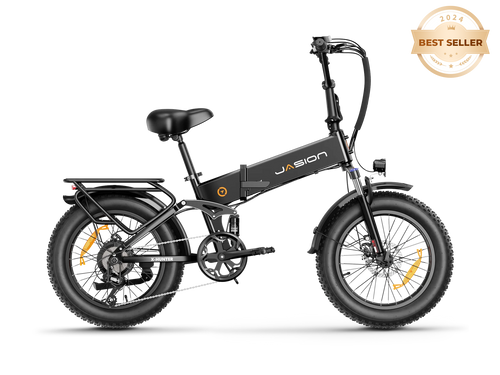
Battery capacity provides a starting point for estimating charging costs. The Jasion Hunter Pro Full Suspension Folding Ebike lists a 48V 15Ah battery, equivalent to 720Wh, or 0.72kWh of nominal energy.
At an assumed electricity rate of $0.20 per kWh, 0.72 × $0.20 equals about $0.14. This calculation is a nominal battery-energy cost, not a measured charge from the wall. Charging losses increase electricity use, and your bill depends on the local rate and how much charge you replenish.
For a more useful personal estimate, track electricity used across several charges and divide it by the miles ridden. Assist level, throttle use, hills, rider and cargo weight, tire pressure and temperature can all affect consumption.
Choose Short Car Trips You Can Replace Regularly
You do not need to replace every car journey to change your travel habits. Start with a repeatable route that has suitable cycling access, manageable distance and secure parking.
- Daily commuting: Plan the round trip, charging access and a backup for unsuitable weather.
- Local errands: Check that your bags and carrying accessories fit the bike and stay within rider, rack and total-load limits.
- Neighborhood visits: Try a familiar route where you can lock the bike securely at your destination.
Replacing a car trip also avoids exhaust along that route and reduces the parking space needed for the journey. Pedaling can add physical activity to the routine, though effort varies with assistance and throttle use.
Keep the Bike Useful for Longer
Manufacturing contributes to an ebike's carbon footprint. Keeping a serviceable bike in regular use spreads that initial impact over more travel, especially when those miles replace driving.
- Follow the maintenance schedule for brakes, tires, chain and fasteners.
- Use the manufacturer-approved charger and follow the battery's storage and charging instructions.
- Repair worn components when appropriate rather than replacing the whole bike unnecessarily.
- Use a suitable battery collection or recycling service at end of life; do not place an ebike battery in household trash.
Choose an Electric Bike That Fits Your Routine
The most useful commuting ebike is one that fits your body, route and storage arrangements. Compare bike weight, riding position, carrying requirements and how you will park or charge it.
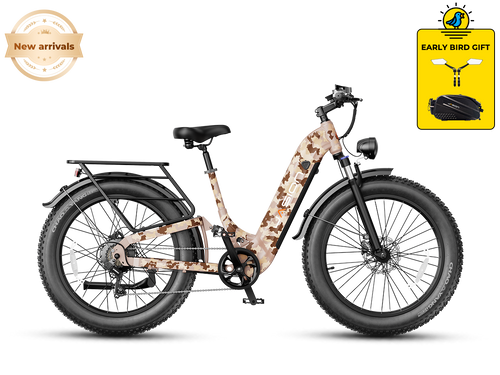
A step-through electric bike has a lower frame opening that can make mounting and dismounting easier. Rider height, reach, balance and handling still matter; no frame design suits everyone.
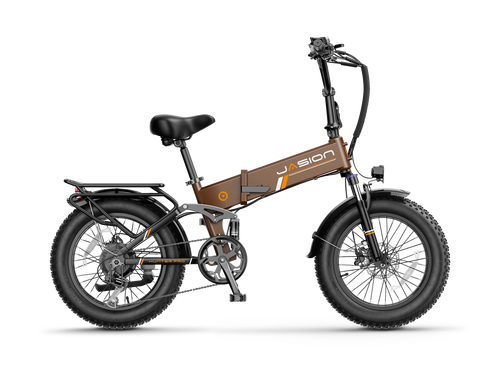
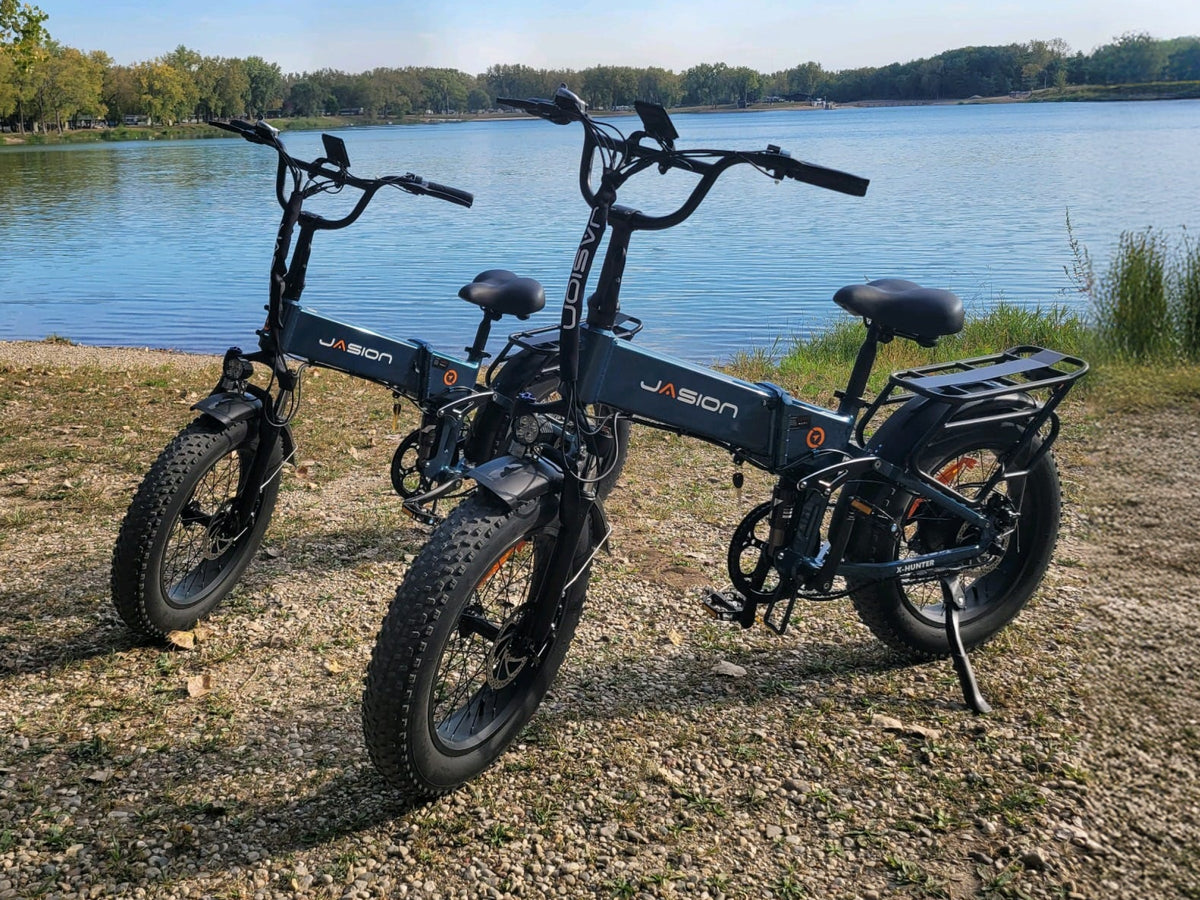
If you want a folding fat tire ebike with front and rear suspension, consider the Hunter Pro for your shortlist. Check its weight, rider fit and storage dimensions before choosing it for daily commuting. Its environmental value depends on how you use and maintain it, rather than a model-specific carbon-saving claim.
Compare the Jasion electric bike collection against one car trip you could replace consistently. Build the purchase around that practical need.
Electric Bikes and Carbon Emissions: FAQs
Are electric bikes zero-emission vehicles?
Ebikes produce no tailpipe exhaust while riding, but manufacturing, charging, maintenance and disposal create emissions. Their full lifecycle footprint is not zero.
How much CO₂ can I save by commuting on an ebike?
The result depends on which car trips you replace and your vehicle's emissions. EPA's average of about 400 grams of tailpipe CO₂ per mile can help estimate avoided car exhaust, but net lifecycle savings also account for the ebike's footprint.
Does the 13 g CO₂e/km estimate apply to Jasion bikes?
No model-specific conclusion follows from that figure. It comes from a French lifecycle estimate reported in 2023 with an assumed 20,000 km of use, not a lifecycle assessment of a Jasion model.
Is riding an ebike always greener than walking?
No. Replacing walking or conventional cycling does not provide the same avoided-car benefit as replacing a gasoline-car trip. The journey displaced matters.
Do I need regenerative braking to reduce car-related emissions?
No. The opportunity comes from replacing car travel with ebike trips and keeping the bike in use. Regenerative braking should only be treated as a feature when the manufacturer confirms it for the exact model.




Share: