
 EU
EU
 UK
UK
 US
US
 CA
CA



For a bike light on well-lit city streets, 300–500 lumens is a useful starting range. If your route includes roads without streetlights, consider roughly 600–1,000 lumens, with a beam that lights the road ahead evenly. These are shopping guidelines, not fixed minimums: your speed, surroundings, and the light's optics matter too.
When comparing Jasion commuter ebikes, think about the trip home as well as the trip out. A route that looks clear at lunchtime may include a dark stretch after work. Choose your lighting around that stretch, then check how long the light runs at the setting you will actually use.
Bike Light Lumens: A Starting Point for Your Route
Lumens measure a light's total visible output. They help you compare lights, but do not tell you exactly how far you can see. Two lights with the same lumen rating can put very different amounts of light onto the pavement.
| Where you ride | Front-light starting point | What to prioritize |
|---|---|---|
| Well-lit city streets | About 300–500 lumens | A controlled beam, side visibility, and enough runtime for your commute |
| Mixed streets with occasional unlit sections | About 500–800 lumens | Useful illumination beyond the streetlights and accessible brightness controls |
| Unlit roads or paths | About 600–1,000 lumens | Light reaching far enough ahead to spot changes in the surface |
| Technical off-road trails after dark | Often 1,000 lumens or more | Coverage through turns, secure mounting, and sustained output |
The ranges overlap because routes do. A slow ride on a smooth, familiar path is different from a quick descent on uneven pavement. Adjust your pace so you can stop within the road you can clearly see. These ranges are not legal standards or Jasion product test results.
What Matters Besides the Lumen Number?
Where the beam lands
A wide beam helps reveal the edges of a path and nearby turns. A more concentrated beam can reach farther ahead, but may leave the sides dark. For road riding, look for an even patch of useful light rather than a bright spot just in front of the wheel.
A light with a defined upper cutoff can help keep light out of approaching riders' eyes. Whatever beam you choose, follow its aiming instructions and direct it toward the road. More output is useful only when it reaches the area you need to see.
Runtime at your riding setting
Compare output and runtime for the same mode. A headline maximum lumen figure and a headline maximum runtime may describe two different settings. A light that lasts several hours on low may run for much less time on high.
For example, a 35-minute ride each way means 70 minutes of lighting between charges. Look for more than 70 minutes at your chosen setting, leaving room for a detour or delay. This is a planning example, not a measured runtime for a Jasion light.
Some lights reduce output as they warm up or their battery runs down. Where available, check sustained-output information as well as the peak rating.
A mount that stays put
The beam should hold its position over ordinary bumps. Check clamp fit, clearance around the display and cables, and access to the light's controls. If you use a front basket, check the beam with the basket loaded: a bag that sits above the rim can block a handlebar-mounted light.
Do You Need an Extra Light on an Ebike?
Start with the lighting already fitted to your bike. On a short evening ride in a familiar area, check whether you can see the surface ahead comfortably at your usual pace. An additional light can be useful for an unlit section, a longer evening ride, or an independent backup.
An integrated light and a separate rechargeable light also have different charging routines. The integrated system uses the bike's electrical supply; a separate light needs its own charging check. Choose the arrangement that fits how you park and charge your bike.
If you are adding a front light, browse the Jasion Ultra-Bright Wide-Beam Ebike Headlight. Confirm the mount fits your intended position and that the selected version's controls and runtime suit your route. For a wired replacement, match the bike's specified voltage and connector rather than assuming any ebike light will fit.
Front and Rear Lights Have Different Jobs
A front light helps illuminate your route and makes you more noticeable from ahead. A rear light helps people behind you see your position, so it does not need to match the front light's lumen figure. Rear-light viewing angle and placement matter, especially when a coat, saddle bag, or rear load could cover it.
Use a steady front beam to see the road after dark. Where permitted, a daytime visibility mode can serve a different purpose: attracting attention in daylight. Check local requirements for light colors, modes, and reflectors rather than treating a lumen number as proof of compliance.
For the rest of your setup, see our ebike safety gear guide.
A Short Check Before Your First Evening Commute

- Fit your usual bags. Check that neither the front beam nor the rear light is covered.
- Set the beam. Follow the mounting instructions and aim toward the road, checking that the mount stays secure.
- Try the controls. Make sure you can reach the brightness button without interfering with steering or braking.
- Plan both journeys. Check the charge for the return trip, especially if you cannot recharge at work.
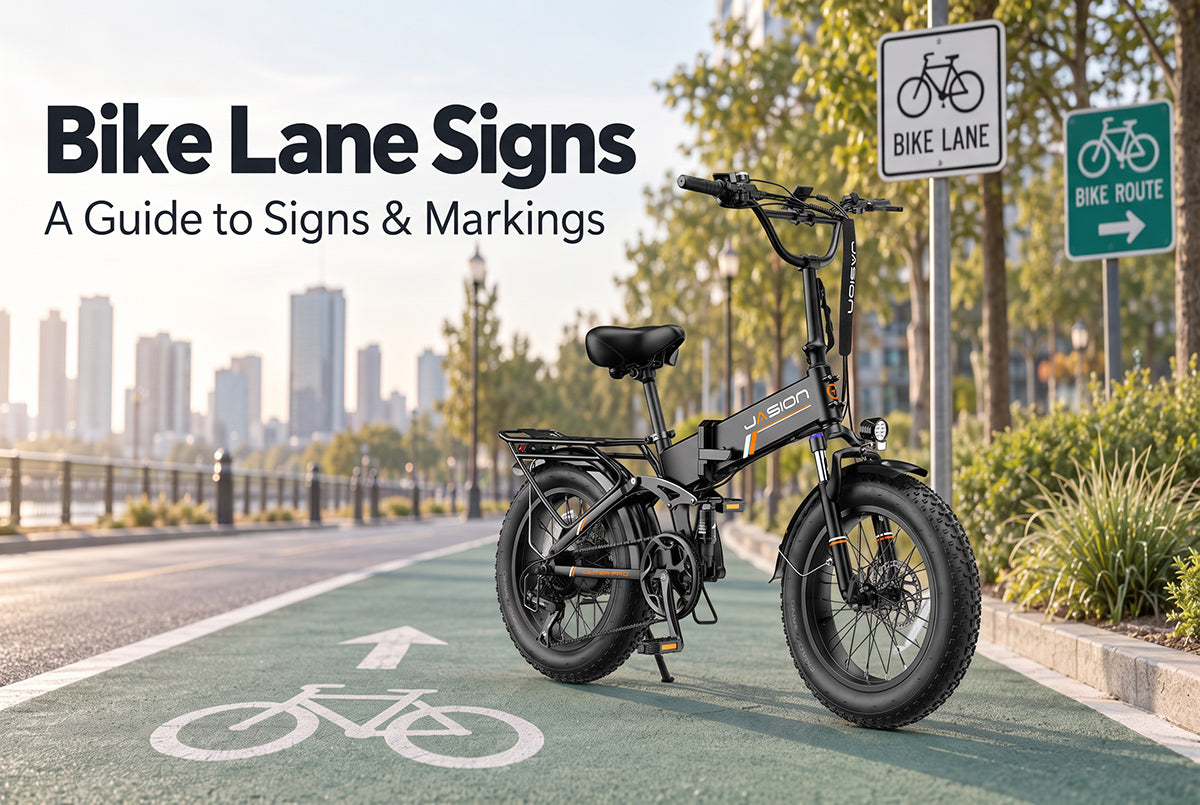
Wet pavement and reflections can make details harder to pick out. Adjust your pace and use our rainy-day ebike riding guide for weather-specific preparation. If your commute is unfamiliar, our guide to bike lane signs and road markings can help you plan the route before setting out.
Bike Light Questions
Is 500 lumens enough for a bike light?
A 500-lumen front light can suit well-lit city streets and some mixed-light routes at a moderate pace. On completely unlit roads, check that its beam reaches far enough ahead for your speed; the lumen rating alone cannot establish that.
Is a 1,000-lumen bike light too bright for commuting?
Not necessarily. That output can be useful on an unlit part of the journey. On brighter streets, use a suitable lower setting if available and aim the beam correctly. Beam shape and direction matter as much as maximum output when avoiding glare.
Do ebikes need more lumens than regular bikes?
Not automatically. Choose lighting for your speed and route, rather than the presence of a motor. Riding faster on an unlit road calls for more useful light farther ahead, regardless of the type of bike.




Share: