
 EU
EU
 UK
UK
 US
US
 CA
CA



To use gears on an ebike, shift the mechanical gears to control how hard the pedals feel, then choose a pedal assist level to control how much help the motor provides. Keep pedaling lightly while shifting, ease pressure on the pedals, and change gears before a hill or stop rather than waiting until the drivetrain is under heavy load.
Mechanical gears and pedal assist work together, but they do different jobs. If you are comparing bikes for commuting, hills, or longer rides, browse the Jasion electric bike and compare the drivetrain and assist system alongside the motor.

Do Electric Bikes Have Gears?
Many ebikes have mechanical bicycle gears, although some use a single-speed drivetrain. A multi-speed ebike typically has a handlebar shifter, rear derailleur, several rear cogs, and a chain. Moving the chain between those cogs changes how hard the pedals feel.
An ebike may also show assistance levels on its display. Riders often call these “electric gears,” but they are not mechanical gears. Pedal assist changes motor support; the bicycle gears change the relationship between pedaling and wheel movement.
| Control | What it changes | Use it for |
|---|---|---|
| Mechanical gear | Pedal resistance and cadence | Starting, climbing, cruising, and descending |
| Pedal assist level | How much motor assistance the system requests | Managing effort, response, and battery use |
For more about the electric side of the system, see how ebike pedal assist works.
Low Gear vs High Gear: What Changes?
A lower or easier gear makes each pedal stroke easier but requires the rider to pedal faster to maintain the same road speed. It is useful for starting, climbing, carrying a load, and riding slowly.
A higher or harder gear moves the bike farther for each turn of the pedals. It suits faster riding on level ground or a gentle descent, but it takes more force to turn. Starting in a high gear can make the first few pedal strokes feel heavy even when the motor soon provides assistance.
On a common rear-derailleur setup, the largest rear cog is the easiest gear and the smallest is the hardest. Because shifter labels vary, judge the gear by pedal feel as well as its displayed number.
How to Shift Gears on an Ebike
- Begin in an easy or middle gear. You should be able to start without forcing the pedals.
- Pedal steadily. A derailleur needs chain movement to complete a shift.
- Ease pressure on the pedals. Keep them turning, but briefly reduce how hard you push.
- Make one deliberate shift. Let the chain settle onto the next cog.
- Resume normal pressure. Once the shift is complete, continue pedaling and reassess the cadence.
- Repeat if needed. Move through the gears progressively rather than forcing several shifts under heavy load.
You should normally hear a brief, clean movement as the chain changes cogs. Repeated clicking, skipping, delayed shifting, or a chain that will not stay in gear may indicate that the drivetrain needs cleaning, inspection, or adjustment.
Which Gear and Assist Level Should You Use?
Use pedal feel and cadence as your guide. The pedals should turn smoothly without feeling heavy or spinning without useful pressure. Adjust for the grade, speed, load, wind, and surface.
| Riding situation | Mechanical gear | Assist approach |
|---|---|---|
| Starting from a stop | Easy to middle gear | Start smoothly in a lower assist setting and increase only if needed |
| Flat cruising | Middle to harder gear as speed increases | Use enough support to maintain comfortable effort |
| Approaching a hill | Shift easier before pedal pressure becomes heavy | Add assistance gradually while continuing to pedal |
| Descending | A harder gear may prevent uncontrolled spinning if pedaling | Motor help is often unnecessary; control speed with appropriate braking |
| Preparing to stop | Shift to an easier restart gear while still moving | Reduce assistance for a predictable stop and restart |
Two Moments Worth Planning Ahead
Before a hill: move into an easier gear while the chain is still under moderate load, then add assistance as needed. This keeps your cadence steady and avoids asking the chain to move during the hardest pedal stroke. For the complete buying decision, Jasion's ebike hill-climbing guide covers motor torque, battery capacity, load, tires, and gearing.
Before a stop: downshift while the bike is still rolling. A derailleur needs chain movement to complete the change, so preparing an easier gear makes the next start smoother. Some internal-gear hubs work differently; follow the instructions for the drivetrain on your bike.
Can the Right Gear Improve Ebike Range?
Efficient shifting helps you maintain a comfortable cadence and contribute more consistently, which may reduce unnecessary reliance on high assistance. It does not create a fixed mileage gain; battery use still changes with the route, speed, load, assist level, weather, tire pressure, and rider input.
Common Ebike Shifting Mistakes
- Letting assist hide a poor gear choice: Set the mechanical gear for a comfortable cadence, then choose the motor support you want.
- Forcing several changes at once: Shift progressively and give the chain time to settle.
- Ignoring new drivetrain noise: Ongoing clicking, skipping, or clunking deserves inspection instead of harder shifting.
- Cross-chaining: On bikes with multiple front chainrings, avoid extreme front-and-rear combinations that pull the chain at a sharp angle.
When Does Shifting Need Attention?
A properly operating drivetrain should change gears without ongoing hesitation. Inspect it if you notice:
- repeated clicking after the shift is complete;
- the chain jumping between gears;
- a shifter that moves without changing gear;
- a chain that drops off the cassette or chainring;
- visible damage, excessive rust, or a bent derailleur;
- grinding or clunking that continues after a clean shift.
Keep the chain clean and lubricated according to the bike and lubricant instructions, and keep lubricant away from brake surfaces. If the derailleur appears bent or shifting remains unreliable, have it inspected before the problem worsens.
A Multi-Speed Jasion Option

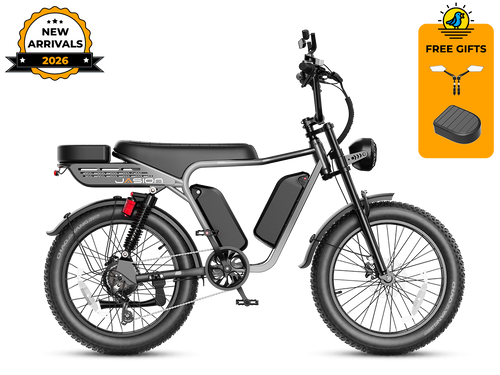
The Jasion RetroVolt Max Ebike pairs a Shimano 7-speed drivetrain with a dual-battery system, 20 × 4-inch tires, full suspension, and hydraulic disc brakes. Riders can adapt pedal effort for starts, cruising, hills, and changing terrain while selecting motor support separately.
It is a practical match for riders who want multi-speed flexibility across varied routes instead of a single-speed setup.
Use the Jasion ebike comparison page to compare drivetrains alongside frame style, tires, suspension, brakes, and the way you plan to ride.
Frequently Asked Questions
What gear should I start an ebike in?
Start in an easy or middle mechanical gear that lets you move without forcing the pedals. The exact gear number varies by drivetrain and terrain. Use a controlled assist level and shift harder as speed increases.
Should I stop pedaling when shifting an ebike?
With a conventional derailleur, keep the pedals turning but briefly ease how hard you push. The moving chain completes the shift, while reduced pressure helps it move more smoothly between cogs.
What is the best gear for going uphill on an ebike?
Use an easier mechanical gear that supports a steady, comfortable cadence. Shift before the steepest part of the climb and add pedal assist gradually instead of waiting until the drivetrain is under maximum load.
Is pedal assist the same as changing gears?
No. Pedal assist changes how much motor support is requested. Mechanical gears change pedal resistance and the relationship between crank movement and wheel movement. Riders normally adjust both.
Can I shift ebike gears while stopped?
A derailleur system normally needs the chain and pedals to move before the gear change can happen. Some internal-gear hubs can shift at a stop, so follow the instructions for the drivetrain on your exact bike.
Does using a lower gear use more battery?
The mechanical gear alone does not set battery use. Battery demand depends on motor assistance, grade, speed, load, rider input, and other conditions. An appropriate easy gear can help the rider pedal effectively on a climb rather than relying only on higher assistance.
Ready to put the technique into practice? Explore Jasion electric bikes and compare drivetrains, assist systems, frames, tires, and riding uses together.




Share: