
 EU
EU
 UK
UK
 US
US
 CA
CA



Most everyday ebikes weigh about 40 to 80 lb. City models can be lighter, while cargo, trike, moped-style, and electric dirt bikes often weigh more. The battery and motor account for part of the difference; the frame, tires, suspension, and fitted equipment account for the rest.
Before comparing Jasion electric bikes, picture the part of the day when you are not riding. Will you roll the bike out of a garage, carry it upstairs, fold it for an RV, or lift it onto a vehicle rack? That routine tells you how much the number on the spec sheet matters.
How Much Does an Ebike Weigh?
Typical weight depends on the bike's purpose and equipment:
| Ebike type | Broad shopping range | Why the weight varies |
|---|---|---|
| Light city or road-style ebike | About 30–50 lb | Smaller batteries, narrower tires, and simpler equipment can keep weight down. |
| Commuter or step-through ebike | About 45–75 lb | Fenders, racks, suspension, comfort features, and battery size create a wide range. |
| Folding ebike | About 40–75 lb | Folding changes the bike's dimensions, not necessarily its mass. Fat tires and suspension can make a folding model substantial. |
| Fat-tire or all-terrain ebike | About 60–90+ lb | Wide tires, stronger wheels, suspension, and larger electrical components add useful capability and weight. |
| Cargo, trike, or moped-style ebike | About 70–120+ lb | Longer or reinforced frames, cargo hardware, extra wheels, seating, and larger or dual batteries can raise the total. |
Use these ranges as a starting point, then check the exact model and configuration.
Bike Weight and Payload Are Not the Same
Bike weight is how much the ebike itself weighs. Maximum payload is the load the manufacturer permits the bike to carry. Depending on the manufacturer's wording, payload can include the rider, cargo, accessories, and anything attached to the bike.
For example, an ebike listed at 70 lb with a 330 lb maximum payload weighs 70 lb. The payload figure describes the permitted load, not the bike itself. Check whether the manufacturer defines that load as rider plus cargo and accessories.
You may also see net weight, gross weight, or shipping weight:
- Net or bike weight: generally refers to the assembled product, although the included accessories and battery can vary by brand.
- Gross or shipping weight: can include the carton, protective materials, and uninstalled parts.
- Weight without battery: shows what remains to be lifted after removing a removable battery.
Racks, baskets, seats, tire setup, and a second battery can change the ready-to-ride total, so compare the configurations you would actually use.
What Adds Weight to an Electric Bike?
Battery
Battery size and construction affect weight. A second battery adds pounds, but it can also support longer planned rides and fewer charging stops.
Motor and electrical system
The motor, controller, display, wiring, sensors, and protective housings all contribute. Motor rating alone does not reveal the weight of the complete bike. The Jasion ebike controller guide explains how the main electrical parts work together.
Frame, suspension, wheels, and tires
A folding hinge, full suspension, fat tires, and stronger wheels all add material. This is why a folding ebike can take up less space without being especially light. If storage size matters most, see Jasion's folding ebike guide.
Utility and comfort equipment
Racks, baskets, fenders, lights, rear platforms, and larger saddles add to the ready-to-ride total. They can also make commuting and errands more practical.
Is a Lighter Ebike Always Better?
No. Lower weight matters most when you regularly carry the bike upstairs, lift it onto a vehicle rack, or maneuver it in a tight apartment. If you normally roll the bike out of a garage and start riding, tire choice, suspension, cargo space, and battery setup may matter more.
A lighter design is easier to lift. A heavier one may include fat tires, full suspension, cargo hardware, or a second battery. Choose the equipment you need, then make sure you can store and transport the complete bike.
If carrying the bike is a regular part of your commute, Jasion's lightweight commuter ebike guide covers city-focused choices in more detail.
Check Weight Against Your Routine
- Stairs: Decide whether you can control the bike's weight and size. Removing a removable battery can make the lift easier.
- Vehicle rack: Check the rack's per-bike and total limits, tire-width and wheelbase fit, attachment method, and vehicle limits.
- Apartment or RV storage: Measure the narrowest doorway, turn, or compartment. Folded dimensions and weight both matter.
- Hills and rough roads: Compare motor, gearing, brakes, tires, suspension, rider load, and route. Jasion's ebikes for hills guide covers this decision in detail.
- Groceries and gear: Check payload, rack rating, cargo layout, kickstand, wheelbase, and brakes along with the empty-bike weight.
Jasion Model Weights
These are the listed weights in each model's main product specifications. Accessories and configuration can change the ready-to-ride total.
| Model | Listed weight | Bike style |
|---|---|---|
| EB5 Roamer ST | 65 lb | Step-through commuter |
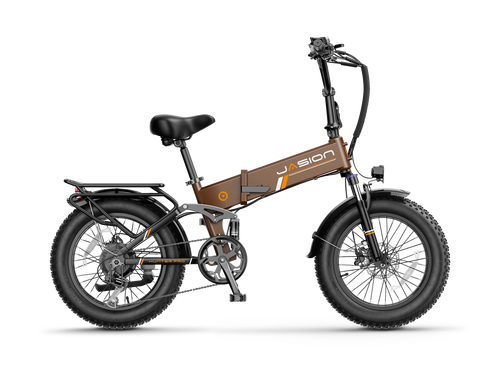
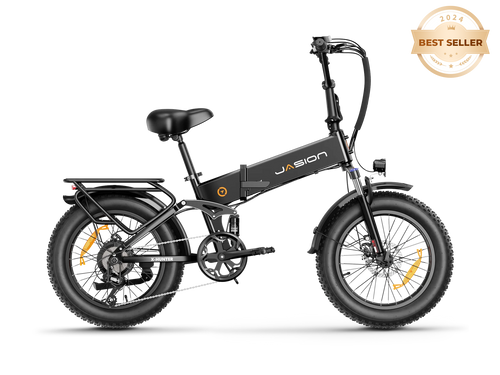
| X-Hunter | 71 lb | Folding fat-tire ebike |
| X-Hunter ST | 71 lb | Step-through folding fat-tire ebike |
| Hunter Pro | 82 lb | Full-suspension folding fat-tire ebike |
| Thunder | 82 lb | Full-size fat-tire ebike |
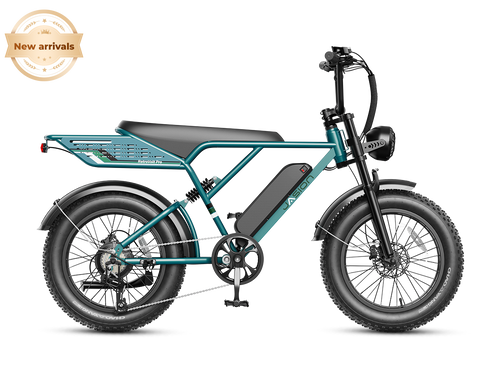
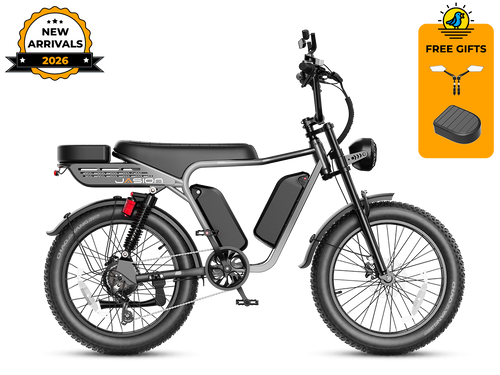
| RetroVolt Pro | 82 lb | Moped-style fat-tire ebike |
| JT18 | 88 lb | Folding electric trike |
| Kago | 94 lb | Compact utility cargo ebike |
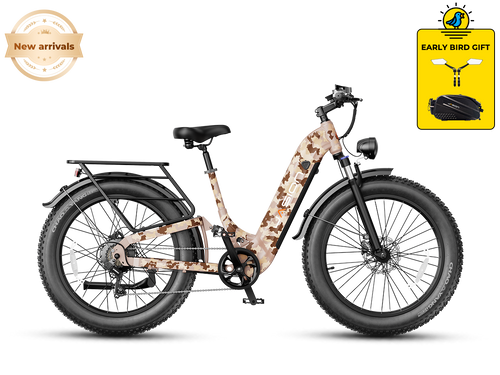
| Thunder Pro | 96.6 lb | Full-size fat-tire ebike |
| Thunder Pro ST | 96.6 lb | Step-through fat-tire ebike |
| RetroVolt Max | 108 lb | Dual-battery moped-style ebike |
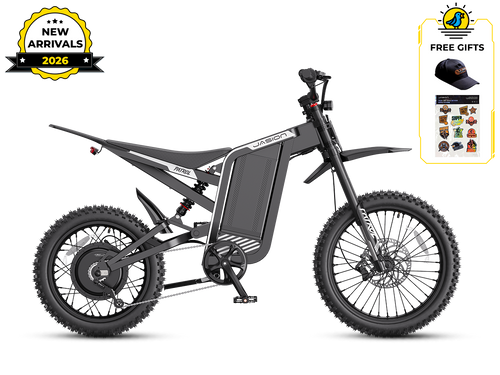
| Patrol | 115 lb | Throttle-only electric dirt bike |
The lineup ranges from a 65 lb step-through commuter to larger cargo, trike, moped-style, and electric dirt bike designs. Choose the bike style first, then check that its weight works with your storage and transport plans.
For everyday roads and easier mounting
The Jasion EB5 Roamer ST pairs the lowest listed weight in this group with a step-through commuter frame. It is the natural starting point when daily streets and easier mounting matter more than fat tires or a cargo platform.
For folding storage and rougher routes
The Jasion X-Hunter weighs 71 lb and combines a folding frame with fat tires and full suspension. It suits riders who want a smaller storage footprint without giving up an all-terrain setup.
For groceries, gear, and daily utility
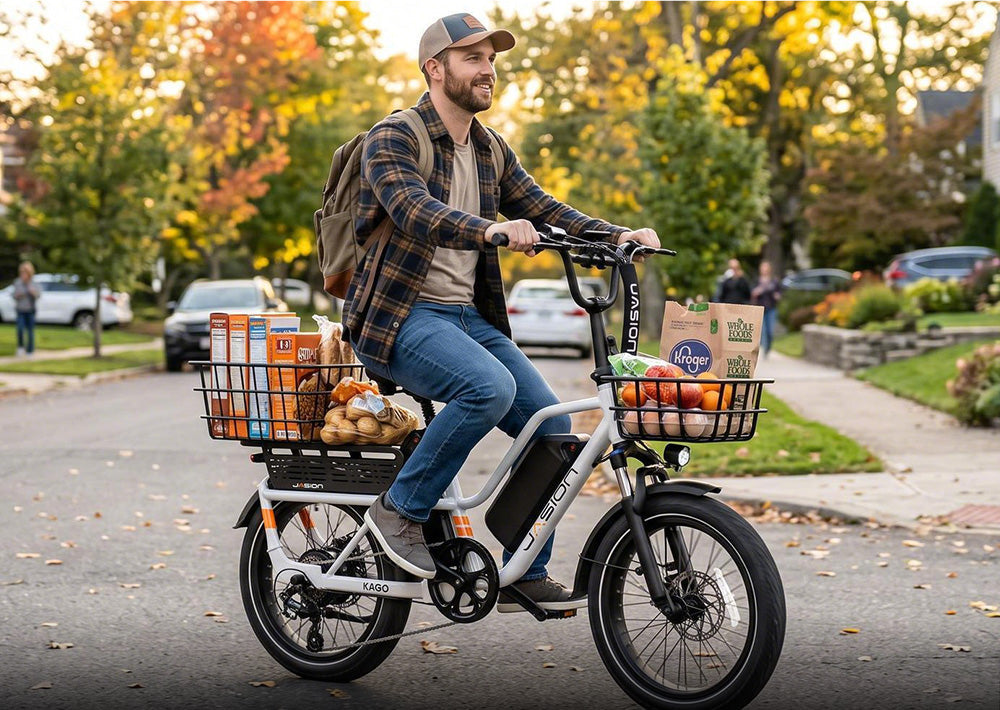
The Jasion Kago Cargo Ebike weighs 94 lb and uses a compact utility layout with dual removable batteries and an extended rear rack. It is designed around groceries, gear, and everyday utility.
If carrying equipment is central to your decision, the compact vs. full-size cargo ebike guide explains the layout tradeoffs. You can also use the Jasion comparison page to review complete specifications side by side.
Frequently Asked Questions
How much does an ebike weigh?
Many everyday ebikes weigh about 40 to 80 lb. Light city models may weigh less, while cargo, trike, fat-tire, and moped-style ebikes can weigh more. Check the exact model rather than relying only on a category average.
Is 70 lb heavy for an ebike?
Seventy pounds is within the range of many full-featured commuter, folding fat-tire, and all-terrain ebikes. Whether it feels heavy depends on whether you must carry it, load it onto a rack, or mainly roll it from storage to the road.
Can I remove the battery to make an ebike easier to lift?
If the model has a removable battery and its instructions allow removal for transport, taking it out can reduce the weight you lift at once. Secure and transport the battery according to the manufacturer's instructions, and remember that the remaining bike may still be bulky.
Does a heavier ebike use more battery?
Weight can affect energy use, especially during acceleration and climbing, but it is only one factor. Rider and cargo load, speed, assistance level, hills, stops, wind, temperature, tire pressure, and battery capacity also affect range.
Can a regular bike rack carry an ebike?
Some can. Check the rack's per-bike and total weight limits, tire width, wheelbase, attachment method, hitch limits, and vehicle instructions for the exact bike.
Is maximum payload the same as ebike weight?
No. Ebike weight describes the bike itself. Maximum payload describes how much load the bike is designed to carry, usually including the rider and cargo according to the manufacturer's definition.
Compare Jasion electric bikes by style, equipment, and listed weight to find the setup that fits your route and storage space.






Share: