
 EU
EU
 UK
UK
 US
US
 CA
CA



If your shoulders tense up, your wrists carry too much weight or you have to lock your elbows to reach the grips, the handlebar position may need attention. Even a small change can make an ebike feel more natural.
The method depends on the stem. Some handlebars slide vertically, while others move through an adjustable stem, headset spacers or bar rotation. Identify the system first, then make one small change at a time.

Can You Adjust the Handlebar Height on Every Bike?
Most bikes offer some way to refine the cockpit, although that does not always mean direct vertical adjustment. A quick-release riser may slide up and down, an adjustable stem changes angle, and a threadless system may use spacers or a different stem. A folding hinge, however, may be intended only for storage. The owner's manual will show which movement the hardware supports.
First, Know What You Are Changing
“Raise the handlebars” can describe several different adjustments. They affect fit in different ways.
| Adjustment | What moves | What you may feel |
|---|---|---|
| Handlebar height | The bar and stem move vertically | A more upright or forward-leaning riding position |
| Stem angle | The stem pivots upward or downward | A change in both bar height and reach |
| Handlebar angle | The bar rotates inside the stem clamp | A different wrist angle and a small change in reach |
| Stem length or rise | The stem is replaced with a compatible one | A larger change in reach or bar position |
That distinction matters because rotating a handlebar is not the same as raising the stem. If your main complaint is an awkward wrist angle, changing the bar angle may solve it without changing the true handlebar height.
How High Should Bike Handlebars Be?
There is no single measurement that works for every rider or bike. Start with a position that lets you look ahead comfortably, keep a slight bend in your elbows and reach both brake levers without stretching your fingers.
- For an upright everyday position: the grips are often near saddle height or above it, depending on the frame and bar shape.
- For a more forward riding position: the grips may sit lower, placing more of the rider's weight toward the front of the bike.
- For frequent stops and relaxed riding: a moderately raised position can make it easier to keep the head up and reduce the feeling of reaching.
If the controls still feel far away at a comfortable bar height, check the bike's overall fit rather than continuing to raise the stem. Our ebike size and fit guide explains reach, frame style and rider height.
How to Tell Which Direction to Adjust
- Consider moving the bars higher or closer if you lock your elbows, crane your neck or feel that you are falling toward the grips.
- Consider moving them slightly lower or farther forward if the cockpit feels cramped or the steering feels too light.
- Consider rotating the bar if height feels right but your wrists bend awkwardly.
Saddle position can also shift weight onto the hands. Set it first, then evaluate the cockpit. See how to adjust bike seat height, angle and position if that part of the fit still needs work.
Identify Your Bike's Handlebar System
Telescoping Riser with a Quick-Release Clamp
This system has an inner tube that slides inside an outer tube, usually with a quick-release lever or clamp near the top of the steering column. It is common on some folding and compact bikes. A minimum-insertion or maximum-height line on the inner tube marks the safe extension limit.
Adjustable-Angle Stem
An adjustable stem has a visible pivot between the steerer and the handlebar clamp. Loosening the specified fixing bolt allows the stem to rotate. Raising the angle usually moves the grips both upward and closer to the rider; lowering it moves them forward and down.
Threadless Stem and Spacers
A threadless system clamps around the fork's steerer tube and often has round spacers above or below the stem. Changing spacer position can alter height within the available steerer length. This job also affects headset bearing preload, so it requires more care than opening a quick-release clamp.
Fixed or Folding Stem
Some stems fold at a hinge for storage but do not telescope. Once unfolded, the hinge should close and lock fully.
What You Need Before Adjusting the Handlebars
- The owner's manual for the exact bike model
- The correct metric hex keys or supplied tool
- A torque wrench when the manual gives torque values
- A piece of removable tape to mark the original position
Switch the ebike off and support it on level ground. Photograph the original cable routing and mark the current bar position so you can return to the starting setup if needed.
How to Adjust a Telescoping Handlebar Height
- Support the bike. Place it on level ground and keep the front wheel straight.
- Open the correct clamp. Use the quick-release lever or fastener identified in the owner's manual.
- Move the riser gradually. Raise or lower it in a small increment, staying within the marked adjustment range.
- Check cable movement. Turn the bar gently left and right. Brake hoses, shift cables and electrical wires must not pull tight, kink or catch.
- Align the handlebar. Center the stem with the front wheel.
- Close and secure the clamp. Follow the manual's lever tension or torque instruction. The riser must not slide or rotate.
The lever should close firmly without excessive force. Adjust its tension according to the model instructions if it feels unusually loose or tight.
How to Adjust an Adjustable-Angle Stem
- Find the pivot and fixing bolt. Confirm the correct bolt in the model manual; nearby bolts may serve a different purpose.
- Mark the original angle. A small tape line gives you a reliable reference.
- Loosen only enough for movement. Support the handlebar while loosening the specified fastener.
- Rotate the stem in a small increment. Watch the cables as the grips move higher or lower.
- Secure the fastener. Tighten it to the specification in the owner's manual.
- Test for movement. Hold the front wheel steady and apply gentle twisting pressure at the grips. The stem should remain fixed.
An adjustable stem changes reach as well as height. After raising it, make sure the controls have not moved so close that your elbows feel cramped.
How to Adjust the Handlebar Angle
Handlebar rotation can improve wrist position without changing the stem. This is also the adjustment used when centering a newly installed bar.
- Mark the current position of the handlebar against the stem faceplate.
- Support the bar, then loosen the faceplate bolts evenly. Do not remove them unless the manual instructs you to do so.
- Rotate the bar a small amount until your wrists feel neutral and the brake levers remain easy to reach.
- Tighten the faceplate bolts gradually in an alternating pattern, following the specified torque.
- Confirm that the gap around the faceplate is even where the stem design requires it.
Do not roll the bar so far that the brake levers, throttle, display or controls become awkward to operate. If the lever angle also needs adjustment, treat that as a separate step.
What About a Threadless Stem?
On a threadless setup, moving spacers above or below the stem can change handlebar height. The top cap sets headset bearing preload before the stem clamp bolts secure the assembly, so follow the correct tightening sequence and torque shown in the manual. A replacement stem must also match the steerer, handlebar clamp and available cable length.
Adjusting the Hunter Pro Handlebar Position
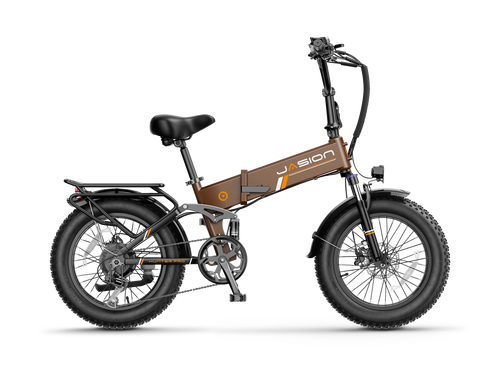
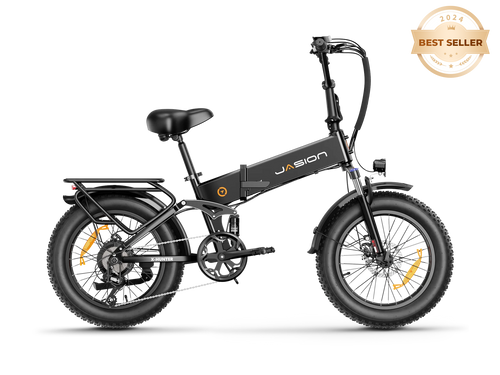
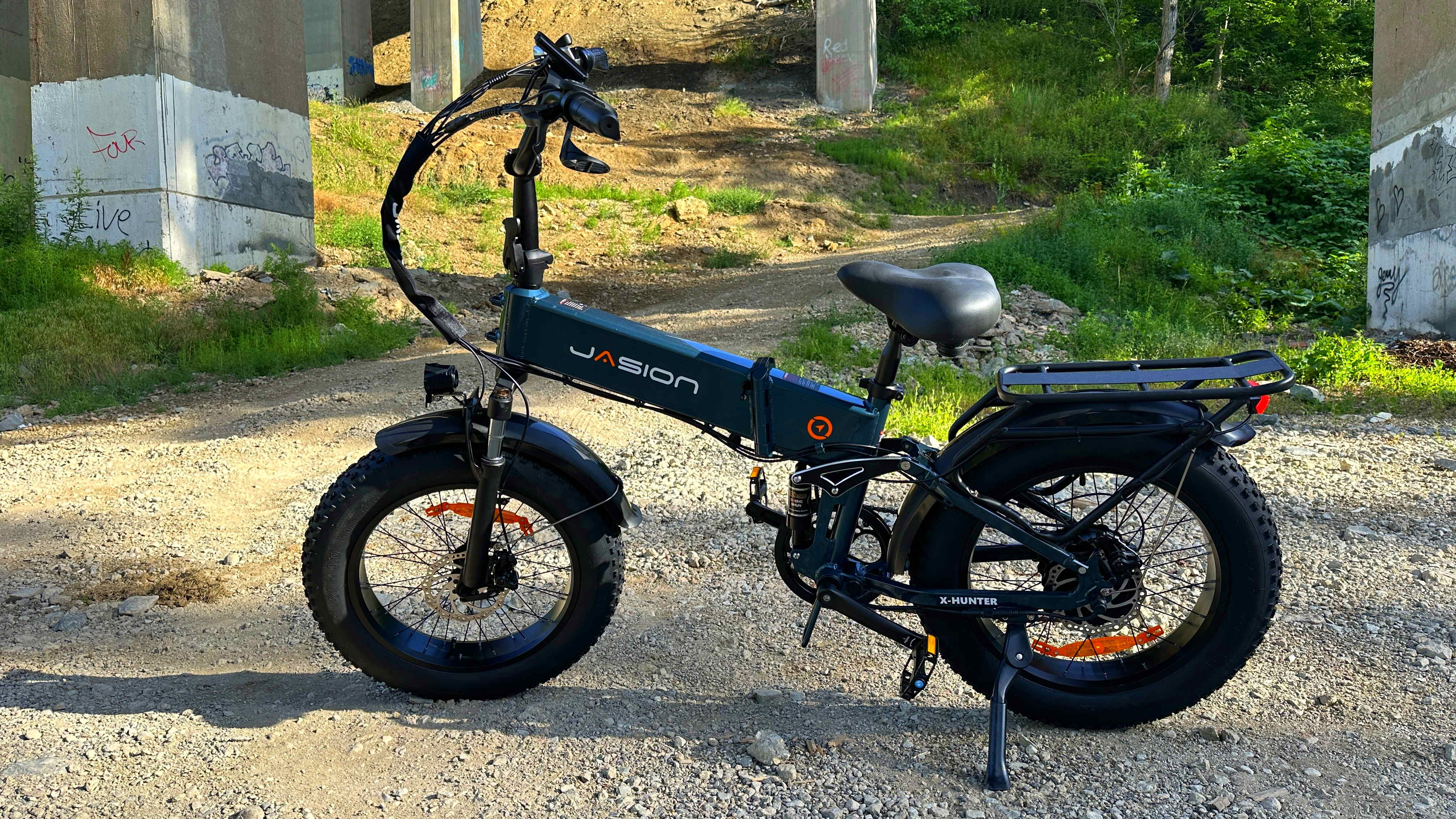
The Jasion Hunter Pro Full Suspension Folding Ebike provides a useful example of angle-based adjustment. Its riser angle and handlebar angle can be set to refine the height, reach and wrist position while retaining the compact folding design.
According to the Hunter Pro assembly instructions, center the handlebar in the riser clamp, set its angle, align the riser with the front wheel and tighten the four faceplate screws evenly. Set the riser angle at the side screw, then confirm that the folding mechanism is fully locked. Use the current manual supplied with the bike for the exact hardware sequence.
Check Cable and Control Clearance
An ebike cockpit carries more than brake and shift cables. It may also include display wiring, throttle wiring, lighting controls and motor-cutoff connections. After any handlebar change:
- Turn the handlebar fully left and right.
- Confirm that no hose, cable or wire becomes taut.
- Check that nothing catches on the frame, light, basket or display.
- Make sure the brake levers, shifter, throttle and buttons remain easy to operate.
- Verify that added accessories do not restrict steering or cover controls.
If the cables do not have enough room for the position you want, keep the bars within their current range or use compatible parts and routing.
Post-Adjustment Safety Check
Before riding, run through this short check:
- Confirm that the handlebar is aligned with the front wheel and does not twist independently.
- Apply the front brake and rock the bike gently; the headset should not knock or move.
- Turn fully left and right; steering should remain smooth and the cables should stay relaxed.
- Operate both brakes, the shifter, throttle and display controls while stationary.
- Take a short, low-speed ride in an open area and recheck the fasteners afterward.
If the bar slips, the headset clicks or the steering binds, correct the setup before the next ride.
How to Fine-Tune the Position
Make one small change, then try it on a familiar route. Pay attention to your hands, shoulders, neck and access to the brakes before deciding whether another adjustment is needed.
A comfortable setup should let you hold the grips without bracing your upper body against them. Your elbows should remain relaxed, and you should be able to look ahead without craning your neck. The best position is not necessarily the highest one; it is the one that keeps the bike easy to control throughout the ride.
If you are choosing a bike with a more upright frame or a different handlebar position, compare the current Jasion electric bike collection by frame style, rider fit and intended use.
Frequently Asked Questions
How do I raise the handlebars on a bike?
First identify the stem type. A telescoping riser can move upward within its marked limit, an adjustable-angle stem pivots upward and a threadless stem may require spacer changes or a different stem. Follow the instructions for the exact system rather than loosening bolts at random.
Can all bike handlebars be raised?
Not in the same way. Some use a telescoping riser, others change position through stem angle or spacers, and some have a fixed-height stem. A folding hinge may provide storage convenience without vertical adjustment.
Should bike handlebars be higher than the seat?
They can be, especially on bikes designed for an upright riding position, but it is not a universal rule. Frame geometry, riding style, flexibility and reach all affect the most comfortable position.
How do I know if my handlebars are too low?
Common signs include locked elbows, tense shoulders, neck strain and excessive pressure on the hands. Check saddle position as well, because a poorly positioned saddle can push the rider's weight forward.
Does rotating the handlebar make it higher?
Rotating a swept or riser bar can move the grips slightly, but it mainly changes wrist angle and reach. It is not the same as raising a telescoping riser or changing stem height.
Why do my handlebars move after adjustment?
The clamp may be under-tightened, incorrectly assembled, contaminated or damaged. Stop riding if the bar or stem slips. Inspect the hardware and tighten it only to the specification for that component, or have a bicycle mechanic check it.


Share: