
 EU
EU
 UK
UK
 US
US
 CA
CA



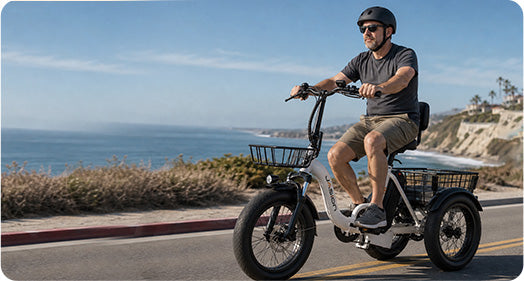
If steady starts and stops, carrying a few groceries, or avoiding a high step over are priorities, a 3 wheel electric bike for adults may be worth considering. It is not automatically the right choice, though. The extra wheel changes how the bike turns, how much room it needs, and where you can store it.
Use this guide to compare fit, cargo space, battery setup, braking, and storage before you buy an adult electric trike.
Is a 3 Wheel Electric Bike Right for You?
An adult electric trike can be a practical choice when you want help with pedaling but also value a bike that stays upright when stopped. That can be useful for short local errands, carrying a few bags, or riders who do not enjoy balancing a loaded two wheel bike at a stoplight.
A third wheel changes the ride. An electric trike is generally wider than a standard ebike, needs more room through gates and around parked cars, and turns differently. At speed, a trike does not lean into a corner like a two wheel bike. Riders need to slow down, steer smoothly, and get used to how the rear wheels track through a turn.
Before comparing models, map out where you ride. A paved neighborhood route, a bike path, and a wide driveway are very different from narrow trails, tight apartment storage, or a busy road with limited shoulder space.
Start With the Type of Adult Electric Trike
Traditional upright electric trikes
These have an upright riding position and two wheels at the rear. They are familiar to many riders, often leave room for a rear basket, and can work well for relaxed local riding. Their larger footprint can make them harder to store or transport.
Folding electric trikes
Consider a folding model when garage space is limited or the bike must fit into a smaller storage area. Folding does not automatically make a trike light or easy to lift. Check the folded size, total weight, and the route between storage and the street. Ask, "Can I realistically move and store it where I live?"
Recumbent electric trikes
Recumbent trikes place the rider lower to the ground with the legs extended forward. Some riders prefer the seated position, but they have a distinct fit, visibility, storage, and riding experience. They are best considered separately from upright utility trikes.
7 Things to Compare Before You Buy
1. Fit and getting on or off
Start with the frame shape and riding position. A frame that is easy to step through can make mounting and dismounting easier for riders with limited hip or knee mobility, but it is only one part of fit. Check handlebar reach, seat adjustment, pedal position, and whether you can place your feet comfortably on the ground when stopped. If you can test ride, practice starting, stopping, and turning before deciding.
2. Low speed handling and turning
Many shoppers choose three wheels because they want less balancing at a stop. That does not remove the need to learn trike handling. Take turns at a controlled speed, leave room for the wider rear end, and avoid treating corners like you would on a leaning bicycle. A test ride should include a slow turn, a stop on a slight incline, and a path narrow enough to reveal any clearance problem.
3. Cargo space and total load
A basket is helpful only when the bike's stated payload supports the combined rider, accessories, and cargo. Think about what you really carry: a small bag, several grocery bags, a lock, a charger, or mobility items. Compare the published total payload with your expected load, and check whether the cargo area is easy to reach and keeps weight stable.
Do not assume that a rear basket makes a trike suitable for carrying a passenger. Only carry people when the manufacturer explicitly approves that use and provides the appropriate seating and safety equipment.
4. Battery setup and realistic range
Battery capacity matters, but advertised maximum range is not a promise for every route. Rider weight, cargo, hills, tire pressure, assist setting, temperature, wind, and stopping frequency all affect distance. Look for a removable battery if charging away from the bike would make ownership easier, and plan a range cushion rather than using the published maximum as your daily target.
5. Motor assistance and your route
Consider the route before chasing a headline watt number. Frequent starts, moderate hills, and a loaded cargo basket place different demands on a bike than a flat, short path. More assistance can make starts easier, but it can also drain a battery faster. Check the model's stated specifications, your local ebike rules, and whether the bike suits the terrain you plan to ride.
6. Brakes, tires, and everyday control
Braking deserves close attention. Review the brake type, make sure you can comfortably reach the levers, and ask how replacement parts and service are handled. Tires should suit your normal surface. A wide tire may help with comfort on rough pavement, but it is not a substitute for careful riding or a route with enough room.
7. Storage, transport, and charging
Measure before ordering. Compare the trike's overall width and length with your doorway, elevator, shed, garage corner, vehicle rack, and charging location. A folded trike may still be too heavy for one person to lift. It is also wise to decide where the battery will be charged, following the manufacturer's instructions and local fire safety guidance.
Choose by the Way You Ride
| Your priority | What to look for | Question to answer before buying |
|---|---|---|
| Short errands and grocery runs | Accessible cargo area, suitable payload, easy mounting | Can I load the items I normally carry without making the bike awkward to steer? |
| More confidence at stops | Comfortable fit, stable parking, controllable low speed handling | Can I start, stop, and turn calmly on my usual route? |
| Limited storage space | Folded dimensions, manageable weight, practical storage path | Will it fit through every door and into its storage spot? |
| Longer or hillier rides | Battery capacity, assistance that suits the route, braking, realistic range buffer | Does the stated range leave enough margin for my actual route and load? |
| Narrow paths or tight turns | Overall width, turning space, route clearance | Are my regular gates, paths, and storage entrances wide enough? |
When a Folding Electric Trike May Make Sense
If your trips are mostly local but your storage is limited, a folding electric trike can be a useful middle ground. The key is to compare the bike's real storage dimensions and weight with your home setup rather than treating folding as a universal convenience feature.
For riders whose needs match a compact, folding adult electric trike, the Jasion JT18 is a model to explore. Check the current product page for specifications, fit guidance, pricing, and availability before making a decision.
Explore the Jasion JT18 electric trike
5 Checks to Make Before Your First Ride
- Adjust the seat and handlebars so you can reach the controls without stretching.
- Practice braking gently and firmly in an open area with little traffic.
- Take wide, slow turns until the trike's handling feels familiar.
- Learn the full width of the bike before using narrow paths, gates, or crowded racks.
- Secure loose cargo and begin with a lighter load while you learn how the trike responds.
Wear a properly fitted helmet and follow the manufacturer's instructions for charging, maintenance, and operation. Local rules can also affect where and how an electric trike may be ridden, so check the regulations that apply to your area before heading out.
Choose the Trike You Can Use Every Day
The best 3-wheel electric bike for adults is one that fits both the rider and the routine. Prioritize a comfortable fit, a route you can ride with confidence, enough capacity for your normal load, and a storage plan that works on an ordinary day. A thoughtful test ride and a few measurements at home can prevent far more frustration than comparing one specification in isolation.
Frequently Asked Questions
Are 3 wheel electric bikes easier to ride than two wheel ebikes?
They can feel easier at a stop because they stay upright without balancing, but they handle differently in turns and take up more space. Riders still need time to learn low speed steering, braking, width awareness, and cargo handling.
What should adults look for in an electric trike?
Start with fit, the ability to get on and off comfortably, payload, battery setup, brakes, storage dimensions, and the space available on your regular route. The best choice depends on how and where you plan to ride.
Are folding electric trikes easy to transport?
Folding can reduce the space a trike occupies, but it does not guarantee that it is light enough to lift or suitable for every vehicle. Check the folded dimensions, total weight, lifting points, and your vehicle's carrying limits before buying.
Can an adult electric trike carry a passenger?
Only if the manufacturer specifically approves passenger use and supplies the necessary seating and safety equipment. A cargo basket or rear rack alone should not be treated as passenger seating.
How much should I expect to pay for a 3 wheel electric bike?
Compare the current price with the features you will actually use, including fit, cargo capacity, battery setup, brakes, and storage needs. Also check what accessories, assembly support, and warranty coverage are included rather than comparing the price alone.


Share: