
 EU
 UK
 US
 CA



The Jasion Thunder Pro ST is worth considering if you want a lower step-through frame without giving up a full-size fat-tire setup, front and rear suspension, or a large battery. Its clearest advantage is easier mounting on frequent stops; its clearest compromise is a 96.6 lb build that is awkward to carry upstairs or lift onto an ordinary vehicle rack. If you have ground-level storage and want a capable bike for mixed commutes and outdoor rides, the ST makes sense. If portability is the priority, look at a folding model instead.

Thunder Pro ST review: the short verdict
The ST is a strong fit for riders who find a high top tube inconvenient, want a relaxed way to get on and off at stoplights or trailheads, and have a place to park the bike without lifting it every day. The low frame opening solves an access problem. It does not make the bike light, compact, or automatically comfortable for every rider.
That distinction matters. The ST weighs 96.6 lb and measures 78 in long. Think of it as a full-size electric bike with easier frame access, not a step-through city bike that you can casually carry through an apartment stairwell. Its 52V 20Ah battery stores 1,040Wh of nominal energy, and Jasion gives a maximum range of up to 90 miles. Those figures make the ST attractive for longer outings, but route, speed, assist level, rider and cargo load, temperature, and stops will change the result.
What the step-through frame changes
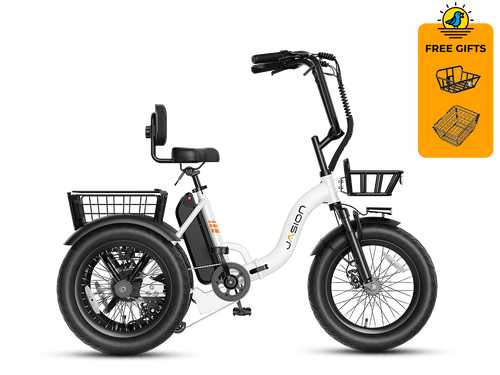
The Thunder Pro ST replaces the higher top tube of the Thunder Pro with a lowered frame opening. When a rider has limited hip mobility, wears bulky outdoor clothing, or simply dislikes swinging a leg over a tall frame, that can make mounting and dismounting feel more natural. It is especially relevant on rides with frequent stops, where the motion repeats all afternoon.
The ST and the standard Thunder Pro share the same broad category of equipment: a 26 x 4 in fat-tire platform, a 52V 20Ah battery, front and rear suspension, and hydraulic disc brakes. The decision is therefore less about choosing a different kind of ride and more about choosing the frame access that suits your body and routine. The standard Thunder Pro's higher frame is the alternative if you prefer its more traditional step-over layout; compare both on our Thunder Pro page.
A step-through frame also does not guarantee a perfect fit. The current geometry lists a 35 in minimum saddle height and a 39 in maximum saddle height. Check those measurements against your inseam and preferred leg extension, and pay attention to reach to the handlebar. The listed rider-height range is broad, so treat it as a starting point rather than a substitute for checking fit. Our guide to step-through vs. step-over ebikes explains which frame layout addresses which access preference.
Adam Esposito's ride review shows the ST's low opening in use and explains why he found the upright handlebar position and sprung saddle comfortable. His impression is a useful look at the riding posture; your inseam and reach still decide whether the bike fits you.
Power, battery and real-world range
The ST pairs a hub motor rated at up to 2,000W peak with 115 N·m of stated torque and a top speed of up to 35 mph. Peak power describes a short burst, not continuous output. This is a bike that can pick up speed quickly; learn its pedal-assist and twist-throttle response somewhere open before taking it into stop-and-go traffic. Speed limits and trail access vary by location, so check the rules for your route. Our guide to ebike classes explains the distinction between speed settings and local riding rules.
The 1,040Wh battery gives the ST meaningful stored energy for longer rides between charging opportunities. The up-to-90-mile figure is a maximum, not a promise that every rider will see that distance. A faster pace, higher assist, hills, cold weather, low tire pressure, frequent stops, or added gear can shorten a ride. Plan from your own route and keep a reserve instead of treating the maximum as a round-trip guarantee. Our ebike battery guide covers charging and storage habits that help you care for the pack over time.
For a more demanding point of reference, BikeRide Reviews rode a Thunder Pro ST with a 200 lb rider, 1,256 ft of elevation gain and an 18.9 mph average. Its highest-assist run covered 27.7 miles. That is one test under high-power conditions, not the range every owner should expect. The gap from the 90-mile maximum shows why assist level and route matter when planning a long ride.
BikeRide also reached a GPS-verified 35 mph and recorded strong hill climbs on its test route. The reviewer found the default pedal-assist steps too widely spaced for comfortable pedaling at higher settings, then adjusted each level's speed in the Jasion app. That is a useful ownership tip: set the assist levels for the pace at which you actually pedal, then test the response in an open area before a busy ride.
If you ride every day, charging deserves a practical check: where can you safely charge and store the battery, and how much time do you have between rides? If your schedule depends on a precise recharge window, confirm the supplied charger and charge time for your chosen configuration before ordering.
Suspension, tires and braking for mixed routes
The ST pairs 26 x 4 in tires with a front suspension fork and a rear soft-tail suspension system. That combination is useful when a ride includes patched pavement, gravel approaches, or uneven paths: the tires add a larger air volume between the wheel and the surface, while suspension adds movement at the front and rear. These features do not make the bike a technical mountain bike or remove the need to choose a route suited to its size and your skill.
Hydraulic disc brakes with 180 mm rotors give the ST a sensible braking setup for its weight and pace. The hardware is only part of the equation: stopping distance changes with speed, surface, weather, tires, brake condition and load. Practice progressive stops before riding fast or carrying gear; inspect the pads when lever feel changes or noise persists. Our guide to when to replace ebike brake pads covers the wear signs.
In BikeRide's controlled 20 mph braking test, its ST stopped in 21 ft. Treat that as the result of one rider and test setup, not a guaranteed stopping distance. It reinforces the case for leaving room at speed and checking brake feel after assembly.
For an outdoor ride, consider the entire setup: your route, local access rules, the bike's width and weight, and how you will secure any gear. The Thunder Pro ST appears in our hunting ebike guide as one option for riders who value a step-through frame and fat-tire equipment. A product's trail-oriented equipment does not itself establish permission to ride on a particular public trail or hunting property.
What should you know about carrying gear?
A rear rack, fenders, mirrors and a tail bag appear in the current package list, making the ST useful for everyday gear from the outset. Check the exact contents of your selected configuration at checkout, particularly any promotional accessories. One fit issue is settled: our front basket is not compatible with the Thunder Pro series frame. For other bags and racks, check mounting points and accessory-specific limits before ordering.
For heavier cargo, confirm the approved combined rider-and-gear riding limit with our support team. The published 500 lb figure is labeled a static limit, so it should not be used as a moving payload allowance. BikeRide reported receiving a lower riding recommendation from support for the stock suspension; because that advice is not yet reflected in our published specification, ask support for the limit that applies to your configuration before planning a heavy load. Bags, racks and child seats may have lower individual limits. For vehicle transport, start with the complete bike's 96.6 lb weight and your rack's per-bike capacity. Our ebike transport guide covers the measurements to take before a lift.
Thunder Pro ST vs. a folding ebike
Choose the ST when easier mounting and a full-size riding position matter more than compact storage. Choose a folding bike when reducing storage footprint or fitting a bike into a vehicle is part of the routine. Folding does not automatically make a bike light enough for stairs, so compare the complete-bike weight as well as folded dimensions. The folding ebike guide walks through those tradeoffs.
If you are still deciding between frame styles, compare our step-through ebikes. Riders who mainly want a regular commuter for paved routes can explore the wider electric bike lineup.
Who should buy the Thunder Pro ST?
- Consider it if a high top tube makes mounting uncomfortable, but you still want a full-size fat-tire bike with front and rear suspension.
- Consider it if longer rides are part of your routine and you want a large battery, while understanding that the 90-mile figure is an upper estimate.
- Consider it if your rides combine streets, rough pavement and suitable firm paths, and you have ground-level storage.
- Look elsewhere if you must carry the bike upstairs, lift it onto a car rack often, or need a compact bike for a small storage area.
- Pause before ordering accessories if your plan depends on a front basket or a specific rear cargo setup. Confirm compatibility and load limits first.
The Thunder Pro ST is compelling when frame access changes whether you can comfortably use a full-size ebike. Its battery, suspension and brakes support that use case; the 96.6 lb weight and accessory checks are the practical tradeoffs to settle before buying. See current colors, configuration and included items on the Jasion Thunder Pro ST product page.
Thunder Pro ST FAQ
What is the difference between Thunder Pro ST and Thunder Pro?
The ST has a lowered top tube for easier mounting and dismounting. The standard Thunder Pro uses a higher step-over frame. Both are full-size fat-tire models with a 52V 20Ah battery, front and rear suspension, and hydraulic brakes; choose based on frame access and fit.
How far can the Thunder Pro ST go on one charge?
Up to 90 miles is the maximum estimate. In BikeRide Reviews' higher-assist test, a 200 lb rider covered 27.7 miles with 1,256 ft of climbing at an 18.9 mph average. Your result will depend on pace, assist, terrain, weather and load. Plan from your own route and leave a reserve.
Does a front basket fit the Thunder Pro ST?
No. The front basket is not compatible with the Thunder Pro series frame. Check the current product page or ask support to confirm any other basket, rack, or bag before ordering.
Can I carry a 500 lb rider-and-cargo load?
Do not infer that from the product page's “500 lb static limit” label. A static limit is not a clear riding-load definition. Confirm the approved combined rider-and-cargo limit with Jasion before loading the bike, and follow any lower limit printed for a rack or accessory.
Is the Thunder Pro ST easy to carry upstairs?
No. It weighs 96.6 lb. The step-through frame makes mounting easier, but it does not reduce lifting effort. If your route includes stairs or frequent loading into a vehicle, compare a lighter model and confirm the full bike weight before you buy.





Share: