
 EU
EU
 UK
UK
 US
US
 CA
CA



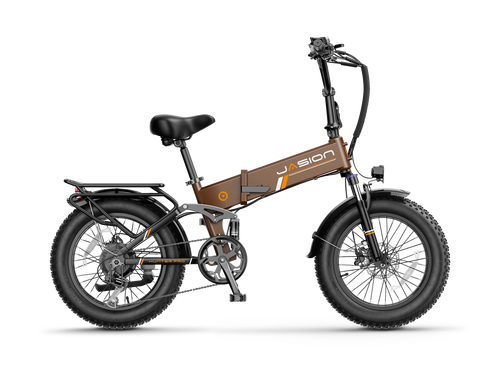
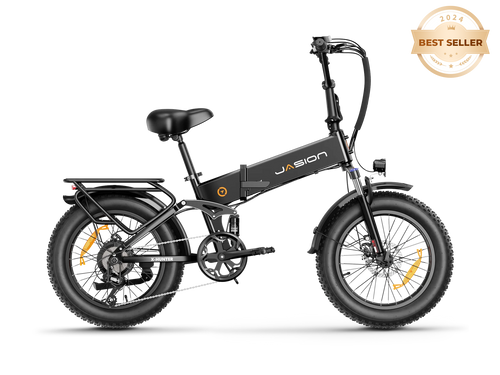
The Jasion Hunter Pro Full Suspension Folding Ebike and RadExpand 5 Plus both pair a folding frame with 20 × 4-inch fat tires. For commuting, garage storage and weekend rides, their most useful differences are suspension, pedal-assist response, rider fit and carrying weight.
On September 15, 2026, their US product pages listed the Hunter Pro at $999 and the RadExpand 5 Plus at $1,899—a $900 difference before taxes, shipping or optional accessories. Prices can change, so compare the current offers before ordering.
The Hunter Pro combines full suspension with a lower listed price. The RadExpand 5 Plus offers torque-sensor assistance, a lower listed bike weight and a fit range that starts at a shorter rider height. Here is how those differences translate into everyday buying decisions.

Hunter Pro vs RadExpand 5 Plus: Specs That Matter
This is a comparison of manufacturer-listed specifications, not a side-by-side road test. Range estimates and motor ratings need context; they do not establish which bike will travel farther or climb a particular hill under the same conditions.
| Feature | Jasion Hunter Pro | RadExpand 5 Plus |
|---|---|---|
| Listed price, September 15, 2026 | $999 | $1,899 |
| Motor specification | 1800W peak; product description also lists 1000W | 750W manufacturer-rated rear hub motor |
| Listed torque | 95 N·m | 64 N·m |
| Battery capacity | 48V 15Ah / 720Wh | 15Ah / 720Wh |
| Manufacturer range claim | Up to 80 miles | Estimated 20–60 miles |
| Pedal-assist sensor | Cadence sensor | Torque sensor |
| Suspension | Front and rear suspension | Hydraulic front suspension fork |
| Brakes | Hydraulic brakes | Hydraulic disc brakes |
| Tires | 20 × 4 inches | 20 × 4 inches |
| Total payload | 400 lb maximum listed payload; confirm separate rider and rack limits | 315 lb total; 225 lb maximum rider weight |
| Listed bike weight | 82 lb | 72.5 lb; 62.5 lb with battery removed |
| Recommended rider height | 5'1"–6'3" | 4'10"–5'10" |
Sources: the Hunter Pro specifications and RadExpand 5 Plus specifications, checked September 15, 2026. Manufacturer weight measurements may use different equipment configurations.
What Do You Get for the Price Difference?
At the checked prices, the Hunter Pro leaves $900 more in the initial purchase budget. Its full suspension is a clear equipment difference for shoppers comparing affordable folding electric bikes.
The RadExpand 5 Plus brings a torque sensor and a lower listed weight. Those features can matter if you want assistance that responds to pedaling effort or need to move the bike into storage regularly. They describe differences between the bikes; they do not prove why a manufacturer set its price.
For a useful budget comparison, add the accessories you actually need, delivery charges and any assembly costs to each offer. Do not assume a sale price or gift remains available after the date above.
Daily Commuting: Pedal Feel and Suspension
How the two sensors differ
A cadence sensor detects pedal rotation. A torque sensor measures pedaling force and lets the controller adjust assistance in response. The RadExpand 5 Plus may appeal if you prefer support that changes with your effort; the Hunter Pro uses cadence-based assistance.
Controller tuning and assist settings also affect the ride. A test ride is more useful than assuming every torque-sensor bike feels the same, particularly for low-speed starts and stop-and-go commuting.
For cracked pavement and uneven paths
The Hunter Pro has suspension at both ends, while the RadExpand 5 Plus has a suspension fork. Rear suspension gives the Hunter Pro another way to absorb bumps, but comfort still depends on suspension setup, tire pressure, rider weight and speed.
Both use wide tires. If you are comparing a fat tire electric bike for commuting and weekend rides, consider the surfaces you actually use. Tire width alone does not guarantee traction on loose gravel, wet pavement or rough trails.
Hills and Range: Read the Numbers Carefully
The Hunter Pro's 1800W figure is peak power. Rad describes its 750W figure as manufacturer-rated power. Dividing 1800 by 750 does not tell you how much faster one bike climbs or how much more power reaches the ground.
The listed torque figures also come from separate manufacturers. Hill performance depends on gradient, total load, battery charge, controller behavior, gearing and rider input. Without a matched test, the specifications do not support a measured climbing advantage.
Both bikes list 720Wh batteries, but their advertised range figures differ. Treat the Hunter Pro's up-to-80-mile claim and Rad's estimated 20–60 miles as separate manufacturer estimates. Assist level, throttle use, speed, hills, load, temperature and tire pressure affect distance per charge.
For commuting, plan around your round-trip distance and charging access, with a reserve for detours. Check the bike's permitted configuration and local route rules before assuming it can be used on every road or shared path.
Rider Fit and Payload Are Separate Checks
Rad lists a 315 lb total payload, but also a 225 lb maximum rider weight and a 59 lb rear rack limit. The 315 lb figure is not a rider-only allowance, and separate component limits still apply.
Jasion lists a 400 lb maximum payload for the Hunter Pro. Do not interpret that as 400 lb of cargo or automatic approval for a 400 lb rider. Confirm rider and rack limits with Jasion before buying if your intended load is close to the stated maximum.
Height matters independently of weight. Hunter Pro's recommended range is 5'1"–6'3"; RadExpand 5 Plus lists 4'10"–5'10". Riders below 5'1" have a clearer published fit starting point with Rad, while riders above 5'10" fall within Jasion's listed range. Check inseam, reach and comfortable mounting rather than treating height alone as a fit guarantee.
Apartment and RV Storage: Folding Does Not Mean Easy to Lift
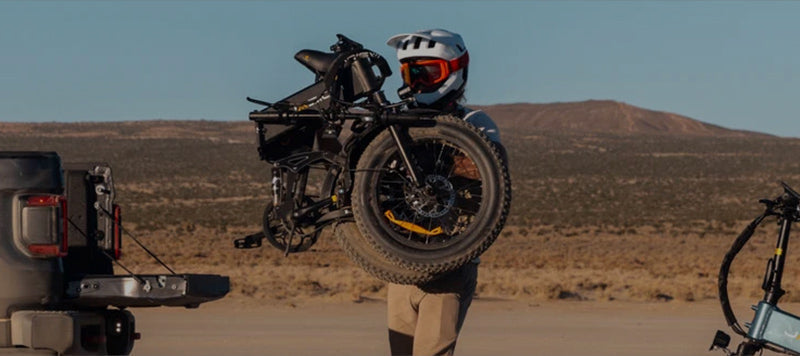
A folding electric bike can help with garage, apartment or RV storage. However, the listed weights here are 82 lb for Hunter Pro and 72.5 lb for RadExpand 5 Plus. Neither should be chosen for stair carrying without considering what you can safely handle.
Measure your trunk opening, storage space and loading height before ordering. Hunter Pro's current page gives two different folded widths, so confirm its folded dimensions with Jasion rather than relying on an unverified fit. Rad lists 41 inches long × 25 inches wide × 29 inches high.
If you roll the bike into a ground-level garage, lifting weight may be less important than rider fit and suspension. If you lift it into an RV or vehicle every trip, handling the folded bike deserves more attention.
Which Folding Fat Tire Ebike Should You Choose?
Consider the Hunter Pro if you want full suspension, fit within its recommended height range and can manage its weight. At the checked price, it is a lower-cost RadExpand 5 Plus alternative for riders comparing folding ebikes for daily travel and weekend outings.
Consider the RadExpand 5 Plus if torque-sensor assistance, its shorter recommended rider range or lower listed weight better matches your needs. Check its separate rider-weight limit before making that choice.
For the Jasion option, review the current configuration, price and fit information before ordering.
Frequently Asked Questions
Is the Hunter Pro a RadExpand 5 Plus alternative?
Yes. Both are folding fat tire ebikes. Hunter Pro offers full suspension and a lower price at the September 15, 2026 check, while RadExpand 5 Plus offers torque-sensor assistance and a lower listed weight.
How much is the price difference?
The checked US product-page prices were $999 for Hunter Pro and $1,899 for RadExpand 5 Plus, a $900 difference before taxes, shipping and optional accessories. Check current offers before buying.
Does RadExpand 5 Plus support a 315 lb rider?
No. Rad lists 315 lb as total payload and specifies a separate 225 lb maximum rider weight. Total payload should not be treated as a rider-only limit.
Which bike has a torque sensor?
RadExpand 5 Plus has a torque sensor that responds to pedaling force. Hunter Pro uses a cadence sensor that detects pedal rotation. Controller settings also influence how assistance feels.
Will Hunter Pro travel farther on a charge?
Its advertised maximum is higher, but these are separate manufacturer estimates, not results from a matched test. Both list 720Wh batteries, and actual range depends on riding conditions and assist use.


Share: