
 EU
EU
 UK
UK
 US
US
 CA
CA



Fat tire e-bikes are often associated with trails, beaches, snow, and off-road riding. But for many commuters, wide tires can also make everyday rides feel more stable, comfortable, and confidence-building.
The real question is not whether a fat tire e-bike can be used for commuting. It can. The better question is whether it fits your commute. If your route includes rough pavement, potholes, gravel shortcuts, wet roads, light snow, or uneven bike paths, a fat tire e-bike may be a smart choice. If your ride is mostly smooth pavement and you need the lightest, most efficient bike possible, a traditional commuter e-bike may still make more sense.
This guide explains when a fat tire e-bike is good for commuting, what trade-offs to expect, and which Jasion models are worth considering if you want a commuter-friendly fat tire setup.
Are Fat Tire E-Bikes Good for Commuting?
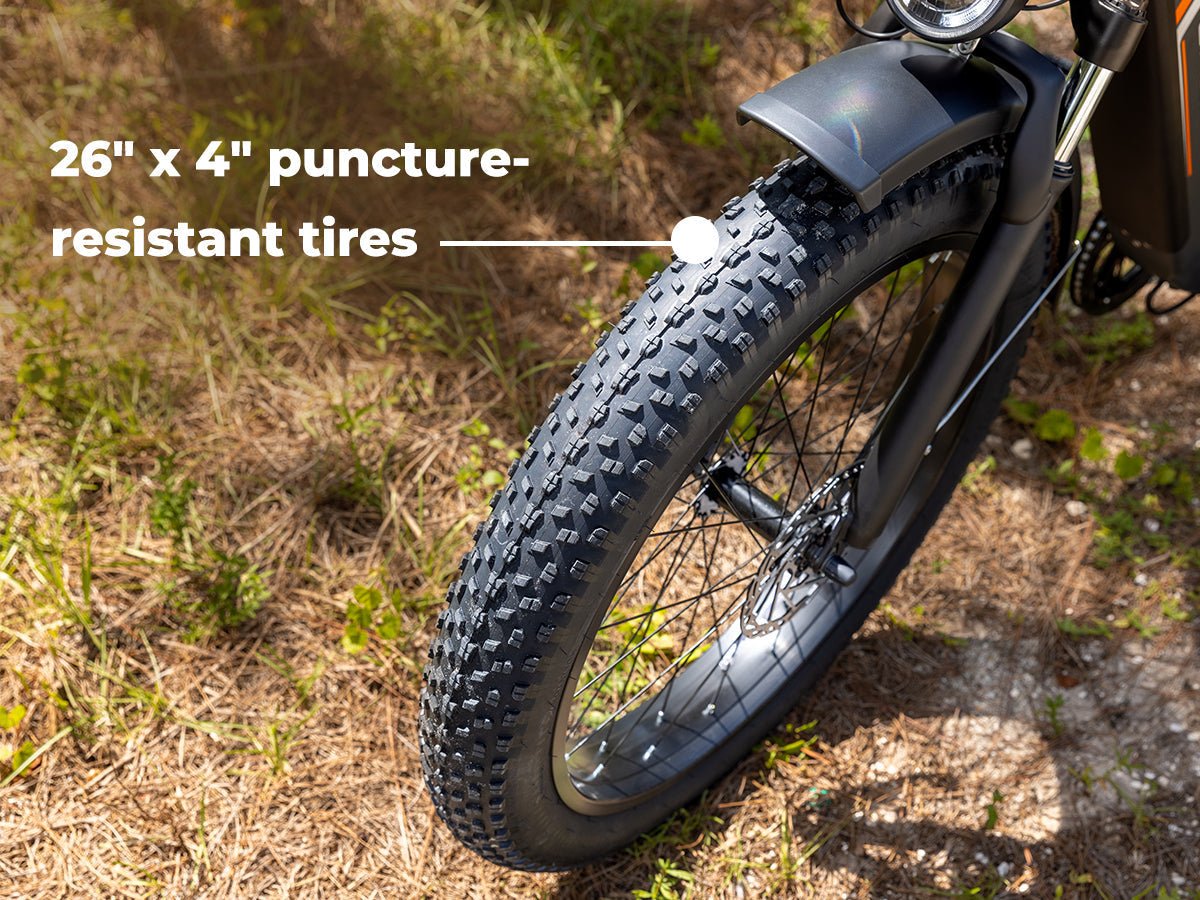
Yes, fat tire e-bikes can be good for commuting, especially if your route is not perfectly smooth. The wider tires create a larger contact patch with the ground, which can improve stability, comfort, and traction on rough or unpredictable surfaces.
For riders who commute through cracked roads, construction zones, gravel shoulders, park paths, wet pavement, or winter conditions, fat tires can make the ride feel more controlled. They also help absorb some road vibration, which can reduce fatigue on longer daily rides.
The trade-off is that fat tire e-bikes are usually heavier than standard commuter e-bikes. They may also have more rolling resistance, especially if the tires are underinflated or if you ride mostly on smooth pavement. That means a fat tire commuter is best for riders who value comfort and control more than maximum lightness.
If you are still comparing different fat tire setups, Jasion’s fat tire e-bike is a useful place to compare folding models, step-through options, tire sizes, torque, battery range, and payload.

Why Fat Tires Can Help on a Daily Commute
Commuting is not always as simple as riding on a clean bike lane. Many riders deal with bumps, curbs, wet leaves, driveway cuts, potholes, loose gravel, and rough shoulders. A fat tire e-bike can make those surfaces feel less stressful.
The biggest benefits usually come down to three things: stability, traction, and comfort.
| Commute Situation | How Fat Tires Help | What to Watch For |
|---|---|---|
| Rough pavement | Wider tires help absorb vibration and improve comfort | The bike may feel heavier than a city commuter |
| Wet roads | More contact with the ground can improve confidence | Braking distance still increases in wet conditions |
| Gravel or park paths | Fat tires feel more stable on loose surfaces | Use appropriate tire pressure for the surface |
| Snow or light sand | Wide tires can reduce sinking and improve flotation | Lower speed and careful braking are still important |
| Long daily rides | Extra comfort can reduce fatigue | Battery range and total weight matter more |
When a Fat Tire E-Bike Makes Sense for Commuting
A fat tire e-bike makes the most sense when your commute includes mixed surfaces or when comfort matters more than having the lightest bike possible.
It is a strong fit if you ride through suburban streets with uneven pavement, city routes with potholes, unpaved shortcuts, gravel paths, or winter road conditions. It can also be helpful for riders who want a more planted feel and do not like the twitchy handling of narrower tires.
Fat tires can also be useful if you carry cargo. A wider tire setup can make the bike feel more stable when you have a backpack, rear rack load, groceries, or work gear. However, payload, brakes, frame design, and motor torque still matter. Tire width alone does not make a bike suitable for heavy loads.
When a Fat Tire E-Bike May Be Overkill
A fat tire e-bike is not automatically the best commuter for everyone. If your route is short, flat, smooth, and fully paved, a lighter city e-bike may be easier to handle and more efficient.
Fat tire bikes are often heavier, and that matters if you need to carry your bike upstairs, lift it into a car, use a wall rack, or move it through a tight apartment hallway. If you ride in an area with limited bike parking, the extra width and weight can also affect storage.
You should also think about speed and range realistically. Fat tires can feel comfortable, but they also create more contact with the ground. If your tire pressure is too low for pavement, the bike may use more battery. For daily commuting, the right tire pressure can make a noticeable difference.
Are Fat Tire E-Bikes Good on Pavement?
Fat tire e-bikes can ride well on pavement, but they feel different from narrow-tire commuter bikes. On smooth city roads, a fat tire e-bike may feel more stable and cushioned, but not as light or quick-rolling as a traditional commuter model.
For pavement commuting, the goal is not to run the tires as soft as you would on sand or snow. Higher tire pressure usually improves rolling efficiency on roads, while lower pressure can improve traction on softer surfaces. The best pressure depends on rider weight, cargo, tire size, and terrain.
If most of your commute is paved but the roads are rough, a fat tire e-bike can be a practical middle ground: more comfortable than a narrow-tire commuter, but still usable for everyday transportation.
What to Look for in a Fat Tire Commuter E-Bike
When choosing a fat tire e-bike for commuting, do not look at tire width alone. The whole bike needs to match your route, storage, comfort, and riding style.
- Motor torque: helpful for hills, starts, heavier riders, and cargo.
- Battery range: important if your commute is long or you use throttle often.
- Brakes: hydraulic brakes are valuable on heavier fat tire e-bikes.
- Suspension: useful for rough pavement, potholes, gravel, and longer rides.
- Folding design: helpful if you need to store the bike in a garage, apartment, RV, or car trunk.
- Payload: check this if you carry bags, groceries, or work gear.
- Lights and fenders: important for real commuting, especially in wet or low-light conditions.
If you want a deeper explanation of motor feel, torque, and hub motor differences, read our guide to geared hub vs direct drive e-bike motors.
Best Jasion Fat Tire E-Bikes for Commuting
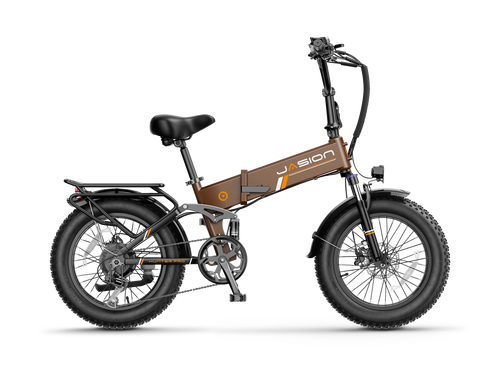
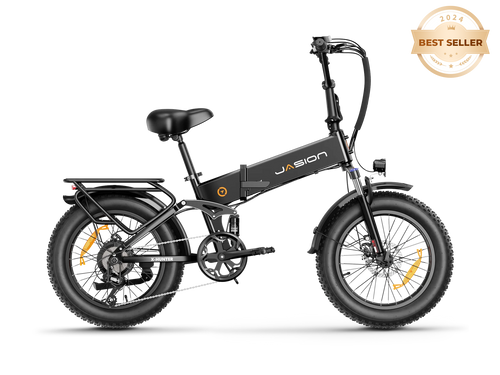
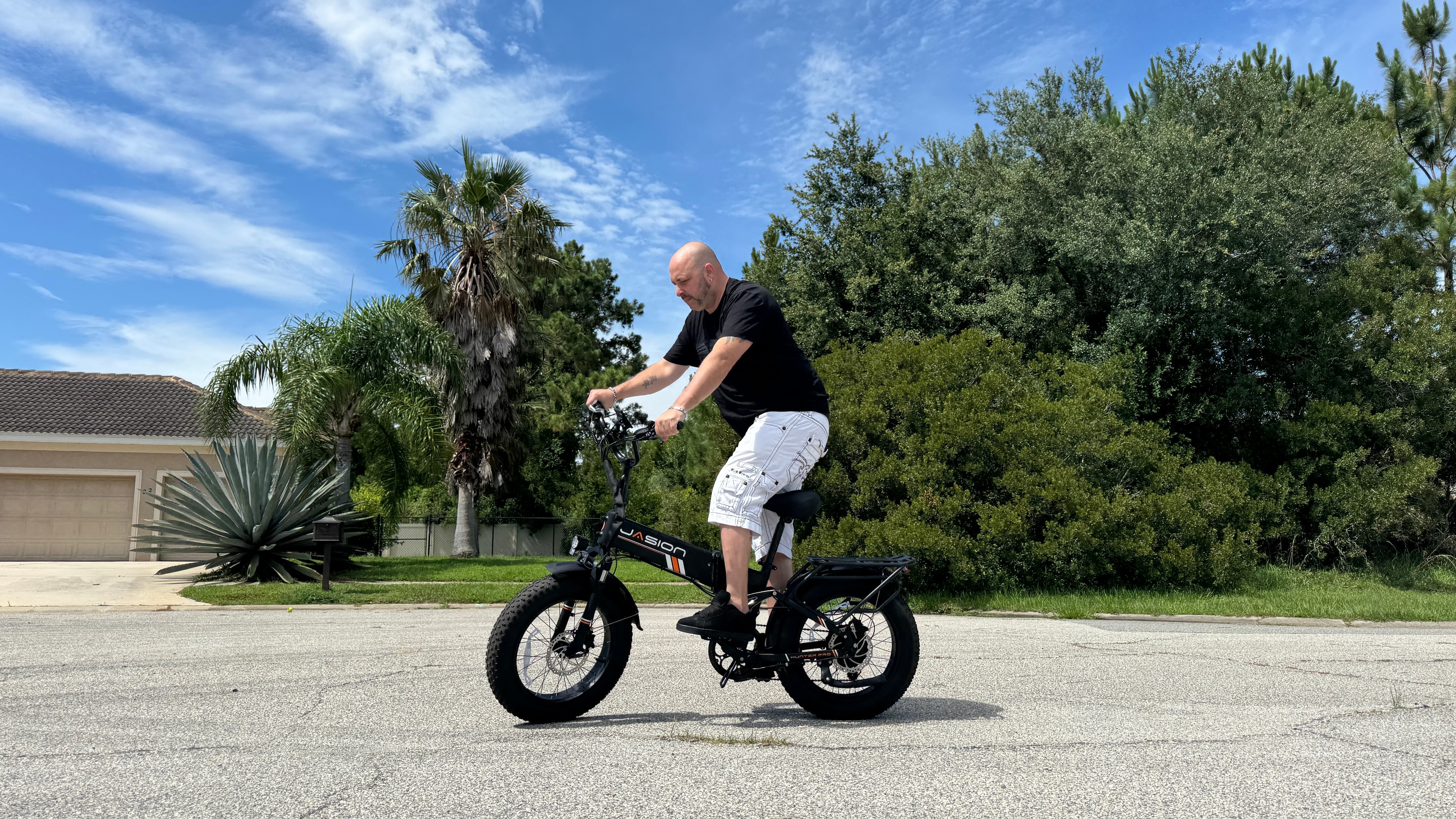
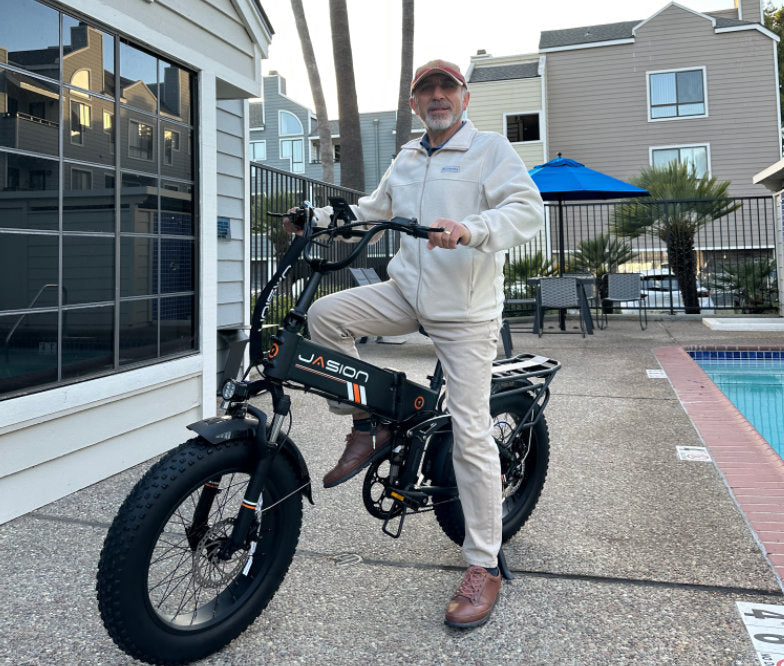
For this kind of commute-focused fat tire article, the two Jasion models that make the most sense to highlight are Hunter Pro and X-Hunter ST. Both use 20" x 4" fat tires, both are folding e-bikes, and both are positioned for mixed terrain rather than only smooth pavement.
Hunter Pro: Best for Powerful Folding Fat Tire Commuting
If you want a powerful fat tire e-bike that can handle rough roads, longer rides, and mixed terrain, Hunter Pro is the stronger all-around pick.
Hunter Pro is listed with a 1800W brushless hub motor, 95 Nm of torque, a 48V 15Ah battery, up to 80 miles of range, 20" x 4" fat tires, full suspension, dual hydraulic brakes, 400 lbs max payload, and a folding frame. That combination makes it a strong fit for riders who want a commute bike that can also handle weekend trails, gravel paths, RV trips, and rougher roads.
For commuting, the important part is not just power. The combination of fat tires, suspension, hydraulic brakes, folding design, and payload capacity makes Hunter Pro more versatile than a simple city bike.
Hunter Pro is a good fit if you:
- want a folding fat tire e-bike for commuting and weekend rides;
- ride rough pavement, gravel, hills, or mixed terrain;
- care about stronger torque and longer range;
- carry cargo or want a higher payload rating;
- want hydraulic brakes and full suspension for comfort and control.
X-Hunter ST: Best for Step-Through Fat Tire Commuting
If easy mounting and comfort matter more to you, X-Hunter ST is the better commuter-friendly fat tire option.
X-Hunter ST is listed with a low-step frame, 1400W brushless hub motor, 85 Nm of torque, a 48V 13Ah battery, up to 71 miles of range, 20" x 4" fat tires, dual hydraulic brakes, 480 lbs max payload, and a folding design. Its step-through frame makes it easier to get on and off, which can be especially useful for city commuting, frequent stops, errands, and riders who prefer a more accessible frame.
Compared with Hunter Pro, X-Hunter ST is easier to recommend for riders who want fat tire stability but do not want to swing a leg over a higher frame every time they stop.
X-Hunter ST is a good fit if you:
- want a step-through fat tire e-bike for easier mounting;
- commute with frequent stops, errands, or city riding;
- want folding convenience and fat tire stability;
- prefer a more accessible frame over a sportier frame;
- need strong payload capacity for daily carrying needs.
Hunter Pro vs X-Hunter ST for Commuting
| Feature | Hunter Pro | X-Hunter ST |
|---|---|---|
| Best for | Powerful folding fat tire commuting | Step-through fat tire commuting |
| Frame style | Folding frame | Low-step folding frame |
| Motor | 1800W brushless hub motor | 1400W brushless hub motor |
| Torque | 95 Nm | 85 Nm |
| Battery | 48V 15Ah | 48V 13Ah |
| Range | Up to 80 miles | Up to 71 miles |
| Tires | 20" x 4" fat tires | 20" x 4" fat tires |
| Brakes | Dual hydraulic brakes | Dual hydraulic brakes |
| Payload | 400 lbs | 480 lbs |
| Better choice if... | You want more torque and longer listed range | You want easier step-through access and higher payload |
How to Choose the Right Fat Tire E-Bike for Your Commute
Start with your route. If your commute is mostly smooth pavement and you need a lightweight bike, a fat tire e-bike may not be necessary. But if your daily ride includes broken pavement, wet roads, gravel paths, hills, or cargo, fat tires can make the bike feel more stable and comfortable.
Next, think about how often you stop. If you ride in traffic, stop at intersections, or run errands, frame style matters. A step-through fat tire e-bike like X-Hunter ST may feel more convenient for frequent stops. If you want stronger torque and longer listed range, Hunter Pro may be the better match.
Finally, consider storage. Folding fat tire e-bikes are still heavier than many standard city bikes, but the folding design can help if you need to store the bike in a garage, apartment, RV, or vehicle. For a broader buying comparison, you can also read our guide to the best folding fat tire e-bikes.
Common Mistakes When Buying a Fat Tire Commuter E-Bike
Choosing fat tires only for looks
Fat tires look rugged, but they should match your riding conditions. If you only ride short distances on smooth roads, you may not need the extra width and weight.
Ignoring bike weight
Fat tire e-bikes are usually heavier than standard commuter e-bikes. Think about parking, lifting, storage, stairs, car racks, and how often you need to move the bike without riding it.
Running the wrong tire pressure
Low tire pressure can improve grip on soft terrain, but it can reduce efficiency on pavement. For commuting, tire pressure should match your rider weight, cargo, tire size, and surface.
Forgetting about brakes
A heavier e-bike needs confident stopping power. Hydraulic brakes are especially useful for fat tire commuters, hills, cargo, and wet roads.
Only comparing top speed
Top speed is not the only thing that matters for commuting. Torque, battery range, comfort, frame style, brakes, lights, fenders, and payload often matter more in daily use.
So, Should You Commute on a Fat Tire EBike?
You should consider a fat tire e-bike for commuting if you want more comfort, stability, and confidence on imperfect roads. It is especially useful if your commute includes rough pavement, gravel, wet conditions, light snow, hills, or cargo.
You may want a lighter commuter e-bike instead if your ride is short, flat, smooth, and storage space is limited. Fat tire e-bikes are versatile, but they are not the lightest option.
For Jasion riders, Hunter Pro is the stronger pick for power, range, and mixed-terrain commuting. X-Hunter ST is the better pick if you want a low-step frame, easier mounting, and fat tire stability for everyday rides.

FAQs
Are fat tire e-bikes good for commuting?
Yes. Fat tire e-bikes can be good for commuting if your route includes rough pavement, gravel, wet roads, hills, or mixed terrain. They offer more stability and comfort than many narrow-tire commuter bikes, but they are usually heavier.
Are fat tire e-bikes good on pavement?
Fat tire e-bikes can ride well on pavement, especially if the roads are rough or uneven. On smooth pavement, they may feel more stable and comfortable, but less light and efficient than a standard commuter e-bike.
What is the downside of a fat tire e-bike for commuting?
The main downsides are weight and rolling resistance. Fat tire e-bikes are often heavier, and they may use more battery if tire pressure is too low or if the route is mostly smooth pavement.
What tire size is best for a fat tire commuter e-bike?
For commuting, 20" x 4" fat tires can be a practical choice because they offer stability while keeping the bike more compact. They are also common on folding fat tire e-bikes.
Is a folding fat tire e-bike good for commuting?
A folding fat tire e-bike can be good for commuting if you need easier storage or transport. It is especially useful for apartments, garages, RVs, and riders who want one bike for commuting and weekend rides.
Should I choose Hunter Pro or X-Hunter ST for commuting?
Choose Hunter Pro if you want stronger torque, longer listed range, and a more powerful folding fat tire e-bike. Choose X-Hunter ST if you want a low-step frame, easier mounting, and strong fat tire stability for everyday commuting.




Share: